The Last Hurricane to Hit Hawaii Became a Movie Star
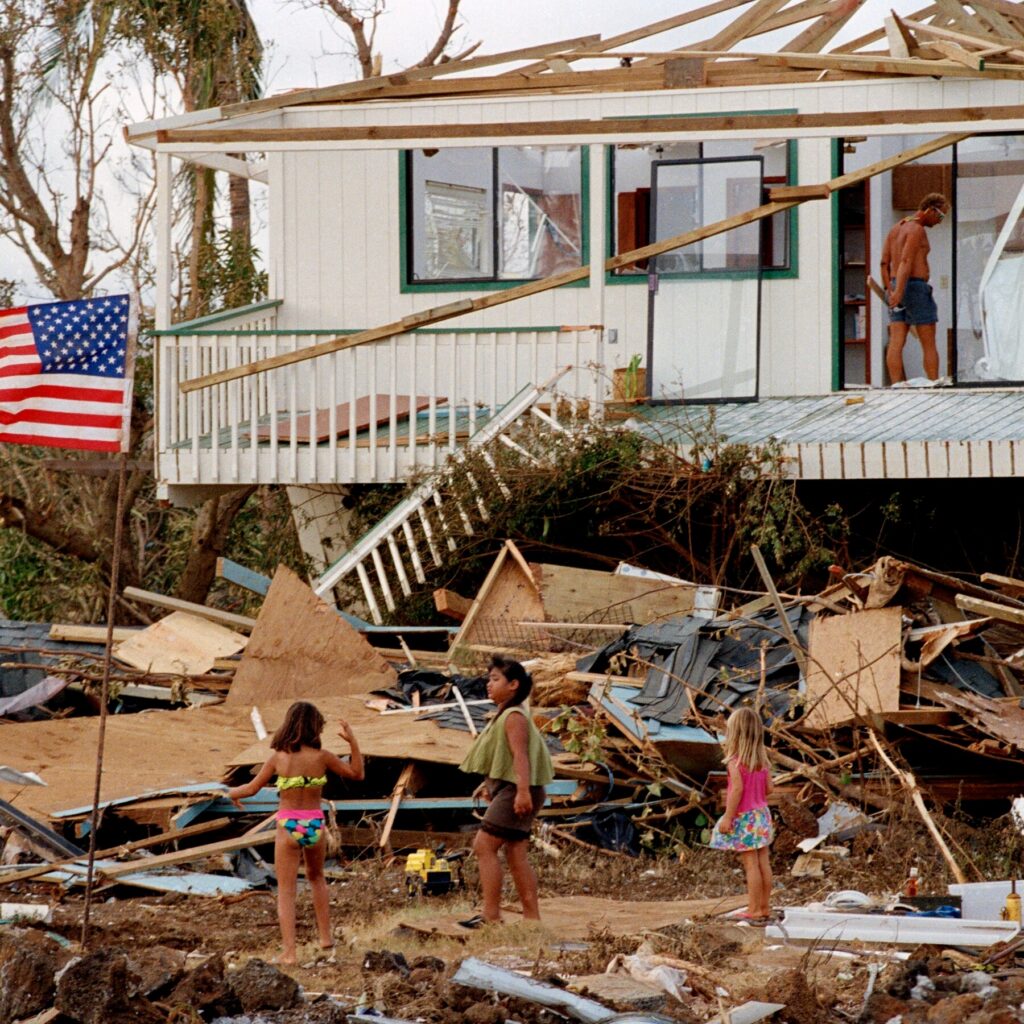
On the afternoon of September 11, 1992, Hurricane Iniki made landfall on Kauai's south shore as a ferocious Category 4 cyclone packing sustained winds of 145 mph. It was the first hurricane to strike the Hawaiian Islands since Hurricane Iwa a decade earlier and remains, to this day, the only major hurricane to hit the state in recorded history. Iniki — Hawaiian for "sharp, piercing wind" — devastated Kauai, flattening homes and resorts, uprooting thousands of trees, snapping power poles, and leaving the island's infrastructure in ruins. Official counts cite six to seven direct fatalities and roughly 100 injuries, while damage estimates range from $1.8 billion to $3.1 billion in 1992 dollars, making it the costliest natural disaster in Hawaii's history. All other Hawaiian islands felt peripheral effects, including 4-to-6-foot surf and damaging winds. Remarkably, the storm also intersected with Hollywood: Steven Spielberg and a 130-person Jurassic Park crew were on Kauai for the final day of on-location shooting when Iniki arrived. The production was abruptly halted, the cast and crew rode out the hurricane in a hotel basement, and Spielberg later incorporated actual footage of Iniki's aftermath into the finished film. The storm thus earned an unusual place in both meteorological and cinematic history.
The Last Hurricane to Hit Hawaii Became a Movie Star
A rare and record-setting storm
Hurricane Iniki formed on September 5, 1992, in the eastern Pacific and tracked west-northwest toward the Hawaiian chain. By September 11 it had intensified to Category 4 strength, with a well-defined eye and a compact, intense wind field. The storm's center passed directly over Kauai around midday, subjecting the island to the full force of its eyewall. Meteorologists note that Hawaii's geographic position — far from typical eastern Pacific hurricane tracks and shielded by cooler sea-surface temperatures and strong wind shear — makes direct hits exceedingly rare. Iniki exploited a brief window of favorable conditions: a deep-layer ridge to the north steered it westward, while anomalously warm waters south of the islands provided fuel. The result was a landfall intensity unmatched in the modern record. Iniki weakened rapidly after crossing Kauai and dissipated on September 13 roughly halfway between Hawaii and Alaska.
Devastation across Kauai
The hurricane's compact size concentrated extreme winds and rain on Kauai, particularly the southern and eastern coasts. Storm surge and battering waves destroyed beachfront properties, while wind gusts estimated above 160 mph peeled roofs off homes, hotels, and public buildings. The island's electrical grid was obliterated; power poles snapped like matchsticks, leaving the entire island without electricity for weeks in some areas. Water systems failed, roads were blocked by debris and downed lines, and the airport sustained heavy damage. Agricultural losses were severe: sugar cane, coffee, and tropical fruit crops were stripped or drowned. The Red Cross and state emergency managers estimated that more than 1,400 homes were destroyed and over 5,000 damaged, displacing thousands of residents. Six deaths were confirmed on Kauai; a seventh fatality occurred on Oahu from storm-related surf. Approximately 100 people required hospital treatment for injuries ranging from lacerations to trauma from structural collapse.
Hollywood on location: Jurassic Park meets Iniki
By a striking coincidence, Universal Pictures had chosen Kauai's lush Napali Coast and interior valleys as the primary backdrop for Isla Nublar in Steven Spielberg's Jurassic Park. September 11, 1992, was scheduled as the final day of on-location principal photography. The crew of roughly 130 people — including stars Sam Neill, Laura Dern, Jeff Goldblum, and Richard Attenborough — were based in hotels near Poipu when the hurricane's outer bands arrived before dawn. As conditions deteriorated, production was cancelled and the cast and crew were moved to a reinforced hotel basement for safety. Spielberg later recounted that the experience was "the most frightened I've ever been on a movie set." Sam Neill, in his 2023 memoir Did I Ever Tell You This?, described the night as "a real-life monster movie" and noted that the cast emerged to find their surroundings unrecognizable. No one from the production was seriously injured, and the crew was evacuated to Honolulu within days. As a memento, the studio distributed "I Survived Hurricane Iniki" T-shirts to cast and crew.
From disaster to screen: Iniki's cinematic cameo
Spielberg, known for improvisation, saw an opportunity in the wreckage. Once the storm passed, he dispatched a second-unit crew to film the devastated landscapes — splintered palm forests, roofless buildings, and debris-strewn roads. Selected shots of Iniki's actual aftermath were woven into Jurassic Park's climactic sequences, most visibly in the wide establishing shots of the island after the dinosaur breakout. The real storm debris lent a visceral authenticity that special effects alone could not achieve. The film's release in June 1993 thus carried an unintended documentary layer: audiences worldwide glimpsed the scars of a genuine Category 4 hurricane embedded in a blockbuster about genetically engineered predators. The juxtaposition underscored a theme the movie itself explored — nature's capacity to overwhelm human hubris.
Recovery and legacy
Kauai's recovery was prolonged. Federal disaster declarations unlocked FEMA assistance, and the U.S. Army Corps of Engineers led debris removal and temporary housing efforts. Power restoration took months in remote areas. The tourism economy, the island's lifeblood, suffered a sharp contraction; visitor arrivals dropped by an estimated 40% in the following year. Yet the disaster also catalyzed improvements: building codes were tightened, emergency communication systems upgraded, and the state invested in more resilient electrical infrastructure. Iniki remains a benchmark for Hawaii's emergency managers, who regularly cite it in preparedness drills and public education campaigns. For the film community, the episode is a legendary case study in production risk management — and a reminder that even the most meticulously planned shoot can be upended by forces beyond any studio's control.
What this means
Hurricane Iniki occupies a singular intersection of natural history and pop culture. As a meteorological event, it rewrote the record books for Hawaii, demonstrating that the islands are not immune to major hurricane landfalls — a lesson that resonates more urgently in an era of warming oceans and shifting storm tracks. As a cultural footnote, it gave the world a Hollywood blockbuster that inadvertently documented a real catastrophe, blurring the line between spectacle and testimony. Three decades later, Kauai's scars have largely healed, but the storm's legacy endures in stronger building standards, sharper emergency protocols, and a handful of unforgettable frames in a dinosaur movie that remind viewers: nature, whether cloned or climatic, always writes the final draft.
Originally reported by nytimes.com. Adapted for our readers with AI assistance.
Delta State's N67.6 billion contribution to rising state domestic debt and a sharp reversal in Nigeria's agriculture trade balance highlight key economic trends affecting…
Liverpool face a double injury blow with Cody Gakpo and Alexander Isak sidelined during international duty, raising concerns about attacking options ahead of the…