
Business News
NDLEA Intensifies Operations Against Narcotic Trade and Illegal Trafficking
The National Drug Law Enforcement Agency has arrested multiple suspects and seized significant drug consignments in recent operations across Nigeria.
TAMFIS NIG LTDRC 8067447CAC ACTIVEFinima, Bonny Island, Rivers State

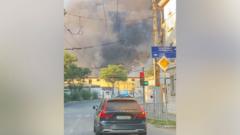
In a major escalation of the ongoing conflict between Russia and Ukraine, Ukrainian forces launched a large-scale drone and missile strike on Russia’s crucial Black Sea port of Novorossiysk. The attack targeted vital grain export terminals and the last major Russian naval base on the Black Sea, causing casualties and significant damage to infrastructure. This development highlights the growing impact of the war on global food security and maritime operations in the region.
In the early hours of August 12, 2026, Ukrainian forces executed a coordinated strike involving rockets, jets, and naval drones against Novorossiysk, one of Russia’s largest ports on the Black Sea. The assault damaged two major grain export terminals and inflicted hits on Russian naval vessels, including four warships with two identified as frigates. Local officials reported three fatalities, including an eight-year-old child, and 24 injuries resulting from the overnight bombardment.
The attack caused repeated explosions throughout the night as Russian air defenses attempted to intercept the incoming drones and missiles. The damage extended beyond the port facilities, affecting pipelines and disrupting the city’s water supply. An emergency situation was declared in Novorossiysk following the strikes. Additionally, the surrounding Krasnodar region experienced multiple drone attacks, damaging dozens of buildings and resulting in at least one death from drone debris.
Novorossiysk has become a critical hub for Russian naval and commercial operations in the Black Sea, especially after Russia’s Black Sea fleet was compelled to relocate from Sevastopol in Crimea due to vulnerability to Ukrainian attacks. The port serves as the last major Russian naval base on the Black Sea, making it a strategic military and logistical asset.
The Ukrainian military’s targeting of this base signals an intent to undermine Russia’s maritime capabilities and disrupt its control over the Black Sea. Ukrainian President Volodymyr Zelensky emphasized that Russian naval infrastructure will remain vulnerable as long as the conflict persists, underscoring the ongoing contest for dominance in the region.
The strikes on Novorossiysk’s grain terminals come at a critical time for global food markets. Russia is the world’s largest wheat exporter, and the port plays a vital role in facilitating grain shipments. Damage to export infrastructure has forced the Russian agriculture ministry to seek alternative routes, including ports in the Baltic and Caspian Seas and overland transport, though these options face logistical limitations.
Analysts predict that Russian grain exports for August could decline by more than 50% compared to the average over the past five years due to disruptions in the Black and Azov Seas. This reduction threatens to exacerbate global food shortages and price volatility, particularly affecting regions heavily reliant on Russian and Ukrainian grain, such as North Africa, the Middle East, and parts of Asia.
Ukraine has also experienced severe disruptions to its grain exports due to Russian attacks on the port of Odesa and shipping vessels. The last remaining maritime route for Ukrainian agricultural exports has been repeatedly targeted, contributing to a reported 23% decrease in exports in July 2026.
Following the attacks, Russian authorities have not publicly commented on the specific damage to their naval assets or grain terminals. However, Russian Foreign Ministry spokeswoman Maria Zakharova condemned Ukraine’s strikes on Russian agricultural infrastructure, attributing them to rising global food prices and shortages.
Russia, in turn, has vowed to continue targeting Ukrainian military facilities in the Black Sea to neutralize perceived threats to its security. This tit-for-tat escalation reflects the broader pattern of renewed hostilities in the Black Sea region after a relative lull, with both sides intensifying attacks on each other’s ports and maritime assets.
Moscow also launched aerial strikes in Ukraine during the same period, killing at least 11 civilians, including ballistic missile and glide bomb attacks on the southern city of Zaporizhzhia. These developments underscore the continuing human toll and the complex military dynamics shaping the conflict.
The conflict’s impact on grain exports has reverberated globally since Russia’s full-scale invasion of Ukraine in 2022. The Black Sea Grain Initiative, established in 2022 to facilitate safe passage for Ukrainian agricultural exports, collapsed after Russia resumed attacks on maritime corridors in 2023.
The ongoing military confrontations have severely disrupted shipping routes, undermining international efforts to stabilize food supplies. The blockade and attacks on ports like Novorossiysk and Odesa have heightened concerns about food security, particularly in vulnerable regions dependent on grain imports from Russia and Ukraine.
The situation remains fluid, with both sides leveraging maritime strikes to exert pressure. The international community continues to monitor the conflict’s effects on global markets and humanitarian conditions closely.
The recent Ukrainian strikes on Novorossiysk mark a significant escalation in the ongoing conflict’s impact on maritime infrastructure and global grain supplies. By targeting Russia’s key Black Sea port and naval base, Ukraine has not only inflicted military damage but also deepened disruptions to grain exports critical to global food markets. As both sides continue to contest control over the Black Sea, the prospects for stabilizing regional security and ensuring reliable food shipments remain uncertain. International stakeholders face the challenge of navigating these complex dynamics to mitigate further humanitarian and economic fallout.
Originally reported by bbc.co.uk. Adapted for our readers with AI assistance.
Keep reading
Business News
The National Drug Law Enforcement Agency has arrested multiple suspects and seized significant drug consignments in recent operations across Nigeria.
Business
Nigerian shoppers are increasingly turning to AI assistants like ChatGPT, Claude and Gemini for product ...
Business
The global developer workforce has undergone a transformative expansion over the past five years, fundam...
TAMFIS NIG LTD
Electrical and instrumentation engineering, bid preparation and consulting, IT and software.