
Business
Beyond the Digital Shelf: How AI Agents Are Reshaping Product Discovery for Nigerian Consumers
Nigerian shoppers are increasingly turning to AI assistants like ChatGPT, Claude and Gemini for product ...
TAMFIS NIG LTDRC 8067447CAC ACTIVEFinima, Bonny Island, Rivers State

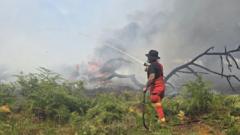
Since Sunday, August 9, a wildfire has been burning in the New Forest, southern England, triggered by a van fire on the A31. Firefighters have been engaged in a difficult and prolonged effort to contain the blaze, which has affected approximately 1.6 square kilometers of protected heathland. Rising temperatures and changing wind conditions have complicated containment efforts, while the incident underscores a broader national challenge as England and Wales face an unprecedented number of wildfires in 2026. This article examines the current situation in the New Forest, the operational challenges faced by fire services, and the wider implications for wildfire management in the UK.
The wildfire in the New Forest began when a van caught fire on the A31, prompting 23 drivers to abandon their vehicles as flames spread rapidly. Firefighters from the Hampshire & Isle of Wight Fire and Rescue Service (HIWFRS) have been battling the blaze for four days, working to establish fire breaks and maintain control of the fire’s perimeter.
Despite making progress, crews face challenging conditions due to rising temperatures and shifting winds that threaten to spread the fire unpredictably. To secure a reliable water supply, a heavy volume pump has been deployed at Hightown Lake in Ringwood, with hoses laid across pavements and driveways, causing some disruption to local residents.
The fire has impacted approximately 400 acres of heathland, a protected environment home to rare species, according to the New Forest National Park Authority. Smoke and ash have forced nearby residents to keep doors and windows closed for safety.
Meanwhile, National Highways has reported significant damage to the A31, including the road surface, safety barriers, bridge parapets, and boundary fencing. Repairs are delayed until the fire service confirms it is safe to access the area, with no work expected to begin before Friday, August 14.
The firefighting response has been complicated by the unpredictable weather conditions, particularly the changing wind patterns that can cause flare-ups and rapid fire movement. Fire crews have implemented fire breaks to slow the spread and are continuously monitoring the perimeter.
HIWFRS has acknowledged the frustration caused to residents by the water supply infrastructure but emphasized its necessity for effective firefighting. The service is working closely with the community to minimize disruption while maintaining operational effectiveness.
The fire service has also issued safety warnings to the public, advising against actions that could start new fires, such as smoking, lighting campfires, or using barbecues in high-risk areas. Drivers are cautioned not to park on dry grass, as the heat from vehicle undersides can ignite fires.
These precautions are critical given the strain on firefighting resources. The Fire Brigades Union has highlighted difficulties in recruiting on-call firefighters and a decline in overall firefighter numbers, leading to fewer available fire engines and increased pressure on existing crews.
The New Forest wildfire is part of a worrying national trend. So far in 2026, England and Wales have recorded 1,017 wildfires, matching the total number for the entire previous year. This surge is linked to ongoing heatwave conditions and dry weather, creating a tinderbox environment for wildfires.
The National Fire Chiefs Council (NFCC) has shared these figures, underscoring the scale of the challenge facing fire services. Prime Minister Andy Burnham has expressed concern over the situation, particularly in the South of England, and is considering measures such as banning disposable barbecues to reduce fire risks.
The Ministry of Housing, Communities and Local Government has pledged support, noting nearly £2 billion allocated to fire services in England, including a £100 million investment aimed at enhancing national resilience. This funding represents the largest upgrade to fire service capabilities in almost two decades.
Despite these investments, the ongoing increase in wildfire incidents demands continuous adaptation and resource allocation to meet the evolving threat.
The New Forest area affected by the wildfire is recognized for its ecological importance, containing protected heathland that supports a variety of rare species. Wildfires pose a significant threat to this biodiversity, destroying habitats and disrupting ecosystems.
Local residents have been urged to stay vigilant and follow safety advice to prevent further fire outbreaks. The fire service stresses that a single careless act, such as discarding a cigarette or leaving a barbecue unattended, can trigger a wildfire with severe consequences.
Community cooperation is vital, especially as firefighting efforts continue under challenging conditions. The disruption caused by firefighting infrastructure, such as water hoses laid across public spaces, requires understanding and patience from those affected.
The incident also highlights the broader societal impact of wildfires, including road closures and damage to infrastructure, which affect daily life and local economies.
The New Forest wildfire serves as a case study in the need for enhanced wildfire preparedness and prevention strategies across the UK. With climate change contributing to hotter, drier summers, the risk of wildfires is expected to increase.
Authorities are exploring regulatory measures to mitigate risks, such as restricting the use of disposable barbecues and enforcing stricter controls on activities that could ignite fires in vulnerable areas.
Investment in firefighting resources, including recruitment drives and equipment upgrades, is essential to ensure that services can respond effectively to multiple simultaneous incidents.
Public education campaigns aimed at raising awareness of wildfire risks and promoting responsible behavior are also critical components of a comprehensive approach to wildfire management.
Collaboration between fire services, environmental agencies, local communities, and government bodies will be key to developing resilient strategies that protect both people and the environment.
The ongoing New Forest wildfire exemplifies the growing challenge of managing wildfires in the UK amid increasingly extreme weather conditions. While firefighting teams have made progress in controlling the blaze, unpredictable winds and rising temperatures continue to complicate efforts. The incident highlights the urgent need for enhanced preparedness, resource investment, and public cooperation to address the rising frequency and severity of wildfires. As climate change intensifies these risks, coordinated strategies involving government agencies, fire services, and communities will be essential to protect both natural habitats and public safety. The lessons learned from the New Forest fire will inform future responses and prevention measures, underscoring the importance of vigilance and resilience in the face of evolving environmental threats.
Originally reported by bbc.co.uk. Adapted for our readers with AI assistance.
Keep reading
Business
Nigerian shoppers are increasingly turning to AI assistants like ChatGPT, Claude and Gemini for product ...
Business
The global developer workforce has undergone a transformative expansion over the past five years, fundam...
Business
Neighborhood Intelligence, the entity formed from Bed Bath & Beyond Inc.'s restructuring, has r...
TAMFIS NIG LTD
Electrical and instrumentation engineering, bid preparation and consulting, IT and software.