Politics
How Minnesota Figures Into the Presidential Politics of Insulin Prices
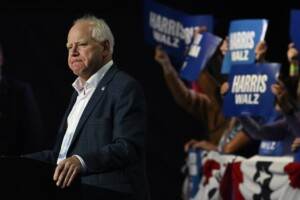
Politics tamfitronics Minnesota Gov. Tim Walz attends a rally in Asheville, North Carolina, on Sept. 17. Minnesota led the way on in...
TAMFIS NIG LTDRC 8067447CAC ACTIVEFinima, Bonny Island, Rivers State

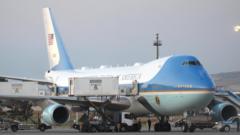
On July 8, 2026, while world attention focused on President Donald Trump’s arrival in Turkey, a sophisticated security operation unfolded beneath the surface. The president secretly departed Air Force One via a catering truck, boarding a separate military aircraft while the original plane—complete with its call sign—continued as a decoy. This move, driven by heightened tensions with Iran, was not merely a military tactic but a masterclass in risk mitigation, succession integrity, and adaptive security. For business leaders navigating Nigeria’s dynamic markets or overseeing global supply chains, the principles behind this operation offer transferable lessons in protecting leadership, ensuring continuity, and outmaneuvering threats in uncertain geopolitical climates.
The core of the Air Force One decoy operation lay in creating uncertainty for potential adversaries. By allowing the official call sign to remain on a plane no longer carrying the president, security teams introduced ambiguity into threat assessment models. This principle mirrors strategies used in corporate risk management, where diversification and misdirection can reduce exposure to targeted threats. Nigerian firms operating in volatile regions such as the Niger Delta or dealing with cross-border trade tensions often employ similar tactics—rotating logistics routes, varying executive travel schedules, or using neutral vessels to obscure high-value movements. The Turkey incident demonstrates how controlled deception, when ethically applied and tightly managed, can serve as a protective layer rather than a reputational risk.
In commercial contexts, this translates to strategies like maintaining duplicate operational hubs, using cloud-based failover systems, or issuing public statements that do not reveal real-time executive locations during high-risk periods. The key is not secrecy for its own sake, but creating a resilient posture where no single point of failure—whether a plane, a server, or a CEO’s itinerary—can be exploited. For businesses in Lagos, Abuja, or Port Harcourt facing periodic unrest or regulatory shifts, adopting such layered defences can mean the difference between continuity and costly disruption.
A critical but often overlooked aspect of the decoy operation was the deliberate placement of Secretary of State Marco Rubio and Treasury Secretary Scott Bessent on the original aircraft. Their presence ensured that, even if the president had been compromised, the line of succession remained intact and visible. This decision underscores a fundamental truth: leadership continuity depends not just on having successors, but on positioning them where they can be immediately effective. In business terms, this is the difference between having a named deputy on paper and ensuring that deputy is embedded in decision-making chains, authorised to act, and visibly in charge during crises.
For Nigerian enterprises—whether family-owned conglomerates in Kano or tech startups in Yaba—this reinforces the need to go beyond formal succession documents. Regularly involving potential successors in high-stakes meetings, crisis simulations, and external engagements builds both competence and confidence. When a managing director travels to ECOWAS summits or negotiates with foreign investors, having a trained deputy visibly engaged (even if not the final decision-maker) deters opportunistic challenges and reassures stakeholders. The Air Force One example shows that succession is not just about who comes next, but about demonstrating stability in real time.
The decision to deploy the decoy was not routine; it was a direct response to elevated risks stemming from U.S.-Iran tensions. This highlights how security protocols must evolve with threat landscapes—a lesson acutely relevant to businesses operating in or with Nigeria. Fluctuations in foreign exchange policy, sudden regulatory shifts, or regional insecurity (such as pipeline vandalism or communal clashes) can rapidly alter risk profiles. Static security measures fail in such environments; adaptive protocols that scale with perceived danger are essential.
Business leaders should therefore establish tiered response frameworks: standard procedures for routine operations, escalated measures for heightened alerts (e.g., during elections or commodity price shocks), and maximum protocols for crises. These might include temporary travel restrictions, enhanced due diligence on partners, or activating alternative supply chains. Just as the White House adjusted Air Force One protocols based on intelligence, Nigerian firms must monitor leading indicators—such as CBN announcements, SEC updates, or security bulletins—and adjust their defences accordingly. The goal is not to react after an incident, but to maintain a state of calibrated readiness.
One of the enduring tensions in the Air Force One episode is the balance between operational necessity and public accountability. While the decoy served a clear security purpose, its secrecy raises questions about when and how leaders should disclose protective measures. In business, similar dilemmas arise: Should a bank reveal it has moved its data centre offsite during a cyber threat alert? Should an oil company disclose it has evacuated personnel due to rising militancy? Over-disclosure can aid adversaries; under-disclosure can erode trust.
The solution lies in principled communication—sharing enough to maintain confidence without compromising safety. After-action reviews, delayed disclosures, or general statements about 'enhanced security protocols' can uphold transparency without sacrificing operational integrity. For Nigerian CEOs addressing shareholders or international partners, framing security adaptations as proactive and responsible—rather than reactive or secretive—builds credibility. The Turkey incident reminds us that secrecy, when justified and time-limited, is a tool of protection, not inherently a sign of concealment.
The secret departure of President Trump from Air Force One during his 2026 Turkey visit was more than a fleeting headline—it was a demonstration of how sophisticated risk management, succession planning, and adaptive security converge in high-stakes environments. For business leaders in Nigeria and beyond, the episode offers a powerful metaphor: resilience is not about predicting every threat, but about building systems that remain effective even when the unexpected occurs. By studying such operations—not to replicate them in scale, but to extract their underlying logic—executives can fortify their organisations against uncertainty. In markets where change is the only constant, the ability to protect leadership, ensure continuity, and communicate with purpose is not just prudent; it is a strategic imperative.
Originally reported by bbc.co.uk. Adapted for our readers with AI assistance.
Keep reading
Politics
Politics tamfitronics Minnesota Gov. Tim Walz attends a rally in Asheville, North Carolina, on Sept. 17. Minnesota led the way on in...
Politics
Deji Adeyanju; Niger State Mining Victims Human rights lawyer and activist, Deji Adeyanju, has accepted his appointment as a member of the Federal Government’s…
Politics
Democracy, Featured, Global, Global Governance, Headlines, International Justice, IPS UN: Inside the Glasshouse, TerraViva United Nations UNITED NATIONS, Sep 11 2026 (IPS) – When…
TAMFIS NIG LTD
Electrical and instrumentation engineering, bid preparation and consulting, IT and software.