
Business
Nigeria’s Economic Performance: Domestic Debt Rise and Agriculture Trade Shift in Q2 2026
Nigeria's economic landscape in the second quarter of 2026 presents a mixed picture of fiscal press...
TAMFIS NIG LTDRC 8067447CAC ACTIVEFinima, Bonny Island, Rivers State

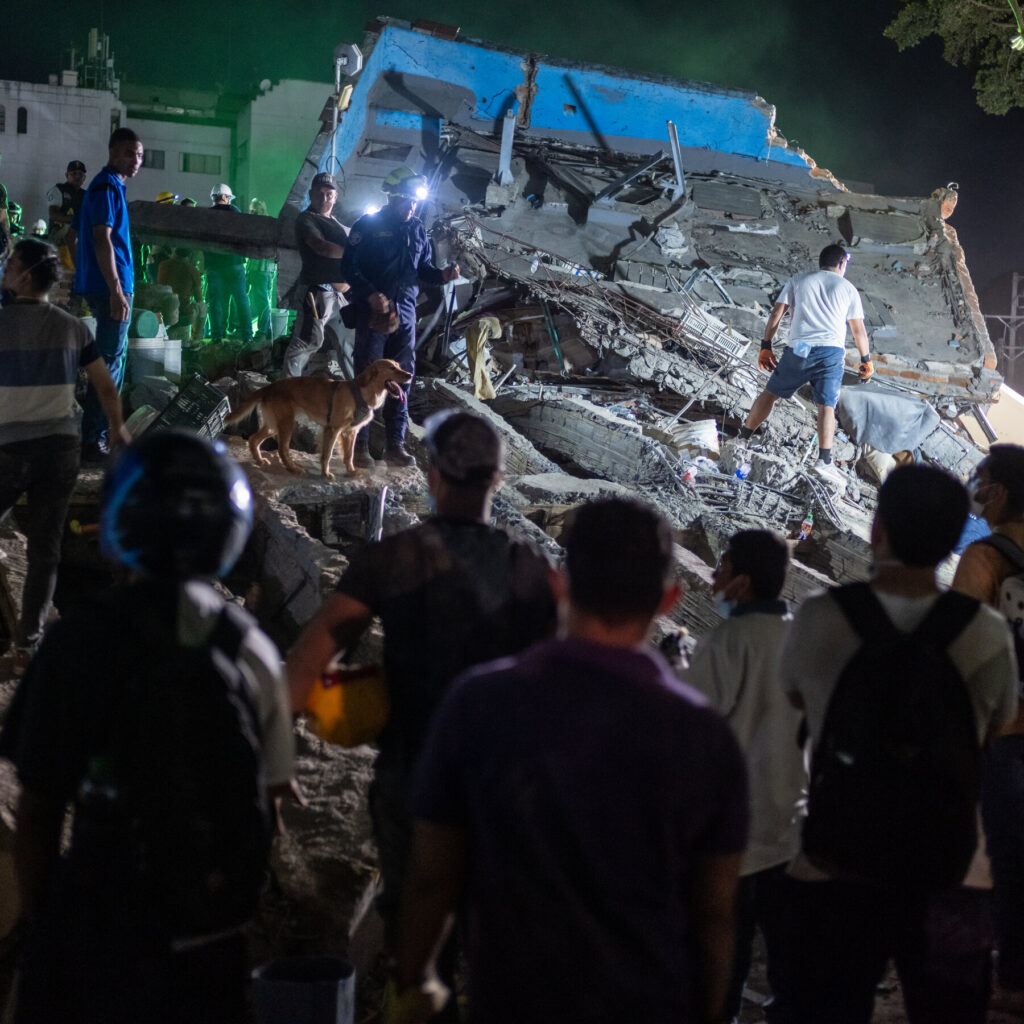
A powerful 7.4-magnitude earthquake struck Colombia, leaving more than 100 people dead and damaging hundreds of buildings across affected areas. The event has been identified as the strongest earthquake recorded in the country in a decade, a distinction that highlights both its destructive force and its relative rarity compared with the seismic activity Colombia typically experiences. As officials and communities assess the aftermath, the scale of the loss and damage underscores the serious threat posed by major earthquakes and the long recovery process that often follows.
The earthquake registered a magnitude of 7.4, placing it among the most powerful seismic events to affect Colombia in recent memory. According to the available information, the quake killed more than 100 people and damaged hundreds of buildings. That combination of significant loss of life and widespread structural damage signals a major disaster requiring extensive response and recovery efforts.
The event also stands out because it was the strongest recorded in Colombia in a decade. In seismically active countries, a ten-year interval without an earthquake of comparable strength can create a false sense of stability; when a 7.4-magnitude quake does occur, it can overwhelm infrastructure and emergency systems that have not been tested by such force for years.
A magnitude of 7.4 places an earthquake well above the threshold at which serious damage becomes likely in populated areas. Modern magnitude scales measure the energy released at the earthquake's source, and each whole-number increase represents roughly a tenfold increase in wave amplitude and about a thirtyfold increase in energy release. By that measure, a 7.4 event releases far more energy than the moderate tremors that many regions experience regularly.
At this magnitude, shaking can be felt over large distances and can cause damage far from the epicenter, depending on local geology, building construction, and population density. The depth of the earthquake also matters: shallower quakes tend to produce stronger surface shaking and more destructive effects than deeper ones of the same magnitude. Without specific depth and location data, however, only the general principle applies.
The reported damage to hundreds of buildings points to a broad zone of structural impact. In earthquakes, the type and age of construction often determine how severely structures perform. Buildings made of unreinforced masonry, informal materials, or older designs that predate modern seismic codes are generally more vulnerable than engineered structures built to withstand lateral shaking.
Damage on this scale can have cascading consequences. Even buildings that remain standing may be unsafe for occupation until engineers can inspect them for cracks, foundation shifts, or compromised load-bearing walls. Displaced residents, disrupted utilities, and closed roads can extend the humanitarian impact long after the ground stops shaking. The hundreds of damaged structures therefore represent not only a property loss but also a housing and public-safety challenge.
The death toll of more than 100 people reflects the lethal potential of a major earthquake. Fatalities in such events typically result from collapsing buildings, falling debris, landslides triggered by shaking, and secondary hazards such as fires or damaged infrastructure. When dozens or hundreds of buildings are affected, the risk of entrapment and injury rises sharply, especially in densely populated areas.
Beyond the immediate fatalities, large earthquakes often leave many more people injured, displaced, or in need of psychological support. The human toll also includes families searching for loved ones, survivors losing homes and livelihoods, and communities mourning collective loss. The figure of more than 100 dead, while already stark, may be accompanied by additional injuries and broader social disruption that take longer to measure.
Describing the quake as the strongest recorded in Colombia in a decade is more than a statistical observation. It situates the event in a longer pattern of seismic activity and signals that the country's population, infrastructure, and emergency services had not faced a comparable test during that period. Such intervals can affect preparedness: building codes may be updated, public awareness may fade, and the political and financial priority given to earthquake readiness can fluctuate.
The phrase also implies that smaller earthquakes have occurred over the past ten years, but none matched the energy or damage potential of this one. For scientists and disaster managers, a decade-high event provides data for revising hazard assessments and response plans. For the public, it serves as a reminder that low-frequency, high-impact disasters remain a persistent risk.
In the aftermath of any major earthquake, the immediate priorities include search and rescue, medical care for the injured, damage assessment, and provision of shelter and supplies for displaced people. A disaster that kills more than 100 people and damages hundreds of buildings requires coordination across multiple agencies and levels of government, as well as support from local communities and international partners where needed.
Recovery from a 7.4-magnitude event can take years. Rebuilding damaged housing, restoring public services, and addressing the economic losses faced by families and businesses all demand sustained resources. The full picture of the Colombian earthquake will become clearer as more information emerges about the epicenter, affected towns and cities, aftershocks, and the precise causes of death and destruction. Until then, the confirmed facts already describe a serious national emergency.
The 7.4-magnitude earthquake in Colombia is a significant disaster by any measure: it has caused more than 100 deaths, damaged hundreds of buildings, and ranks as the strongest seismic event in the country in ten years. While broader details about the epicenter, affected communities, and recovery operations will clarify the full scope in the days ahead, the known facts already point to extensive loss and a demanding recovery. The event also serves as a broader reminder of how destructive major earthquakes can be and why preparedness, building resilience, and coordinated emergency response remain essential.
Originally reported by nytimes.com. Adapted for our readers with AI assistance.
Keep reading
Business
Nigeria's economic landscape in the second quarter of 2026 presents a mixed picture of fiscal press...
Business
Liverpool manager Andoni Iraola is confronting a significant selection headache as two key forwards, Cod...
News
Health News tamfitronics [Editor’snote:[Editor’snote: This transcript was generated using both transcription ...
TAMFIS NIG LTD
Electrical and instrumentation engineering, bid preparation and consulting, IT and software.