
News
KFF Health News’ ‘What the Health?’: LIVE From KFF: Health Care and the 2024 Election
Health News tamfitronics [Editor’snote:[Editor’snote: This transcript was generated using both transcription ...
TAMFIS NIG LTDRC 8067447CAC ACTIVEFinima, Bonny Island, Rivers State

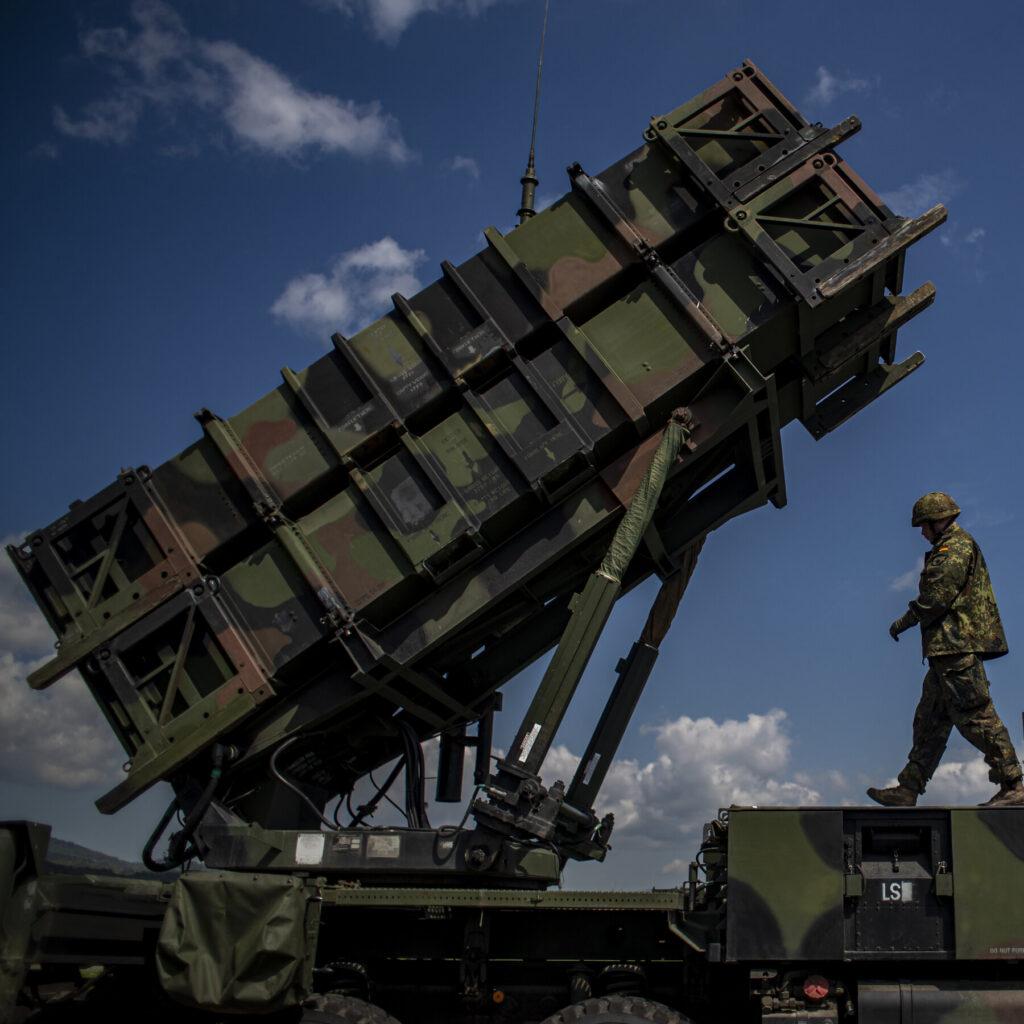
The United States’ war with Iran has caused a critical weaponry shortage. That leaves the U.S. military vulnerable and complicates Washington’s efforts to end the war. A prolonged conflict consumes precision munitions, air-defense interceptors, and strike missiles faster than they can be replaced, steadily eroding the margin of safety that American commanders rely on when planning operations. When inventories fall below the level needed for simultaneous deterrence, defense, and offensive action, the entire strategic calculus shifts. The problem is not merely logistical; it touches on national security, diplomatic leverage, and the credibility of U.S. commitments around the world. In an era of missile-centric warfare, running short on these weapons is akin to running short on ammunition during a ground battle: every engagement becomes more costly, and every decision carries greater consequence.
The United States’ war with Iran has caused a critical weaponry shortage. Sustained combat operations draw heavily on advanced missile systems: cruise missiles used to suppress enemy air defenses, ballistic-missile interceptors launched to protect bases and allies, and precision-guided standoff weapons employed against hardened targets. As the conflict has dragged on, the rate of expenditure has outpaced the normal replenishment cycle, thinning the stockpiles that the Pentagon keeps in reserve for unexpected crises. The result is a dangerous imbalance between the military’s immediate operational needs and the inventory required to maintain readiness elsewhere. What began as a carefully managed campaign has evolved into a high-volume drawdown that touches nearly every level of the joint force.
Missile stockpiles are the foundation of modern American military power. They provide the tools for both offense and defense, allowing the United States to project force without immediately exposing pilots and ships to enemy fire, and to shield partners from incoming ballistic and cruise missiles. Healthy inventories also serve as a deterrent; adversaries are less likely to escalate when they know the United States can absorb an initial exchange and still strike back decisively. When those reserves run low, every subsequent decision carries greater risk. Commanders must weigh the value of each target against the possibility that a future threat will arise with too few weapons left to meet it. A thin inventory can also encourage adversaries to gamble, believing that the United States may hesitate to act because it cannot afford the expenditure.
The shortage leaves the U.S. military vulnerable in several ways. First, it reduces the force’s ability to respond to a second contingency. A military already stretched by the war with Iran would find it harder to surge capabilities to another theater if a new crisis erupted. Second, it strains the air and missile defenses that protect American troops, bases, and allied populations. Each interceptor fired is one fewer available for the next salvo, and if production cannot keep up, defenders may eventually face an enemy that can overwhelm them through persistence. Third, low stockpiles affect morale and planning. Units may be asked to accomplish missions with fewer resources than doctrine prescribes, increasing the burden on personnel and equipment. In the worst case, the shortage could force a commander to choose between defending a current position and preserving enough firepower for the next phase of operations.
The shortage also complicates Washington’s efforts to end the war. Negotiations are shaped by the balance of power on the battlefield; a party that appears weakened may find it harder to drive a favorable settlement. If Iran or its allies sense that American munitions are running low, they may believe that time is on their side and resist concessions. Conversely, U.S. diplomats may feel pressure to conclude a deal quickly, even if the terms are less advantageous than desired. The military shortfall therefore becomes a political variable, influencing the pace, tone, and outcome of peace talks.
Restoring the stockpile is not a simple matter of ordering more missiles. Advanced munitions require specialized components, long production lines, and rigorous testing. Supply chains for guidance systems, propellants, and rare materials can be fragile, and scaling them up takes months or years. During that time, the armed forces must balance competing demands: resupplying the force engaged in the current war, rebuilding the strategic reserve, and continuing to modernize systems for future threats. The longer the conflict lasts, the deeper the hole becomes and the more expensive the recovery. Even after fighting stops, the Pentagon must continue buying missiles at an accelerated rate to restore the cushion that existed before the war began.
Beyond the immediate theater, a depleted missile inventory sends signals to allies and adversaries alike. Partners who depend on American security guarantees may question whether the United States can still uphold its commitments, potentially prompting them to seek alternative arrangements or accelerate their own armament programs. Rivals may see an opportunity to test U.S. resolve in other regions, knowing that the Pentagon has fewer resources to spare. The situation therefore has ripple effects that extend well beyond the Iranian battlefield, reshaping alliances and deterrence relationships across the globe.
The United States’ war with Iran has caused a critical weaponry shortage. That leaves the U.S. military vulnerable and complicates Washington’s efforts to end the war. Addressing the problem requires more than a ceasefire; it demands a sustained effort to replenish the munitions that underwrite American deterrence and protect U.S. forces abroad. Until those stockpiles are restored, the Pentagon will face hard choices about how to allocate limited resources, and diplomats will negotiate under the shadow of a weakened military hand. The danger is not that the United States will lose tomorrow, but that repeated operations today may leave it unprepared for the crises of the future. Restoring the stockpile will therefore be a central measure of whether the country emerges from the conflict in a stronger or weaker strategic position.
Originally reported by nytimes.com. Adapted for our readers with AI assistance.
Keep reading
News
Health News tamfitronics [Editor’snote:[Editor’snote: This transcript was generated using both transcription ...
News
Amanda Knox, the American woman acquitted of murdering British student Meredith Kercher in Italy, has re...
News
Three-time Olympic champion Adam Peaty, the greatest breaststroker in history, struggles to find his top form at the 2023 Commonwealth Games, settling for bronze…
TAMFIS NIG LTD
Electrical and instrumentation engineering, bid preparation and consulting, IT and software.