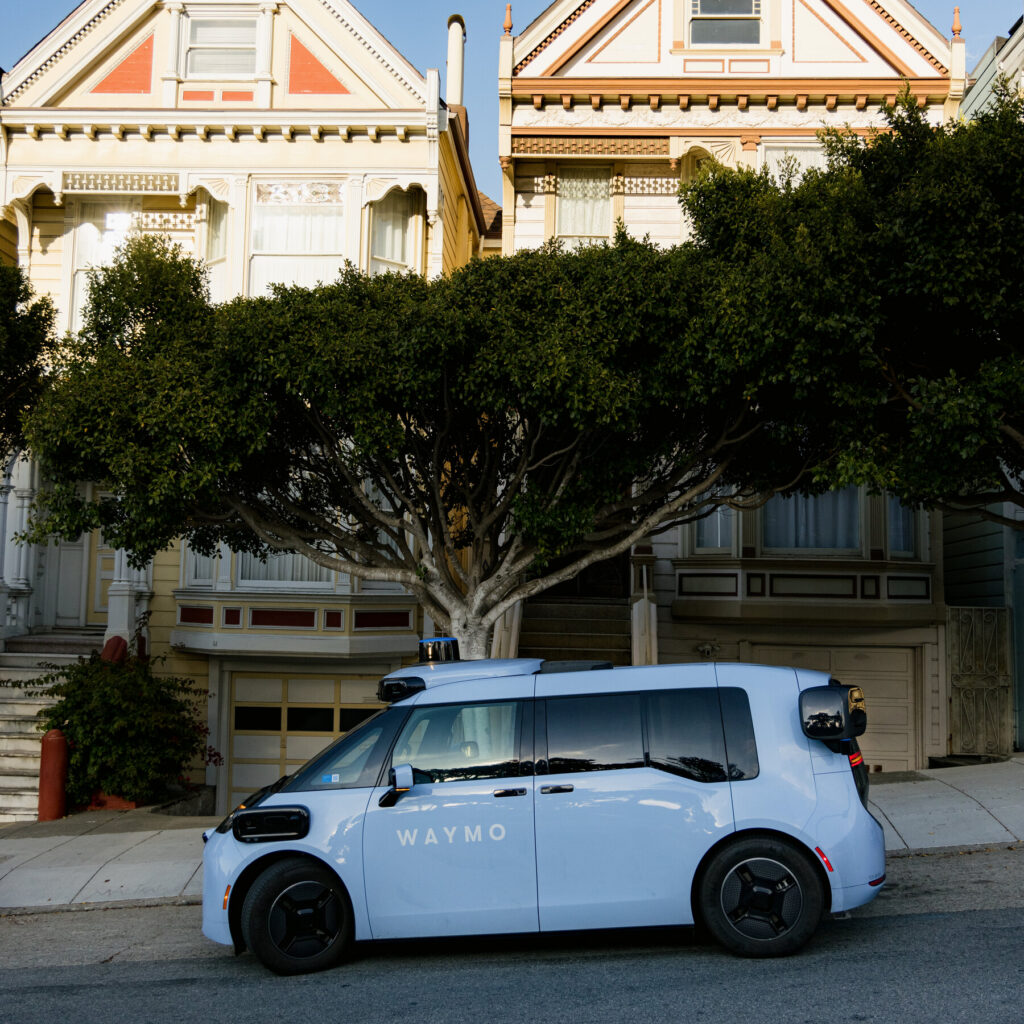
Navigating the Uncharted: How Waymo’s Rapid Expansion Challenges Autonomous Driving Technology
Waymo, a pioneer in autonomous vehicle technology, is rapidly expanding its driverless car services across 15 U.S. cities. This accelerated deployment exposes its fleet to a broader spectrum of complex and unforeseen situations on the road. These so-called ‘edge cases’—rare or unusual scenarios that fall outside the scope of preprogrammed responses—pose significant challenges for the safety, reliability, and scalability of autonomous driving systems. This article delves into how Waymo’s swift growth is revealing these edge cases, the implications for the technology and urban environments, and what it means for the future of driverless transportation.
Navigating the Uncharted: How Waymo’s Rapid Expansion Challenges Autonomous Driving Technology
The Scale of Waymo’s Expansion
Waymo has steadily broadened its operational footprint, now running driverless vehicles in 15 cities across the United States. This expansion is a testament to both technological advancements and increasing confidence in autonomous systems’ capabilities. No longer confined to controlled test tracks or limited pilot zones, Waymo’s vehicles actively serve passengers in diverse urban landscapes, ranging from dense metropolitan areas to suburban neighborhoods.
Each city presents a unique set of challenges—traffic laws vary, road layouts differ, and weather conditions fluctuate. For instance, a city with heavy pedestrian traffic and complex intersections demands different navigation strategies than one with wide highways and fewer pedestrians. Additionally, local driving cultures and behaviors influence how autonomous vehicles must interpret and react to their surroundings. As Waymo’s fleet grows, so does the complexity of the operational environment, requiring the technology to adapt to an ever-widening array of conditions.
Understanding ‘Edge Cases’ in Autonomous Driving
‘Edge cases’ refer to rare or unexpected situations that autonomous vehicles have not been explicitly programmed to handle. These scenarios can range from unusual obstacles on the road, such as debris or animals, to erratic behavior from other drivers, ambiguous traffic signals, or unpredictable pedestrian movements like jaywalking or sudden crossings.
While autonomous systems are designed to manage routine driving scenarios through extensive programming and machine learning, edge cases push these systems to their limits. Successfully navigating such situations requires not only advanced sensor perception and decision-making algorithms but also the capacity for real-time adaptation. Sometimes, these complex scenarios necessitate human intervention, either remotely or through safety drivers.
Importantly, the frequency and nature of edge cases vary with geography. What might be an infrequent event in one city could be relatively common in another, compelling continuous learning and system updates. This variability underscores the challenges in creating a one-size-fits-all autonomous driving solution.
Challenges Posed by Edge Cases
Edge cases present significant safety and operational challenges for autonomous vehicles. When confronted with situations lacking clear rules or precedents, such as navigating a construction zone with confusing signage or reacting to a pedestrian crossing unexpectedly outside a crosswalk, driverless cars must make split-second decisions.
These scenarios can lead to hesitation, incorrect responses, or the vehicle coming to a complete stop, which impacts passenger experience and can disrupt traffic flow. Moreover, unresolved edge cases have the potential to erode public trust in autonomous technology, particularly if they result in accidents or near misses.
Addressing these challenges requires extensive data collection from real-world driving, sophisticated scenario simulation, and iterative machine learning to enhance the vehicle’s ability to predict and respond appropriately. The complexity of these situations highlights that autonomous driving is not merely a technological hurdle but a multifaceted problem involving dynamic human behaviors and unpredictable environments.
Waymo’s Approach to Managing Edge Cases
To tackle the challenges posed by edge cases, Waymo employs a comprehensive and layered strategy. The company gathers vast amounts of real-world driving data to identify and analyze unusual scenarios encountered by its fleet. This data is crucial for refining the vehicle’s software, allowing it to better anticipate and respond to complex situations.
Simulations are a cornerstone of this approach. By recreating edge cases in controlled virtual environments, Waymo can test various responses extensively without risking safety. This process accelerates learning and enables the company to prepare for scenarios that may be too dangerous or rare to encounter frequently in real life.
Human oversight remains integral during early deployment stages. Safety drivers inside the vehicles and remote operators monitor trips and intervene when necessary, ensuring passenger safety while the system continues to mature.
Continuous improvement through iterative software updates is central to Waymo’s methodology. These updates aim to expand the vehicle’s operational design domain—the range of conditions under which the vehicle can operate safely without human intervention—and to reduce the frequency of manual overrides. This ongoing refinement is essential for scaling autonomous services reliably across diverse urban settings.
Implications for the Future of Autonomous Vehicles
The challenges posed by edge cases illustrate that achieving fully autonomous driving extends beyond technological innovation. It is a complex systems challenge that involves understanding and integrating human behavior, urban infrastructure, and regulatory frameworks.
Waymo’s experience underscores that scaling autonomous vehicle services will require sustained collaboration among technology developers, city planners, policymakers, and communities. Creating urban environments that support safe driverless operation may involve adapting infrastructure, such as clearer signage, dedicated lanes, or smart traffic signals.
Public acceptance is another critical factor. Transparent communication about the current capabilities and limitations of autonomous vehicles, especially regarding edge cases, is vital to building trust. As these rare scenarios continue to emerge in real-world deployments, educating users and stakeholders about ongoing improvements will help manage expectations.
Ultimately, the ability to effectively identify, learn from, and manage edge cases will be a key determinant in the success of autonomous vehicles in transforming urban mobility. It represents a dynamic interplay between cutting-edge technology and the complexities of human-centered environments.
What this means
Waymo’s accelerated deployment of driverless cars across multiple cities marks a significant milestone in autonomous vehicle technology. However, as the fleet encounters an expanding array of edge cases, the complexity of ensuring safe and reliable operation increases substantially. These challenges highlight the necessity of continuous learning, adaptive technology, and collaborative efforts among stakeholders to address the unpredictable nature of real-world driving environments. While the journey toward fully autonomous transportation remains complex and iterative, Waymo’s experiences offer valuable insights into overcoming the hurdles ahead. This progress paves the way for a future where driverless vehicles can safely and efficiently navigate the intricate realities of urban life, ultimately transforming mobility as we know it.
Originally reported by nytimes.com. Adapted for our readers with AI assistance.
As AI-powered recommendation systems become central to how shoppers find products, Nigerian businesses and consumers face new opportunities and challenges in the evolving landscape…
An in-depth look at the world's leading developer communities reveals shifting growth patterns, with emerging economies outpacing traditional tech hubs in expansion rates, presenting…
The company formerly known as Bed Bath & Beyond is restructuring its partnership with Fathom to leverage digital assets like tZero, Medici, and GrainChain,…