Politics
How Minnesota Figures Into the Presidential Politics of Insulin Prices
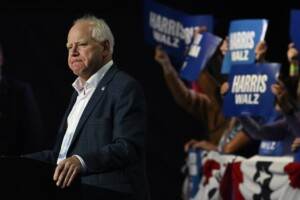
Politics tamfitronics Minnesota Gov. Tim Walz attends a rally in Asheville, North Carolina, on Sept. 17. Minnesota led the way on in...
TAMFIS NIG LTDRC 8067447CAC ACTIVEFinima, Bonny Island, Rivers State

As Michigan's Senate primary intensifies, Dr. Abdul El-Sayed, a progressive candidate, has actively sought to bridge divides within the Democratic Party. His recent conversation with former President Barack Obama underscores the strategic efforts to unify the party’s base ahead of a consequential election. This article explores the context and significance of their discussion, the dynamics shaping the primary race, and the broader implications for Democratic cohesion in Michigan and beyond.
Michigan’s Senate race has garnered national attention due to its potential to influence the balance of power in the U.S. Senate. The state, often viewed as a political battleground, presents a complex electoral landscape where candidates must appeal to a diverse electorate including progressives, moderates, independents, and some moderate Republicans.
The primary contest features candidates representing a broad ideological spectrum within the Democratic Party. Dr. Abdul El-Sayed, a progressive health expert and former Detroit health director, has positioned himself as a candidate advocating for bold reforms in healthcare, climate policy, and social justice. His platform resonates strongly with the progressive wing of the party, which seeks transformative change.
However, El-Sayed’s progressive stance has met with skepticism from some Democratic voters and party leaders concerned about electability in a competitive general election. The apprehension stems from fears that a candidate perceived as too far left might struggle to attract moderate voters and independents critical for winning in a swing state like Michigan. This tension has created a complex environment where fostering party unity is both crucial and challenging.
Former President Barack Obama’s engagement with Dr. El-Sayed is significant for several reasons. Obama remains one of the most influential figures in the Democratic Party, with the ability to shape voter perceptions and party dynamics through his endorsements and public support.
While the recent conversation between Obama and El-Sayed was focused on fostering unity rather than an explicit endorsement, it signals a strategic effort to consolidate support within the party and reduce intra-party friction ahead of the general election. This dialogue reflects a recognition that presenting a cohesive front against Republican opponents is essential for electoral success.
Obama’s involvement also highlights a broader party strategy to reconcile the progressive and moderate wings of the Democratic Party. By engaging directly with a progressive candidate like El-Sayed, Obama and other party leaders are acknowledging the importance of inclusivity and dialogue to prevent internal divisions that could jeopardize key races.
Dr. El-Sayed’s progressive platform includes ambitious proposals aimed at expanding healthcare access, combating climate change aggressively, and advancing social justice initiatives. These positions energize a passionate segment of the Democratic base that seeks substantial policy changes.
Despite this enthusiasm, some moderate Democrats and party leaders remain cautious. Their skepticism is rooted in concerns over electability in a swing state where appealing to independents and moderate Republicans is vital. They worry that a progressive candidate might alienate these voters, potentially handing an advantage to Republican opponents.
El-Sayed’s outreach efforts, including his dialogue with Obama, are designed to address these concerns by emphasizing shared goals and the necessity of unity. By focusing on common values and the collective objective of winning the seat, El-Sayed aims to build broader support that transcends ideological divides.
The Michigan Senate primary serves as a microcosm of the broader tensions within the Democratic Party nationwide. Balancing progressive ambitions with moderate pragmatism remains a delicate but essential task for party leaders and candidates alike.
The conversation between Obama and El-Sayed underscores an acknowledgment among party leaders that internal divisions must be managed carefully to avoid undermining the party’s chances in critical races. This dialogue reflects an understanding that ideological diversity can be a strength if navigated thoughtfully.
Successful unification efforts in Michigan could bolster the Democrats’ position not only in this key state but also in other competitive regions. It may set a precedent for how the party approaches ideological diversity and internal debates in the lead-up to the 2026 midterm elections.
As the primary progresses, candidates will need to focus on building coalitions that can secure a Democratic victory in Michigan’s general election. This involves addressing both the enthusiasm of the progressive base and the concerns of moderate voters who prioritize electability and pragmatic policy approaches.
Former President Obama’s role, whether as a unifying figure or potential endorser, will continue to be significant in shaping the narrative and rallying support across the party’s diverse factions. His influence may help smooth over differences and encourage a collective focus on defeating Republican challengers.
Ultimately, the outcome of this primary and the Democratic Party’s ability to present a united front will have implications that extend beyond Michigan. It will influence Democratic strategies nationwide as the party prepares for the 2026 midterm elections, where maintaining or expanding Senate control is a key objective.
The dialogue between Barack Obama and Dr. Abdul El-Sayed highlights the Democratic Party’s ongoing efforts to bridge ideological divides in a high-stakes Senate race. As Michigan voters prepare to choose their nominee, the emphasis on unity reflects a strategic recognition that overcoming internal skepticism is vital for electoral success. The outcome of this race will not only determine Michigan’s representation in the Senate but also serve as a bellwether for the party’s ability to navigate its diverse coalition in an increasingly polarized political landscape.
Originally reported by nytimes.com. Adapted for our readers with AI assistance.
Keep reading
Politics
Politics tamfitronics Minnesota Gov. Tim Walz attends a rally in Asheville, North Carolina, on Sept. 17. Minnesota led the way on in...
Politics
Deji Adeyanju; Niger State Mining Victims Human rights lawyer and activist, Deji Adeyanju, has accepted his appointment as a member of the Federal Government’s…
Politics
Democracy, Featured, Global, Global Governance, Headlines, International Justice, IPS UN: Inside the Glasshouse, TerraViva United Nations UNITED NATIONS, Sep 11 2026 (IPS) – When…
TAMFIS NIG LTD
Electrical and instrumentation engineering, bid preparation and consulting, IT and software.