News
RUSSIA versus NATO and BRICS vs. NATO Military SWOT
Recall that Poland’s Minister Sikorski’s core claim is partially supported by the numbers, but the framing “quite quickly” and “without the U.S.” does not…
TAMFIS NIG LTDRC 8067447CAC ACTIVEFinima, Bonny Island, Rivers State

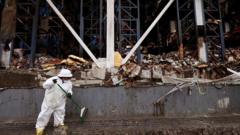
On June 17, a large cold-storage warehouse in Los Angeles’ Boyle Heights neighborhood was engulfed in a fire that destroyed millions of pounds of stored food, including beef, pork, poultry, and seafood. The aftermath has left the community struggling with a pervasive, unbearable stench and a surge in pests such as flies and rats. Despite ongoing cleanup efforts, residents and city officials express frustration over the pace and transparency of the response. This article explores the complexities of managing such a large-scale environmental hazard, the impacts on local businesses and residents, and the measures being taken to restore safety and normalcy to the area.
Boyle Heights, a mixed-use area with warehouses and residential homes, has been deeply affected by the fire’s consequences. The warehouse stored approximately 85 million pounds (39 million kilograms) of perishable food items, which began decomposing rapidly after the fire. Residents describe the smell as overwhelmingly foul, with some comparing it to the odor of a dead body. This intense stench has driven away customers from local businesses, including Brew Sting, a coffee stand that typically enjoys steady patronage but has seen a significant decline since the fire.
The presence of swarms of flies—ranging in color from black to green and blue—has compounded the problem. These insects are not only a nuisance but also a potential health hazard. A city-commissioned inspection highlighted the risk of flies breeding in the warm, decaying waste, which could lead to infections in people and animals, especially those with open wounds. Additionally, residents have reported sightings of large rats, further raising concerns about public health and sanitation.
The company that operated the warehouse, Lineage, has been leading the cleanup operation. As of early August, they reported removing about 80% of the food waste, up from 60% at the end of July. The cleanup is a highly complex and costly process, with estimates ranging between $80 million and $100 million. Workers in protective gear have been dismantling damaged parts of the structure, clearing debris, and removing rotting food around the clock.
Despite these efforts, city officials and residents argue that the response has been inadequate and slow. Los Angeles Mayor Karen Bass has publicly criticized Lineage for insufficient transparency and delayed communication regarding the cleanup progress and environmental monitoring. The city has issued public health and safety violation notices and imposed daily fines on the company for unsanitary conditions. Moreover, the mayor has set a firm deadline of August 13 for the completion of the bulk food waste removal.
The cleanup also involves addressing the environmental hazards posed by the decaying food and pest infestations. The city has mobilized resources including mobile health clinics and distributed thousands of air purifiers to affected residents. However, the persistent odor and pest problems indicate that the community’s recovery will take time.
Local residents and business owners have voiced their frustration over the ongoing situation. Many feel that the city’s response has lacked transparency and sufficient support. For small business owners like Alexis Sicairos, who runs the Brew Sting coffee stand, the economic impact has been significant. After closing for two weeks due to the fire, the stand reopened but continues to suffer from reduced customer traffic, partly due to the unpleasant smell and the presence of flies.
Community members have also criticized the city’s pest control measures, noting that traps placed along sidewalks are inadequate for the large rats seen in the area. The persistent presence of pests not only affects quality of life but also raises concerns about disease transmission.
Mayor Karen Bass has acknowledged these frustrations and emphasized her commitment to listening to residents and ensuring their voices guide the city’s response. She has directed city departments to collaborate with local, state, federal, nonprofit, and community partners to provide immediate support and long-term solutions.
In response to the situation, the county’s public health department has taken regulatory actions against Lineage, issuing fines for maintaining unsanitary and nuisance conditions. The mayor has also ordered a halt on plans to rebuild the warehouse until the health and safety of the community can be assured.
This incident highlights the challenges of managing large-scale food storage facilities in urban settings, particularly when disasters occur. It underscores the need for robust emergency response plans, transparent communication with affected communities, and stringent oversight of cleanup operations to mitigate environmental and public health risks.
The ongoing cleanup and monitoring efforts will likely serve as a case study for future disaster management strategies in similar urban industrial contexts.
The aftermath of the Los Angeles warehouse fire presents a multifaceted challenge involving environmental hazards, public health risks, and community disruption. While significant progress has been made in removing the vast quantities of rotting food, the persistent odor and pest problems continue to affect the daily lives of Boyle Heights residents and businesses. The situation highlights the critical need for coordinated, transparent, and timely responses to urban industrial disasters to protect both communities and the environment. As cleanup efforts continue toward the August deadline, the lessons learned here will be vital for improving future disaster preparedness and response strategies in similar urban settings.
Originally reported by bbc.co.uk. Adapted for our readers with AI assistance.
Keep reading
News
Recall that Poland’s Minister Sikorski’s core claim is partially supported by the numbers, but the framing “quite quickly” and “without the U.S.” does not…
News
By Engr. Tamunofiniarisa BrownReading Time: 6 Minutes The conflict between Russia and Ukraine is often framed in the media as a simple battle between…
World News
Following a tragic crash on the A66 near Middlesbrough that killed two police officers and five young men, Cleveland Police have arrested three more…
TAMFIS NIG LTD
Electrical and instrumentation engineering, bid preparation and consulting, IT and software.