
News
RUSSIA versus NATO and BRICS vs. NATO Military SWOT
Recall that Poland’s Minister Sikorski’s core claim is partially supported by the numbers, but the framing “quite quickly” and “without the U.S.” does not…
TAMFIS NIG LTDRC 8067447CAC ACTIVEFinima, Bonny Island, Rivers State

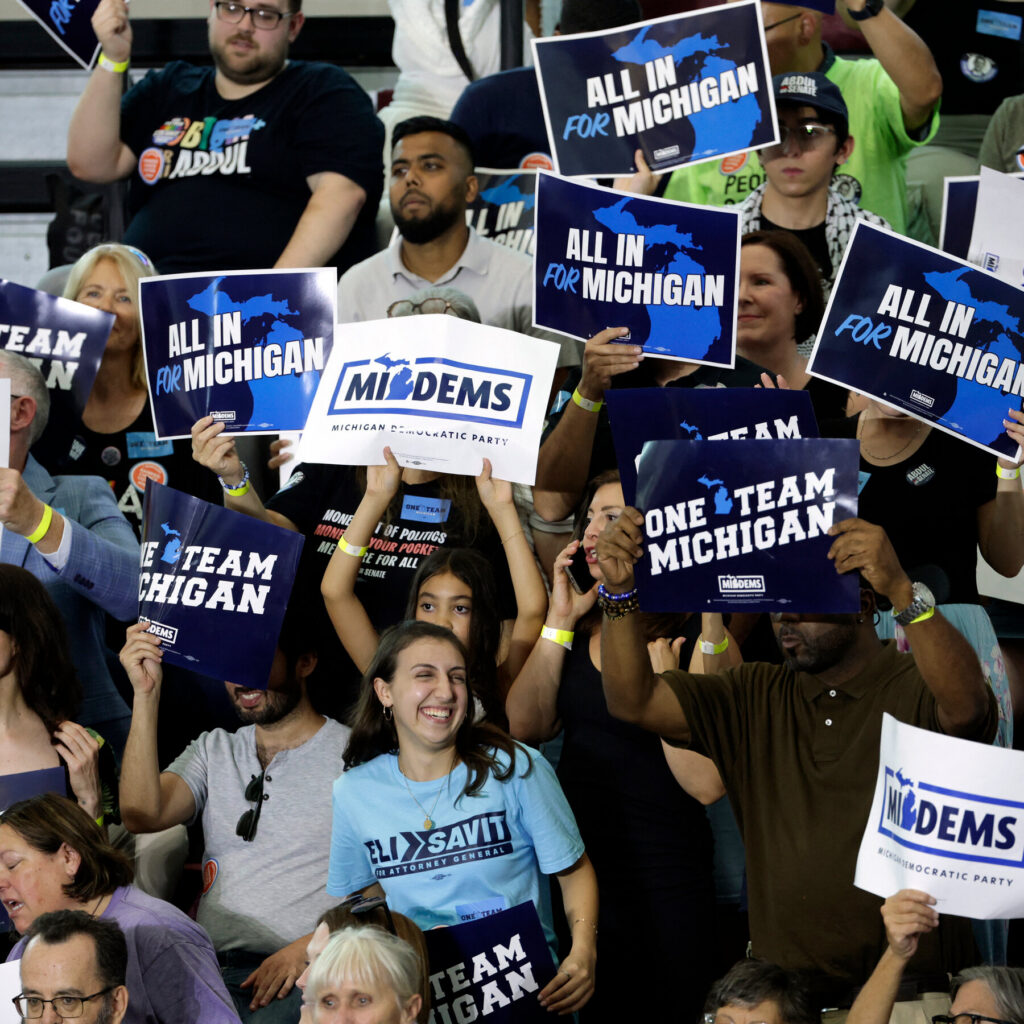
The recent Senate primary in Michigan exposed deep divisions among Democratic voters and candidates, culminating in a fiercely contested race that left the party fractured. Now, as the general election approaches, Michigan Democrats face the critical task of bridging internal rifts and rallying support behind their nominee, Dr. Abdul El-Sayed. This article explores the dynamics of the primary, the efforts toward party unity, and the challenges that remain as Democrats prepare for the next electoral phase.
Michigan’s Senate primary was marked by intense competition and sharp exchanges among candidates, reflecting broader ideological and strategic divides within the Democratic Party. The race drew significant attention due to the high stakes involved in securing a Senate seat in a politically pivotal state that often swings between parties.
Pete Buttigieg, a prominent figure in the Democratic Party, described the primary as “spirited” during a recent unity rally, a diplomatic choice of words that underscored the underlying tensions. His remarks came as part of efforts to heal wounds and emphasize the importance of coming together despite the fierce competition.
Dr. Abdul El-Sayed emerged as the nominee after navigating a challenging field of contenders, each representing distinct constituencies and policy priorities. His victory, while decisive, did not immediately heal the divisions exposed during the primary season, which highlighted contrasting visions for the party’s future direction both in Michigan and nationally.
With the primary concluded, the Michigan Democratic Party is now focused on consolidating support behind Dr. El-Sayed. Party leaders recognize that unity is essential to mounting a successful campaign against the Republican opponent in the general election, especially given Michigan’s status as a critical battleground state.
Efforts to promote cohesion have included public endorsements from former rivals, joint appearances at rallies, and messaging aimed at emphasizing shared goals rather than past disagreements. These initiatives seek to reassure voters and activists that the party is committed to working together despite earlier conflicts, aiming to present a united front that can effectively mobilize the electorate.
The urgency of this unity drive is heightened by the narrow margins that often decide elections in Michigan. Democrats are acutely aware that any lingering factionalism could jeopardize their chances of flipping or retaining the Senate seat, making the task of building solidarity a top priority.
Moreover, party leaders are emphasizing the importance of a cohesive campaign strategy that leverages Dr. El-Sayed’s strengths while addressing concerns raised during the primary. This includes aligning messaging on key issues such as healthcare, economic equity, and climate change to resonate broadly with Michigan voters.
Despite public displays of solidarity, some tensions remain beneath the surface. Differences in policy emphasis, campaign style, and personal rivalries have not fully dissipated, posing potential obstacles to a fully unified front as the general election approaches.
Some party members and supporters who backed other candidates during the primary have expressed reservations about rallying behind Dr. El-Sayed. These reservations stem from ideological differences as well as concerns about campaign strategy and messaging, reflecting the diverse perspectives within the party’s base.
Moreover, the primary’s intensity has left emotional scars that require time and deliberate effort to heal. Party leaders must balance the need for swift unity with the reality that reconciliation is a process rather than an immediate outcome, requiring ongoing dialogue and trust-building.
Additionally, the challenge of integrating different campaign infrastructures and volunteer networks remains. Coordinating these resources effectively is critical to maximizing outreach and voter mobilization in the months ahead.
To overcome these challenges, Michigan Democrats are employing several strategies aimed at fostering lasting cohesion. These include inclusive decision-making processes that give voice to diverse party factions and grassroots activists, ensuring that all perspectives are considered in shaping the campaign’s direction.
Engagement with local communities and stakeholders is also prioritized to rebuild trust and enthusiasm across the party’s base. By focusing on common policy goals such as healthcare access, economic opportunity, and climate action, Democrats hope to create a unifying agenda that resonates broadly and motivates voter turnout.
Communication efforts emphasize respectful dialogue and mutual respect among party members, encouraging a culture that values diverse perspectives while maintaining collective purpose. This approach is designed to strengthen internal bonds and present a coherent message to the electorate.
Furthermore, party leaders are facilitating forums and listening sessions to address concerns and foster understanding among different groups within the party. These efforts aim to transform past divisions into opportunities for collaboration and innovation in campaign strategy.
The outcome of these unity efforts will significantly impact the Michigan Senate race. A cohesive Democratic Party stands a better chance of mobilizing voters, fundraising effectively, and countering opposition attacks, all critical factors in a competitive electoral environment.
Beyond Michigan, the party’s ability to manage internal divisions after a contentious primary could serve as a model for other states facing similar challenges. The national Democratic Party is closely watching how Michigan navigates this critical post-primary phase, as lessons learned here may inform strategies elsewhere.
Ultimately, the success or failure of these efforts will influence not only the immediate electoral prospects but also the broader health and direction of the Democratic Party as it seeks to maintain relevance and effectiveness in a polarized political landscape.
The Michigan experience underscores the delicate balance political parties must strike between embracing diverse viewpoints and maintaining a unified front to achieve electoral success.
The Michigan Democratic Party’s journey from a fractious primary to a united front highlights the complexities of contemporary political contests. While public efforts to rally behind Dr. Abdul El-Sayed demonstrate a commitment to party cohesion, underlying tensions remind us that unity is an ongoing process rather than a fixed state. As the general election draws near, Michigan Democrats must continue to engage constructively with their differences and focus on common objectives to maximize their electoral prospects. Their experience offers valuable insights into how political parties can navigate internal divisions in pursuit of shared success.
Originally reported by nytimes.com. Adapted for our readers with AI assistance.
Keep reading
News
Recall that Poland’s Minister Sikorski’s core claim is partially supported by the numbers, but the framing “quite quickly” and “without the U.S.” does not…
Politics
In August 2025, Zespri, the world’s largest marketer of kiwifruit, announced that the European Commission had approved what it described as the first health…
News
By Engr. Tamunofiniarisa BrownReading Time: 6 Minutes The conflict between Russia and Ukraine is often framed in the media as a simple battle between…
TAMFIS NIG LTD
Electrical and instrumentation engineering, bid preparation and consulting, IT and software.