
Politics
Science vs politics: Kiwi’s long road to EU health-claim approval
In August 2025, Zespri, the world’s largest marketer of kiwifruit, announced that the European Commission had approved what it described as the first health…
TAMFIS NIG LTDRC 8067447CAC ACTIVEFinima, Bonny Island, Rivers State
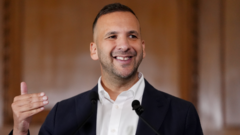
This summer, the United Kingdom has experienced unprecedented heatwaves and drought conditions, triggering widespread concern about public health, water security, and food supply. The extreme weather has brought to the forefront urgent debates about climate policy and government preparedness. Zack Polanski, leader of the Green Party of England and Wales, has sharply criticized the Labour government, led by Prime Minister Andy Burnham, for what he describes as a “dereliction of duty” in addressing these escalating threats. The ensuing political exchange reveals deep divisions over the best strategies to mitigate climate impacts and safeguard the public.
The UK has faced an exceptionally dry and hot summer, with temperatures reaching record highs across the country. These conditions have intensified droughts, putting significant pressure on water supplies and raising alarms about the sustainability of food production. Farmers have warned that prolonged dry spells could lead to shortages of some foods, compounding concerns about national food security.
In addition to drought, the UK and other parts of Europe have witnessed a series of wildfires, some described as “apocalyptic” by observers. These fires underscore the growing risks posed by climate change and extreme weather events, which experts warn are becoming the new normal. The combination of heat and dryness not only threatens ecosystems but also strains emergency services and public health infrastructure.
Zack Polanski has publicly accused the Labour government of ignoring the severity of the climate crisis and failing to take necessary emergency measures. Speaking in central London, Polanski emphasized that the heatwaves and associated threats represent the biggest danger to the UK since World War II, stressing the urgency for immediate action to protect public health and food supplies.
Among Polanski’s proposed measures are the establishment of publicly accessible “cool spaces” in every local area, including schools, hospitals, and care homes, to help vulnerable populations cope with extreme heat. He also called for financial support to enable households to make their homes more heatproof, reducing health risks during heatwaves.
Polanski further urged Prime Minister Burnham to convene an emergency Cobra meeting—a high-level government crisis response session—which had not yet occurred despite the escalating climate threats. He described the government’s inaction as an “astonishing dereliction of duty” and warned that without urgent intervention, the impact on the UK’s population could be “unimaginably grave.”
The Green Party leader also criticized ongoing oil and gas exploration, demanding that Burnham’s government block new drilling licenses and halt developments like the Rosebank and Jackdaw oil and gas fields in Scotland. He framed these actions as essential to curbing the UK’s carbon emissions and combating climate change.
In response to the wildfire risks, Polanski proposed a new national strategy that includes deploying firefighting helicopters where necessary and enhancing preventive measures to reduce the likelihood and severity of blazes. He emphasized that wildfires this summer have highlighted the urgent need for improved emergency response capabilities.
He linked the drought crisis to water management policies, advocating for the renationalization of the water sector in England to increase investment in infrastructure such as new reservoirs. Polanski argued that public ownership would enable more effective long-term planning and resource allocation, helping to mitigate future droughts and water shortages. This approach, he suggested, would better safeguard water security amid increasingly frequent dry spells.
Labour officials responded by pointing out the Green Party’s opposition to certain local projects that could alleviate water and energy challenges. They cited instances where Green councillors had called for inquiries into planned reservoirs and objected to the scale of solar farm developments, suggesting that such resistance hampers progress.
A Labour spokesperson urged the Greens to align their rhetoric with practical support for infrastructure upgrades, emphasizing that the government is committed to delivering vital improvements despite political disagreements. They argued that opposing projects designed to increase water storage and renewable energy capacity undermines the collective effort to tackle climate change.
Prime Minister Burnham has expressed interest in increasing public control over the water sector but has stopped short of full renationalization. He proposed a model inspired by Greater Manchester’s bus network, where private companies operate under local government franchises that regulate fares, routes, and timetables. However, details on how this model would translate to water management remain unclear. This approach aims to balance public oversight with private sector efficiency but requires further elaboration to gain wider support.
The political debate over heatwave responses and climate policies reflects a broader global challenge: adapting to more frequent and severe weather extremes. Governments worldwide are grappling with how to balance immediate public safety needs with long-term environmental sustainability.
In the UK, the summer’s extreme heat has accelerated conversations about infrastructure resilience, emergency preparedness, and energy transition. Discussions about publicly accessible cooling centers, water management reforms, and renewable energy projects highlight the multifaceted nature of climate adaptation.
The tensions between political parties underscore the complexity of implementing effective climate policies, where local concerns, economic interests, and environmental imperatives intersect. As climate change continues to reshape environmental realities, the UK’s political discourse and policy decisions in the coming months will be pivotal in determining how well the country adapts to these new challenges.
The UK’s experience this summer with extreme heat and drought has exposed critical vulnerabilities in infrastructure and public safety systems. While political leaders agree on the seriousness of the climate threat, their differing approaches highlight the challenges of crafting effective and unified responses. Immediate measures such as accessible cooling spaces and wildfire prevention strategies are essential to protect vulnerable populations. At the same time, long-term reforms in energy and water management require careful negotiation and cooperation across parties. As climate change continues to reshape environmental realities, the UK’s political discourse and policy decisions in the coming months will be pivotal in determining how well the country adapts to these new challenges.
Source: Burnham failing public over heat threats, says Green leader via www.bbc.co.uk.
This article was curated with AI assistance and reviewed according to Tamfis editorial settings.
Keep reading
Politics
In August 2025, Zespri, the world’s largest marketer of kiwifruit, announced that the European Commission had approved what it described as the first health…
News
By Engr. Tamunofiniarisa BrownReading Time: 6 Minutes The conflict between Russia and Ukraine is often framed in the media as a simple battle between…
Politics
Twenty-five years after the September 11 attacks, the family of Marine Travis Fuller reflects on his death in the Iraq War, grappling with the…
TAMFIS NIG LTD
Electrical and instrumentation engineering, bid preparation and consulting, IT and software.