
On a summer morning in early August 2026, a boat carrying migrants attempting to cross the English Channel caught fire, leading to a large-scale rescue operation involving French and British authorities. More than 170 people were saved from what could have been a fatal incident, but the event highlights the persistent dangers faced by migrants and the complex political and humanitarian issues surrounding Channel crossings. This article examines the details of the rescue, the broader context of migration across the Channel, and the responses from governments and experts.
The Incident: Fire on a Migrant Boat in the Channel
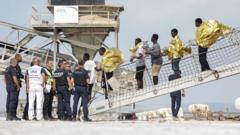
On Tuesday morning, a migrant boat attempting to cross from France to the UK experienced an engine fire, causing rapid deterioration of the vessel's condition. Initially, French maritime authorities reported rescuing 157 migrants, but the number was later revised to 173. The migrants were taken to Boulogne-sur-Mer in France, with 11 individuals treated for minor injuries.
The boat had departed from France the previous night. French authorities noted that earlier in the crossing, five people had required rescue, but most migrants refused assistance from French patrol boats, determined to reach the UK. The French maritime prefecture explained that due to the fragile nature of the small boats used for crossings, they limited intervention unless there was an extreme emergency.
The fire prompted a joint rescue operation involving French and British vessels, including the RNLI Eastbourne lifeboat and UK Border Force ships. The operation deployed 40 firefighters, 13 police officers, seven interpreters, and medical personnel to assist the migrants.
The Human and Political Dimensions of Channel Crossings
The incident is a stark reminder of the dangers migrants face when attempting to cross the Channel in small, often overcrowded boats. Experts note that the average number of people per boat has more than doubled since 2021, reaching an average of 67 individuals per crossing in the past year, which exacerbates safety risks.
Between January and early August 2026, over 14,500 people crossed the Channel by small boat, a 43% decrease compared to the same period in 2025. Despite the decline, small boat crossings remain the most common method of illegal entry into the UK since 2020 and accounted for 42% of asylum applications between April 2025 and March 2026.
The majority of migrants arriving via small boats claim asylum upon arrival, which under international law allows them to stay in the UK while their applications are processed. Among these migrants, people from Eritrea represent the largest group, accounting for 18% of arrivals in the latest reported period.
The UK government has pledged to tackle the criminal gangs facilitating these dangerous crossings. Border Security Minister Anna Turley described the incident as evidence of the perilous nature of these journeys and the ruthlessness of the gangs involved.
Government Responses and International Cooperation
The UK and France have intensified cooperation to address the issue of Channel crossings. In April 2026, the two countries agreed on a £662 million deal aimed at preventing illegal migration via small boats. The agreement includes deploying riot-trained police to French beaches, enhancing surveillance with drones and helicopters, and joint efforts to disrupt people-smuggling networks.
The UK government has also increased enforcement personnel on both sides of the Channel and emphasized the need for creating safe and legal routes for asylum seekers. Prime Minister Burnham, who took office recently, pledged a relentless approach to reducing crossings while acknowledging the necessity of a system that offers safe alternatives.
Despite these efforts, political debate continues. Some opposition figures criticize French authorities for perceived inaction during crossings, while others call for more robust measures such as deploying the navy to deter migrants. The issue remains a contentious topic in UK politics, especially amid rising migration pressures in Europe.
Risks and Realities of Small Boat Crossings
Crossing the Channel in small boats is inherently dangerous. The vessels are often overcrowded and structurally fragile, increasing the risk of accidents, capsizing, and fatalities. The United Nations reported at least 84 deaths during Channel crossings in 2024 alone.
Migrants frequently refuse assistance from authorities during crossings, motivated by the desire to reach the UK. This reluctance complicates rescue operations and increases the likelihood of emergencies escalating before intervention.
The recent fire incident illustrates how quickly conditions can deteriorate on these boats. Rescue teams must balance the urgency of intervention with the migrants' determination to continue their journey, often resulting in complex and high-risk operations.
Broader Migration Trends and Challenges
While small boat crossings receive significant attention, they represent only a fraction of the total immigration into the UK. Other methods include illegal entry via vehicles, ferries, and airports, with over 4,500 people detected using these routes between April 2025 and March 2026.
Additionally, some migrants arrive legally on visas and subsequently overstay, though the total number of such cases is unknown. The UK faces a multifaceted challenge in managing migration flows, balancing border security with humanitarian obligations.
The government continues to face pressure to reduce the backlog of asylum applications and improve cooperation with European partners. Political parties differ on the best approach, with some advocating for stricter enforcement and others emphasizing the need for comprehensive immigration reform.
What this means
The recent fire aboard a migrant boat in the English Channel underscores the grave risks faced by individuals attempting perilous crossings in search of safety and better opportunities. While joint efforts between the UK and France have made some progress in curbing these dangerous journeys, the incident reveals ongoing vulnerabilities and the complex humanitarian and political challenges involved. Addressing these issues requires a balanced approach that combines robust enforcement against criminal smuggling networks with the development of safe, legal pathways for asylum seekers. As migration pressures persist, continued cooperation and comprehensive policy solutions will be essential to safeguard lives and uphold international obligations.
Source: More than 170 migrants rescued after boat catches fire in Channel via www.bbc.co.uk.
This article was curated with AI assistance and reviewed according to Tamfis editorial settings.