News
RUSSIA versus NATO and BRICS vs. NATO Military SWOT
Recall that Poland’s Minister Sikorski’s core claim is partially supported by the numbers, but the framing “quite quickly” and “without the U.S.” does not…
TAMFIS NIG LTDRC 8067447CAC ACTIVEFinima, Bonny Island, Rivers State

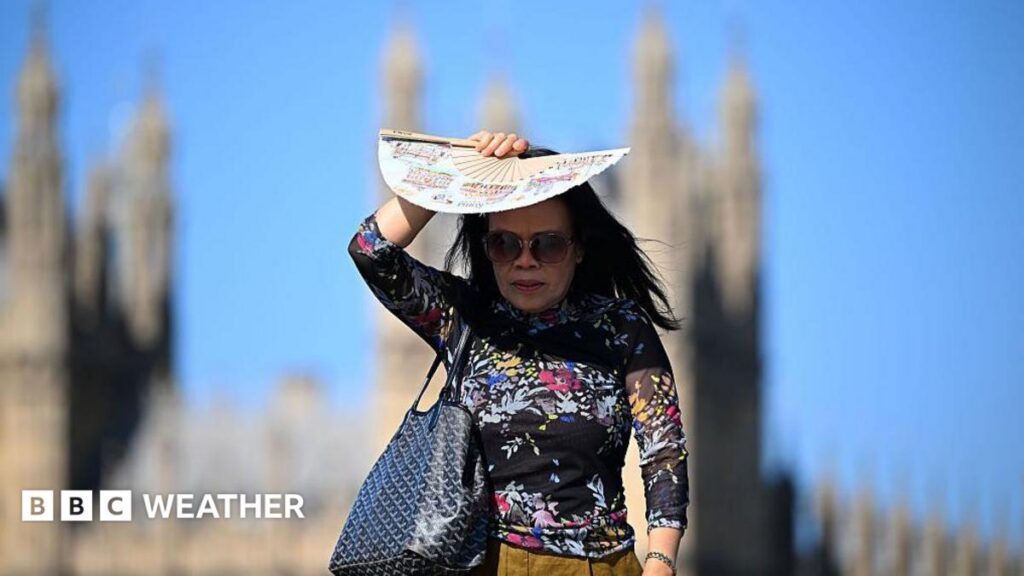
After weeks of soaring temperatures and prolonged dry spells, parts of the United Kingdom are set to experience cooler conditions and scattered showers as a cold front moves in. However, this relief will be unevenly distributed. More than half of England and parts of Wales remain under official drought status, with little to no rain forecast for these parched areas in the immediate future. This article examines the recent heatwave's impact, the current drought situation, and what the coming days hold for water supplies and weather across the UK.
The UK experienced a significant heatwave that peaked on Wednesday, with temperatures reaching 35.2°C in Writtle, Essex, marking the hottest day in over two weeks. This peak matched a similar high recorded in Derbyshire earlier in July but fell short of the record-breaking 38.0°C set in Norfolk on June 26, which remains the highest temperature recorded in the UK this year.
Despite the intense heat, the recent heatwave was relatively brief. For a period to be classified as a heatwave, temperatures must exceed local thresholds for three consecutive days. While Tuesday and Wednesday met this criterion in many areas, Monday’s temperatures were below the threshold across much of the Midlands, East Anglia, and central southern England. This limited the heatwave’s overall extent.
As the cold front approaches, temperatures are expected to dip slightly, preventing many regions from maintaining heatwave conditions. However, East Anglia and parts of south-east England will likely experience a third consecutive day of elevated temperatures, with highs reaching into the high 20s or low 30s Celsius.
The prolonged hot and dry weather has led to official drought declarations covering more than half of England, including central, eastern, and southern regions. This announcement by the Environment Agency signals growing concern over water scarcity and the potential for further restrictions on water use.
The drought’s effects are already visible: river flows are unusually low, harvests are occurring earlier than usual, and the risk of wildfires remains high. Over 20 million people in England are currently subject to hosepipe bans, reflecting the severity of water shortages.
In Wales, drought conditions have been declared in North Wales and the Upper Severn river basin. Natural Resources Wales monitors these areas closely, emphasizing the ongoing challenges posed by the dry spell.
Scotland, which does not formally declare droughts but monitors water scarcity levels, reports that some eastern regions are experiencing 'significant scarcity,' the most severe category. Northern Ireland, by contrast, is not currently facing drought conditions.
The arrival of a cold front on Thursday is expected to bring cooler temperatures and some rain to parts of the UK, particularly the north-west, which has already received above-average rainfall this July. For example, Aultbea in the Scottish Highlands has recorded about one-third more rain than the typical July average.
However, the cold front’s impact will be limited in the driest parts of the country. Areas such as Wisley in Surrey, which has endured 42 consecutive dry days, are unlikely to see any meaningful precipitation. The front is expected to weaken before reaching these regions, leaving drought conditions largely unrelieved.
Forecast models suggest that while next week may bring more rain, the north-west of the UK will again be the most likely beneficiary. Some models indicate possible rainfall in southern areas, but these predictions remain uncertain, and many models forecast little to no rain for the driest parts of England and Wales.
This summer has already shattered several temperature records. The UK has experienced 10 days with temperatures exceeding 34°C, surpassing the previous record of seven days set in 1976 and matched in 2020. Additionally, there have been 31 days with temperatures above 30°C, close to the record of 34 days set in 1995 and well above the 24 days recorded in 1976.
These prolonged periods of heat have strained infrastructure and public services, causing disruptions in transport and education, and increasing demand on emergency services.
The ongoing drought and heat have also had ecological impacts. For example, bumblebee populations are struggling under the intense heat, highlighting broader environmental stresses that accompany extreme weather events.
While the UK is set to experience a welcome respite from recent heat with cooler temperatures and some rain, the relief will be unevenly felt. The most drought-affected regions in England and Wales are unlikely to receive significant rainfall in the coming days, prolonging water shortages and the risks associated with drought. Continued monitoring and water conservation efforts remain crucial as the summer progresses. The recent extreme heat underscores the challenges posed by climate variability and the importance of preparedness for future weather extremes.
Editor’s note: The following is AI-generated commentary and context on this topic, not original reporting.
Reservoir levels, crop yields, and river flows are among the metrics officials watch most closely when trying to gauge how a dry spell like this will affect a region months down the line.
Meteorologists have increasingly linked the frequency and intensity of heat events of this kind to broader shifts in atmospheric patterns, though attributing any single episode definitively to long-term climate trends requires careful statistical analysis.
Public information campaigns during heat events typically emphasise checking on elderly neighbours and relatives, reflecting how much of the health burden from extreme heat falls on those living alone.
Wildlife and freshwater ecosystems can also suffer during prolonged heat and drought, with reduced river flows and warmer water temperatures putting additional stress on already vulnerable species.
Local businesses reliant on outdoor footfall, from agriculture to hospitality, often report measurable revenue swings tied directly to extended heat and dry spells of the kind described here.
Vulnerable groups — including the elderly, young children, and people with pre-existing health conditions — face disproportionate risk during episodes like this, which is why public health alerts tend to focus heavily on hydration and reduced outdoor activity.
Recovery from drought conditions similar to those at issue here depends heavily on the timing and volume of subsequent rainfall, with too much arriving too quickly sometimes causing its own set of flooding problems.
Extended stretches of extreme heat like those described in “Cooler Weather Arrives in Parts of the UK, But Drought-Stricken Areas Remain Dry” put pressure on public health systems, agriculture, and water supplies simultaneously, forcing authorities to juggle several competing priorities during a single sustained event.
Utility providers and local councils facing conditions like this often introduce temporary measures — hosepipe bans, adjusted work hours for outdoor labour, or expanded cooling centres — to reduce strain during the worst of the heat.
Originally reported by bbc.co.uk. Adapted for our readers with AI assistance.
Keep reading
News
Recall that Poland’s Minister Sikorski’s core claim is partially supported by the numbers, but the framing “quite quickly” and “without the U.S.” does not…
News
Thousands of young protesters in Delhi continue to demand education reforms and the resignation of Education Minister Dharmendra Pradhan after a police crackdown. The…
News
Facing a looming financial collapse, Thames Water’s main lenders have offered the UK government a ‘golden share’ and increased local authority involvement to avoid…
TAMFIS NIG LTD
Electrical and instrumentation engineering, bid preparation and consulting, IT and software.