News
RUSSIA versus NATO and BRICS vs. NATO Military SWOT
Recall that Poland’s Minister Sikorski’s core claim is partially supported by the numbers, but the framing “quite quickly” and “without the U.S.” does not…
TAMFIS NIG LTDRC 8067447CAC ACTIVEFinima, Bonny Island, Rivers State

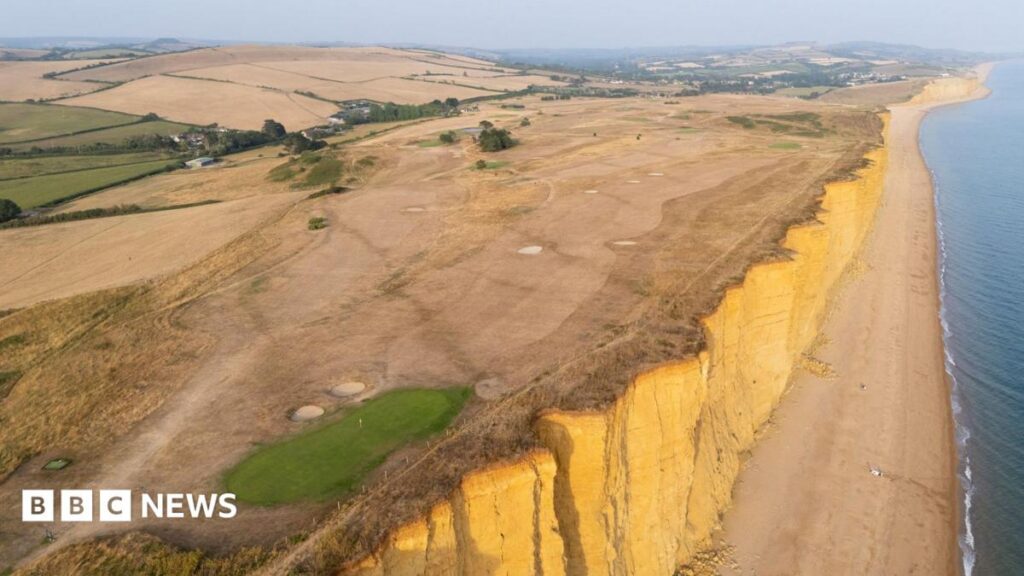
England is currently grappling with an extensive drought affecting over 50% of its land area, as the Environment Agency (EA) confirms that seven regions have entered official drought status. This declaration comes after a July marked by exceptionally low rainfall and record-breaking temperatures, intensifying pressure on water resources and raising concerns about environmental and societal impacts. With hosepipe bans already in place for millions and the risk of wildfires escalating, this drought highlights the growing challenges posed by climate variability and the urgent need for sustainable water management.
The Environment Agency has declared drought conditions across seven English regions: East Anglia; Hertfordshire and London; Thames Valley; Hampshire and the Isle of Wight; Devon and Cornwall; the West Midlands; and Wessex, which includes Dorset, Somerset, Wiltshire, and South Gloucestershire. These areas cover large parts of central, eastern, and southern England, representing more than half of the country’s territory.
July 2026 was exceptionally dry, with rainfall reaching only 7% of the expected levels across England and a mere 1% in southern England. This severe deficit in precipitation has led to significantly reduced river flows, early agricultural harvests, and heightened wildfire risks.
The drought declaration follows two previous droughts in recent years, in 2022 and 2025, marking this as the third drought episode within five years. This frequency signals a worrying trend of increasingly recurrent water shortages.
This summer has been characterized by repeated and prolonged heatwaves, with some regions experiencing their fourth heatwave of the year. The Met Office recently verified a new June temperature record, raising the previous high from 37.7°C to 38.0°C, recorded in Lingwood, Norfolk on 26 June 2026. This surpasses the former UK June record of 35.6°C, underscoring the intensity of the current heat conditions.
Such extreme heat accelerates evaporation rates, further depleting soil moisture and water bodies. This exacerbates drought conditions, placing additional stress on water supplies and ecosystems.
The Environment Agency’s director of water, Helen Wakeham, emphasized that water is currently being used faster than it can be naturally replenished, highlighting the unsustainable demand amid these climatic extremes.
The drought has already led to tangible impacts on the environment and communities. Low river flows threaten aquatic habitats and biodiversity, while early harvests indicate stress on agricultural productivity and potential economic consequences for farmers.
Wildfire risks have escalated significantly due to dry vegetation and prolonged heat, posing dangers to both rural and urban areas. Fire services and land managers are on heightened alert to prevent and respond to outbreaks.
Millions of residents in affected regions are subject to hosepipe bans, restricting non-essential water use to conserve dwindling supplies. These restrictions reflect the severity of the situation and the need for collective action to manage water resources responsibly.
In addition to England, parts of North Wales and the Upper Severn river basin have also entered drought conditions, as reported by Natural Resources Wales. While Scotland does not officially declare drought, the Scottish Environment Protection Agency monitors water scarcity levels, with some eastern areas experiencing 'significant scarcity,' the most extreme category.
The National Drought Group, chaired by Helen Wakeham, coordinates responses across agencies to manage water resources, mitigate impacts, and communicate with the public. Their efforts include monitoring water usage, implementing restrictions, and preparing for potential worsening conditions.
Public engagement is encouraged, with authorities inviting residents in affected areas to share their experiences and contribute to a broader understanding of the drought’s effects.
Drought lacks a single universal definition but generally refers to a prolonged period of unusually dry weather that adversely affects people, nature, and the environment. The current drought declaration reflects a combination of meteorological, hydrological, and environmental criteria.
The recurrence of droughts in 2022, 2025, and now 2026 suggests a pattern of increasing frequency and intensity, likely influenced by broader climatic changes. This trend poses significant challenges for water management, agriculture, and ecosystem resilience.
Addressing these challenges requires integrated strategies that encompass water conservation, infrastructure investment, and adaptation to changing climate conditions.
England’s current drought situation underscores the growing vulnerability of water resources to extreme weather events and climate change. With over half the country affected and multiple regions facing severe restrictions, the need for sustainable water management and public cooperation has never been more urgent. While immediate measures such as hosepipe bans help alleviate pressure, long-term strategies must address the underlying causes and prepare communities for an increasingly variable climate. Monitoring, adaptation, and resilience-building will be key to safeguarding water supplies, ecosystems, and livelihoods in the years ahead.
Editor’s note: The following is AI-generated commentary and context on this topic, not original reporting.
Public information campaigns during heat events typically emphasise checking on elderly neighbours and relatives, reflecting how much of the health burden from extreme heat falls on those living alone.
Meteorologists have increasingly linked the frequency and intensity of heat events of this kind to broader shifts in atmospheric patterns, though attributing any single episode definitively to long-term climate trends requires careful statistical analysis.
Vulnerable groups — including the elderly, young children, and people with pre-existing health conditions — face disproportionate risk during episodes like this, which is why public health alerts tend to focus heavily on hydration and reduced outdoor activity.
Local businesses reliant on outdoor footfall, from agriculture to hospitality, often report measurable revenue swings tied directly to extended heat and dry spells of the kind described here.
Utility providers and local councils facing conditions like this often introduce temporary measures — hosepipe bans, adjusted work hours for outdoor labour, or expanded cooling centres — to reduce strain during the worst of the heat.
Wildlife and freshwater ecosystems can also suffer during prolonged heat and drought, with reduced river flows and warmer water temperatures putting additional stress on already vulnerable species.
Recovery from drought conditions similar to those at issue here depends heavily on the timing and volume of subsequent rainfall, with too much arriving too quickly sometimes causing its own set of flooding problems.
Reservoir levels, crop yields, and river flows are among the metrics officials watch most closely when trying to gauge how a dry spell like this will affect a region months down the line.
Extended stretches of extreme heat like those described in “Over Half of England Faces Official Drought Amid Record-Breaking Heat and Dry Conditions” put pressure on public health systems, agriculture, and water supplies simultaneously, forcing authorities to juggle several competing priorities during a single sustained event.
Originally reported by bbc.co.uk. Adapted for our readers with AI assistance.
Keep reading
News
Recall that Poland’s Minister Sikorski’s core claim is partially supported by the numbers, but the framing “quite quickly” and “without the U.S.” does not…
News
Thousands of young protesters in Delhi continue to demand education reforms and the resignation of Education Minister Dharmendra Pradhan after a police crackdown. The…
News
Facing a looming financial collapse, Thames Water’s main lenders have offered the UK government a ‘golden share’ and increased local authority involvement to avoid…
TAMFIS NIG LTD
Electrical and instrumentation engineering, bid preparation and consulting, IT and software.