Business
Nigeria’s Economic Performance: Domestic Debt Rise and Agriculture Trade Shift in Q2 2026
Nigeria's economic landscape in the second quarter of 2026 presents a mixed picture of fiscal press...
TAMFIS NIG LTDRC 8067447CAC ACTIVEFinima, Bonny Island, Rivers State

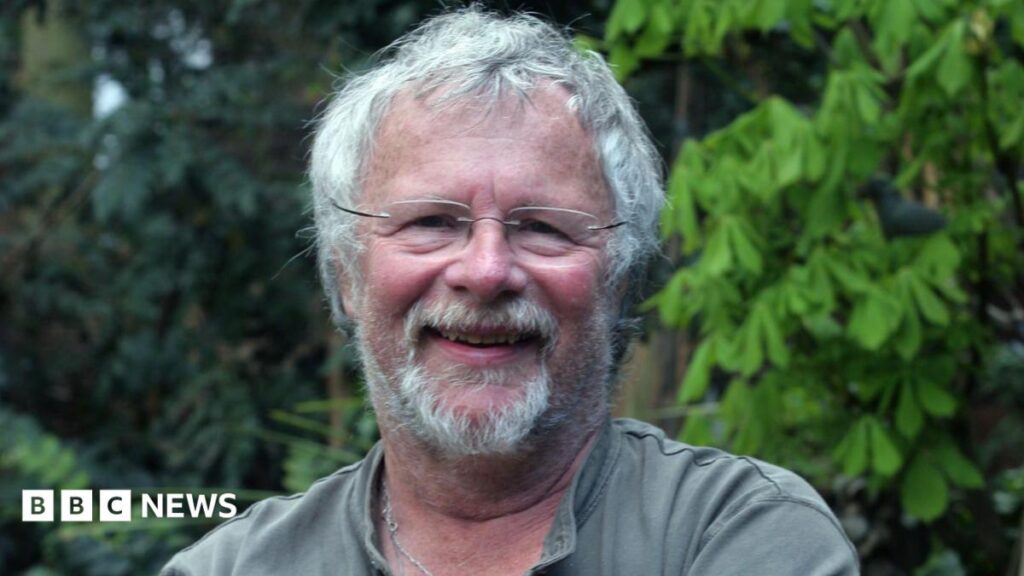
The passing of Bill Oddie at the age of 85 closes a chapter on one of Britain’s most distinctive cultural polymaths. Few public figures have managed to bridge the gap between mainstream comedy and serious environmental advocacy with such authenticity. Oddie was not merely a comedian who dabbled in birdwatching, nor a naturalist who once told jokes; he was a force of nature in both arenas, using the platform built by The Goodies to champion a lifelong obsession with the avian world. His career offers a masterclass in leveraging popular appeal for a greater cause, a lesson that resonates far beyond the entertainment industry.
Born in Rochdale and raised in Birmingham, Oddie’s trajectory shifted at Cambridge University, where he joined the Footlights. It was the early 1960s, a ferment of satirical energy that produced the likes of John Cleese, Michael Palin, and Terry Jones. Oddie cut his teeth writing for *That Was The Week That Was*, the programme that arguably invented modern British political satire. Yet his most enduring partnership formed with Tim Brooke-Taylor and Graeme Garden. Together, they became The Goodies, a trio whose blend of surrealism, slapstick, and musical pastiche dominated BBC schedules for 12 years from 1970.
Commercially, The Goodies were a powerhouse. They understood the economics of light entertainment: merchandise, chart singles, and international syndication. Oddie, often cast as the 'hairy, cynical anarchist', was the group’s primary songwriter. Tracks like 'The Funky Gibbon' and 'The Inbetweenies' cracked the UK Top 10, proving that comedy records could be genuine commercial hits rather than novelties. For today’s content creators, the lesson is clear: intellectual property extends beyond the broadcast. The Goodies built a brand ecosystem decades before the term existed.
While the cameras rolled on *The Goodies*, Oddie was simultaneously pursuing a passion that began in childhood: birdwatching. This was no casual hobby. He authored field guides, led tours, and became a respected voice in ornithological circles long before the BBC commissioned *Birding with Bill Oddie* in the late 1990s. The transition to natural history broadcasting was seamless because the authenticity was unforced. When *Springwatch* launched in 2005, Oddie was the obvious choice to anchor the live broadcasts. His improvisational wit, honed in live comedy, made the unpredictability of nature television feel like appointment viewing rather than a niche interest.
The business of conservation broadcasting changed during his tenure. *Springwatch* proved that natural history could deliver prime-time ratings without dumbing down. It created a template—live, interactive, data-driven—that broadcasters globally now emulate. Oddie’s presence validated the genre for a mainstream audience, attracting advertisers and sponsors who might otherwise have considered wildlife programming too specialist. His 2003 OBE for services to wildlife conservation was not just a personal honour; it signalled institutional recognition of the economic and social value of public engagement with nature.
Oddie’s departure from *Springwatch* in 2009 precipitated a severe mental health crisis. His subsequent candour about depression and bipolar disorder was, in its way, as radical as his comedy. At a time when public figures—particularly male entertainers of his generation—rarely discussed psychiatric illness, Oddie spoke with clinical honesty about the 'worst 12 months of my life'. This transparency contributed measurably to shifting the Overton window on mental health in the UK, predating the Heads Together campaign and the broader destigmatisation push by several years.
For employers and business leaders, Oddie’s experience underscores the cost of ignoring wellbeing in high-pressure creative environments. The BBC’s handling of his exit remains a case study in how not to manage talent transitions. Conversely, his return to public life—writing, speaking, birding—demonstrates the possibility of recovery when support structures exist. It is a narrative that HR departments and occupational health specialists would do well to study.
The tributes following Oddie’s death—from naturalist Stephen Moss, actor Samuel West, and his agent David Foster—converge on a single theme: infectious enthusiasm. It is an undervalued commodity in both media and conservation. Enthusiasm drives engagement; engagement drives funding; funding enables protection. Oddie understood this value chain intuitively. He never asked audiences to care about nature out of guilt; he invited them to share his wonder. That distinction—invitation over obligation—is the secret to sustainable audience development in any sector.
His legacy also includes a body of work that remains commercially viable. *The Goodies* box sets sell steadily; his birding guides stay in print; *Springwatch* clips populate digital platforms. For rights holders and estate managers, Oddie represents a diversified portfolio: comedy IP, natural history IP, musical IP, and a personal brand synonymous with integrity. Managing such a portfolio requires a strategy that respects the distinct audiences while cross-pollinating them—exactly what Oddie did instinctively.
Bill Oddie’s life resists easy categorisation, and that is precisely its value. He proved that a career need not be a straight line; it can be a Venn diagram where comedy, conservation, music, and advocacy overlap. For the business community, the takeaway is strategic: authenticity scales. Oddie never pivoted; he expanded. He took the audience he earned with 'The Funky Gibbon' and trusted them to follow him into a hide on a rainy Suffolk morning. They did, in millions. In an era of algorithmic niche-targeting and personal branding consultants, his example remains the gold standard: be genuinely interested, be rigorously competent, and the audience will find you. The birds, presumably, already knew.
Originally reported by bbc.co.uk. Adapted for our readers with AI assistance.
Keep reading
Business
Nigeria's economic landscape in the second quarter of 2026 presents a mixed picture of fiscal press...
Business
Liverpool manager Andoni Iraola is confronting a significant selection headache as two key forwards, Cod...
News
Health News tamfitronics [Editor’snote:[Editor’snote: This transcript was generated using both transcription ...
TAMFIS NIG LTD
Electrical and instrumentation engineering, bid preparation and consulting, IT and software.