
Business
Nigeria’s Economic Performance: Domestic Debt Rise and Agriculture Trade Shift in Q2 2026
Nigeria's economic landscape in the second quarter of 2026 presents a mixed picture of fiscal press...
TAMFIS NIG LTDRC 8067447CAC ACTIVEFinima, Bonny Island, Rivers State

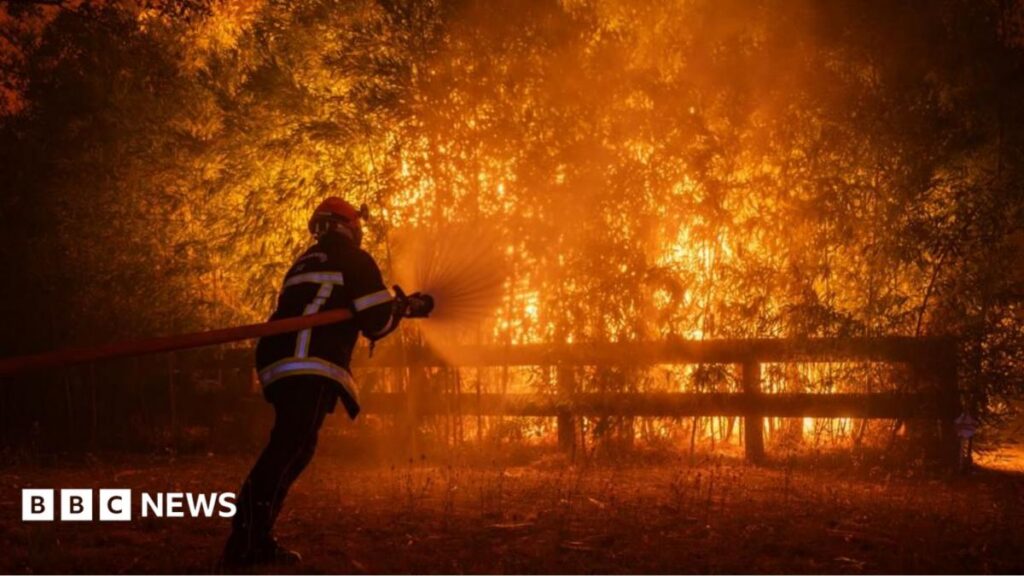
Europe is facing one of its most severe wildfire outbreaks in recent memory, with France and Spain bearing the brunt of a climate-driven emergency that is rapidly evolving into a significant business and humanitarian concern. Soaring temperatures exceeding 40°C, prolonged drought conditions, and strong winds have created ideal conditions for fires to ignite and spread with alarming speed. In France, wildfires near Bordeaux have already consumed tens of thousands of hectares, prompting emergency cabinet meetings led by President Emmanuel Macron. Simultaneously, Spain is battling multiple fronts, including what officials describe as the largest wildfire in recent Spanish history near Ávila, forcing the evacuation of over 90,000 people. These events are not isolated environmental incidents; they represent a growing pattern of climate-related disruption with tangible implications for logistics, agricultural output, energy infrastructure, and insurance markets. For businesses operating in or trading with these regions, the crisis serves as a stark reminder that climate resilience is no longer a long-term consideration but an immediate operational priority.
The Gironde region surrounding Bordeaux is not only a renowned wine-producing area but also a critical hub for logistics and light manufacturing in southwestern France. The ongoing wildfires, which have burned approximately 42,000 hectares in Gironde alone and nearly 98,000 hectares nationally since the start of the year, are threatening vineyards, food processing facilities, and transport corridors essential to regional supply chains. Smoke reduced visibility has intermittently disrupted rail and road networks, while concerns over air quality have led to temporary workforce displacements. Although Bordeaux city itself remains outside the immediate evacuation zone, with a population of 850,000 currently not under evacuation orders according to Mayor Thomas Cazenave, the proximity of the fire front—just 15 kilometres from the city—has raised contingency planning alerts among local businesses. The emergence of a pyrocumulonimbus cloud, a rare fire-induced thunderstorm, has further complicated firefighting efforts by generating unpredictable winds and lightning that can spark new blazes, making containment strategies increasingly difficult to forecast and execute.
In Spain, the wildfire situation is equally dire, with multiple large-scale fires stretching emergency resources thin. Near Valencia, around 15,000 residents have been evacuated as flames encroach on residential and agricultural zones. More critically, the blaze in Ávila province—described by officials as the largest in recent Spanish history—has led to the evacuation of over 90,000 people and is affecting areas in proximity to key transport arteries linking Madrid to southern Spain. While prevailing winds have pushed the fire southward, away from the capital, the shifting front has necessitated the evacuation of numerous villages along its path, creating uncertainty for businesses reliant on rural labor and local supply networks. The tourism sector, already sensitive to perceptions of safety, is facing potential cancellations and booking hesitancy, particularly in rural destinations popular with domestic and international visitors. Furthermore, the strain on electrical grids from increased cooling demand during the heatwave, combined with risks to transmission infrastructure from fire proximity, is adding pressure on energy providers to maintain service continuity.
Both national governments have responded with high-level emergency coordination. President Macron convened a crisis cabinet meeting to address the Gironde blaze, pledging state support for as long as needed and emphasizing rebuilding efforts. Spanish Prime Minister Pedro Sánchez visited affected areas in Ávila, calling for a 'major public pact' to confront the climate emergency, while King Felipe VI toured emergency shelters to highlight the environmental toll. Interior ministers from both nations are actively coordinating firefighting assets, including aerial support and ground crews, and have scheduled site visits to assess evolving conditions. For businesses, this level of governmental engagement underscores the importance of aligning continuity plans with public emergency frameworks. Companies should review their exposure to regions under alert, verify employee safety protocols, assess supply chain dependencies on affected zones, and ensure business interruption insurance adequately covers climate-related disruptions. The repeated emphasis by leaders on the 'climate emergency' as a root cause signals that such events are likely to recur with greater frequency, necessitating long-term adaptation rather than reactive measures.
The wildfires in France and Spain are part of a wider trend of increasing climate volatility affecting business environments worldwide. From North America to Australia, similar patterns of heat-driven fires are challenging traditional risk models. For Nigerian enterprises engaged in export-import trade with Europe, or those relying on European-sourced machinery, raw materials, or technology components, these events highlight the vulnerability of just-in-time supply chains to climate shocks. Diversification of suppliers, investment in real-time environmental monitoring, and scenario planning for extreme weather events are becoming essential components of resilient operations. Additionally, the growing frequency of pyrocumulonimbus events—where fires generate their own weather systems—demonstrates the limits of conventional forecasting, urging businesses to adopt more dynamic risk assessment tools. Insurers are already adjusting premiums and coverage terms in high-risk zones, a trend that could spread as climate attribution science advances. Ultimately, the crisis reinforces that environmental, social, and governance (ESG) considerations are increasingly intertwined with core business performance, particularly in regions on the frontlines of climate change.
The unfolding wildfire crisis in France and Spain is more than a regional emergency; it is a clear signal of the accelerating physical risks posed by climate change to economic activity and business continuity. As extreme weather events become more intense and less predictable, companies can no longer afford to treat climate resilience as a peripheral concern. Instead, proactive adaptation—through supply chain diversification, real-time environmental monitoring, robust emergency planning, and investment in climate-resilient infrastructure—must become integral to strategic decision-making. While governmental responses are vital, the private sector has a critical role to play in building systemic resilience. For markets across Africa, Europe, and beyond, the lessons from Gironde and Ávila are clear: preparing for a hotter, more volatile climate is not just responsible governance—it is essential for long-term competitiveness and sustainability.
Originally reported by bbc.co.uk. Adapted for our readers with AI assistance.
Keep reading
Business
Nigeria's economic landscape in the second quarter of 2026 presents a mixed picture of fiscal press...
Business
Liverpool manager Andoni Iraola is confronting a significant selection headache as two key forwards, Cod...
News
Health News tamfitronics [Editor’snote:[Editor’snote: This transcript was generated using both transcription ...
TAMFIS NIG LTD
Electrical and instrumentation engineering, bid preparation and consulting, IT and software.