
News
RUSSIA versus NATO and BRICS vs. NATO Military SWOT
Recall that Poland’s Minister Sikorski’s core claim is partially supported by the numbers, but the framing “quite quickly” and “without the U.S.” does not…
TAMFIS NIG LTDRC 8067447CAC ACTIVEFinima, Bonny Island, Rivers State

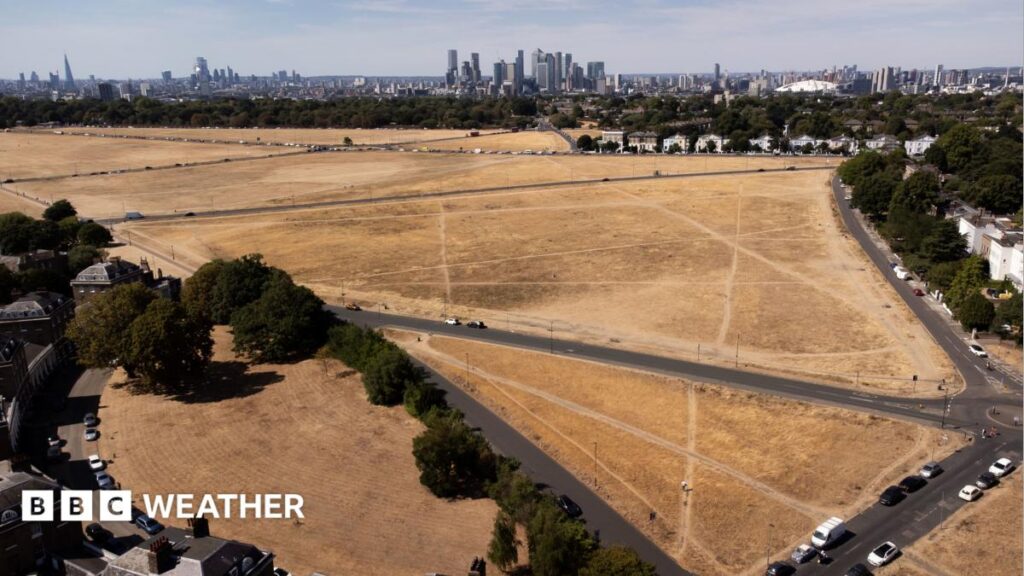
The United Kingdom has experienced an extended period of dry weather, with many regions seeing little to no rainfall since mid-June. Despite a wetter-than-average June overall, the distribution of rain has been uneven, leaving large areas, particularly in southern and central England, parched and edging towards drought conditions. This article examines the current state of rainfall and drought across the UK, the implications for water use restrictions, and the forecasted weather changes that may bring some much-needed precipitation.
While June 2026 was wetter than average for the UK as a whole, the majority of that rainfall occurred in the first half of the month. Since June 15, many parts of England have recorded less than 10 millimeters of rain, with some central southern areas receiving as little as 3 millimeters or less. Notably, Wisley in Surrey has experienced an unprecedented 36 consecutive days without any measurable rain.
Wales has also been dry since mid-June, with most areas receiving less than 25 millimeters of rain. The northeast of Wales, including Rhyl in Denbighshire, has seen particularly low rainfall, recording only 3 millimeters during this period.
In contrast, Northern Ireland and western Scotland had a very wet June, with rainfall exceeding average levels by 67% in Northern Ireland. However, July has brought drier conditions to these regions, except for the Highlands, where places like Aultbea have already reached their average July rainfall and can expect more precipitation soon.
The prolonged dry spell has led to significant concerns over water availability, especially in southern, central, and eastern England. Several water companies have implemented hosepipe bans to conserve water supplies, with Thames Water introducing restrictions as of Thursday. These bans prohibit the use of hosepipes for activities such as watering gardens, washing cars, and filling paddling pools.
The drought declarations indicate that parts of the UK are experiencing water stress severe enough to threaten supplies and ecosystems. The combination of low rainfall and high temperatures has dried out soils and reduced reservoir levels, prompting authorities to take precautionary measures to manage demand.
A notable change in weather patterns is forecast for the upcoming weekend. The high-pressure system that has dominated the UK’s weather is expected to move westward, a phenomenon known as retrogression. This shift will allow the jet stream to pass directly over the UK, steering weather fronts across the country and bringing rain.
Rainfall amounts will vary regionally. Northern Ireland, northern England, and north Wales are predicted to receive between 5 and 10 millimeters of rain, while western Scotland, particularly in highland areas, could see 10 to 20 millimeters. In contrast, the Midlands, southern, and eastern England are likely to experience lighter and more sporadic showers, with some areas potentially missing out on rain entirely.
Although the expected rainfall is relatively modest, it could effectively double the precipitation received since mid-June in some locations, providing some relief to drought-stricken gardens and landscapes.
Despite the upcoming rain, experts caution that this will not be sufficient to reverse the overall drought trend. Soil moisture levels and reservoir capacities remain low in many areas, and the risk of drought conditions spreading more widely persists.
Next week’s forecast suggests that rainfall will become more concentrated in the northwest of the UK, with the Highlands possibly experiencing heavy rain later in the week. Meanwhile, the south and east are expected to remain largely dry.
Beyond July, there is speculation about another heatwave forming in Spain and France, which could potentially impact the UK. However, it remains too early to determine whether this will materialize or affect British weather significantly.
Residents and businesses are encouraged to stay informed through reliable sources such as the BBC Weather website and app to monitor ongoing developments and water use restrictions.
The UK faces a challenging period of dry weather and increasing drought risk, particularly in southern and central England. While the anticipated rain this weekend offers some respite, it is unlikely to fully alleviate water stress or reverse drought conditions. Water conservation measures remain essential as the country navigates this precarious balance between dry spells and sporadic rainfall. Staying informed and adhering to water use restrictions will be crucial in managing resources effectively until more sustained rainfall returns.
Editor’s note: The following is AI-generated commentary and context on this topic, not original reporting.
The UK’s water supply system is more vulnerable to short-term rainfall patterns than many people realise, given that reservoir levels, groundwater reserves, and river flows can vary dramatically between regions even within the same country. A wetter-than-average month nationally can mask serious localised shortfalls, particularly in southern and eastern England, where population density is highest and demand on the water network is greatest. Water companies typically monitor a combination of reservoir stocks, rainfall totals, and soil moisture data before recommending restrictions such as hosepipe bans.
Climate scientists have pointed to an increasing frequency of these boom-and-bust rainfall patterns, in which prolonged dry spells are punctuated by intense, short-lived downpours that do less to replenish reservoirs than steady, sustained rain would. This dynamic complicates long-term water resource planning and has intensified debate over infrastructure investment, leakage reduction, and the pace at which new reservoirs and transfer schemes are being built to keep pace with a changing climate.
Originally reported by bbc.co.uk. Adapted for our readers with AI assistance.
Keep reading
News
Recall that Poland’s Minister Sikorski’s core claim is partially supported by the numbers, but the framing “quite quickly” and “without the U.S.” does not…
News
Thousands of young protesters in Delhi continue to demand education reforms and the resignation of Education Minister Dharmendra Pradhan after a police crackdown. The…
News
Facing a looming financial collapse, Thames Water’s main lenders have offered the UK government a ‘golden share’ and increased local authority involvement to avoid…
TAMFIS NIG LTD
Electrical and instrumentation engineering, bid preparation and consulting, IT and software.