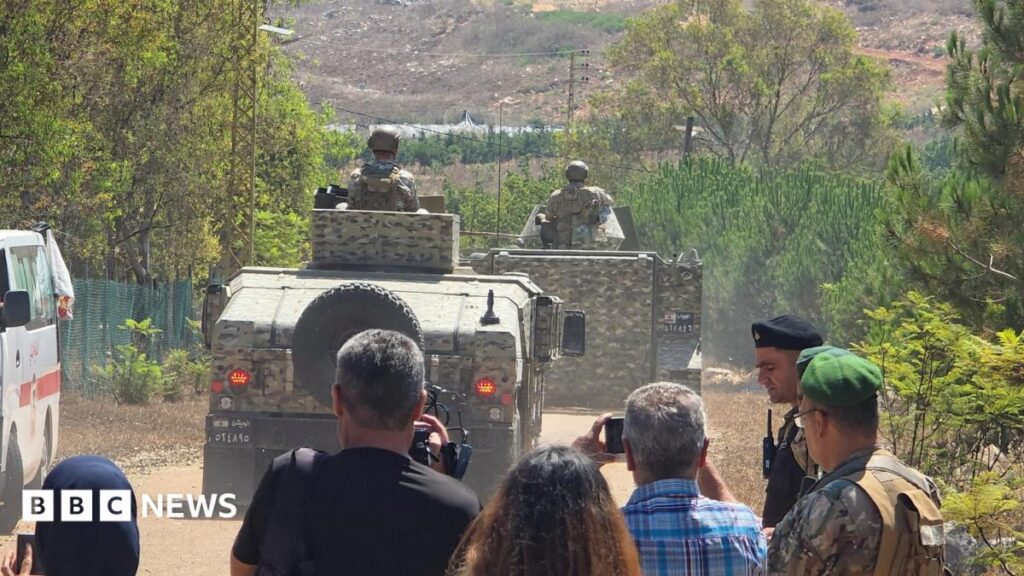
Lebanese Army Deploys in Southern ‘Pilot Zone’ Following Israeli Withdrawal Under US-Brokered Agreement
In a significant development in the volatile border region between Lebanon and Israel, the Lebanese army has initiated troop deployments into a so-called 'pilot zone' in southern Lebanon. This move follows the recent withdrawal of Israeli forces from parts of the territory under a US-brokered agreement aimed at reducing hostilities and reasserting Lebanese sovereignty. The pilot zone deployment is part of a broader framework involving Lebanon, Israel, and the United States, seeking to curb Hezbollah’s influence and restore stability to a region long marked by conflict. This article examines the background, current developments, and implications of this evolving security arrangement.
Lebanese Army Deploys in Southern 'Pilot Zone' Following Israeli Withdrawal Under US-Brokered Agreement
Background: Conflict and the Need for a New Framework
The border area between Lebanon and Israel has been a flashpoint for decades, with periodic escalations involving Hezbollah, the Iran-backed militant group operating in southern Lebanon, and the Israeli Defense Forces (IDF). Tensions intensified sharply on 2 March 2026 when Hezbollah launched rocket attacks into Israel in retaliation for an Israeli strike that killed Iran’s supreme leader. This triggered a severe Israeli military response, including extensive bombing campaigns and incursions into southern Lebanon.
The conflict resulted in significant casualties and destruction. Lebanese health authorities report over 4,300 deaths, including nearly 800 civilians such as women, children, and medical personnel. Israeli losses include 37 soldiers and four civilians. The scale of devastation underscored the urgent need for a diplomatic solution to prevent further bloodshed and restore order in the border region.
The US-Brokered Trilateral Framework Agreement
In late June 2026, Lebanon, Israel, and the United States reached a trilateral framework agreement designed to de-escalate the conflict and establish mechanisms for security and governance in southern Lebanon. Central to this agreement is the creation of a 'pilot zone' where Israeli forces would withdraw, allowing the Lebanese army to reassert control over certain villages previously under Israeli occupation or Hezbollah influence.
The US State Department announced on 20 July that operations had commenced in three villages—Zawtar al-Gharbiyeh, Froun, and Srifa—as part of the pilot zone plan. This initiative was the result of intensive negotiations held in Rome between Israeli and Lebanese representatives. The framework also emphasizes the disarmament of Hezbollah, which Israel and the US classify as a terrorist organization, and the removal of its illegal weapons from the area.
Israeli military officials have confirmed adjustments to their force posture in the pilot zone to facilitate the Lebanese army’s deployment while maintaining the security of Israeli soldiers and preserving Israel’s right to self-defense. Notably, Israel intends to remain in the broader 'security zone'—a 10-kilometer deep strip along the border—for as long as deemed necessary to protect northern Israeli communities.
Lebanese Army Deployment and Local Security Measures
On 21 July, the Lebanese army announced that its units had begun deploying to Zawtar al-Gharbiyeh in the Nabatieh district, marking the first tangible implementation of the pilot zone plan. The army’s command urged local residents to avoid the village until the security situation stabilizes and to follow military instructions to ensure their safety.
Troops had already been active in nearby villages Froun and Srifa following the US announcement. Israeli sources confirmed that no Israeli forces remain in these villages, indicating a clear transfer of control to Lebanese authorities. The Lebanese army’s deployment is coordinated through the Military Coordination Group for Lebanon, a trilateral body tasked with overseeing the framework’s execution.
This step reflects a cautious but meaningful attempt to restore Lebanese sovereignty in parts of the south, traditionally contested between Israel and Hezbollah. It also serves as a litmus test for the broader goals of the agreement, particularly the disarmament of Hezbollah and the establishment of state authority in areas long dominated by non-state actors.
Challenges Ahead: Hezbollah’s Role and Regional Stability
While the pilot zone deployment represents progress, significant challenges remain. Hezbollah’s entrenched presence in southern Lebanon complicates efforts to disarm the group and transfer full control to the Lebanese state. Hezbollah maintains substantial political and military influence, backed by Iran, and has historically resisted disarmament initiatives.
Lebanese President Joseph Aoun is scheduled to meet US President Donald Trump in Washington, where he is expected to seek increased US pressure on Israel to complete its withdrawal from southern Lebanon. Aoun will likely also request enhanced support for the Lebanese army to assert control in Hezbollah-held areas.
The success of the pilot zone plan depends heavily on sustained international engagement, mutual trust between Lebanon and Israel, and the willingness of Hezbollah to comply with disarmament demands. The risk of renewed hostilities remains if these conditions are not met, underscoring the fragile nature of the current ceasefire and diplomatic efforts.
International Implications and Future Prospects
The trilateral framework and pilot zone deployment have broader implications for regional security. They represent a rare moment of cooperation between Lebanon and Israel, facilitated by the United States, amidst a complex geopolitical landscape involving Iran’s influence and ongoing proxy conflicts.
If successful, the framework could serve as a model for conflict resolution in other contested border areas and contribute to long-term stability in the Levant. Conversely, failure could exacerbate tensions and lead to further violence, with repercussions extending beyond Lebanon and Israel to neighboring countries and global powers invested in Middle Eastern peace.
The international community will be watching closely as the Lebanese army consolidates its presence in the pilot zone and as diplomatic efforts continue to address the underlying issues fueling the conflict.
What this means
The deployment of the Lebanese army to the pilot zone in southern Lebanon marks a pivotal moment in efforts to stabilize a historically volatile border region. While the US-brokered framework offers a pathway toward reducing hostilities and reasserting state authority, the success of this initiative hinges on complex factors including Hezbollah’s response, Israeli cooperation, and continued international support. As Lebanon and Israel cautiously navigate this new phase, the world watches to see whether this fragile peace can be sustained and expanded, potentially setting a precedent for resolving entrenched conflicts in the Middle East.
Originally reported by bbc.co.uk. Adapted for our readers with AI assistance.
Thousands of young protesters in Delhi continue to demand education reforms and the resignation of Education Minister Dharmendra Pradhan after a police crackdown. The…
Facing a looming financial collapse, Thames Water’s main lenders have offered the UK government a ‘golden share’ and increased local authority involvement to avoid…
Facing record-breaking temperatures and severe drought, Thames Water has introduced a hosepipe ban impacting over 10 million customers across parts of southern England to…