
Business
Nigeria’s Economic Performance: Domestic Debt Rise and Agriculture Trade Shift in Q2 2026
Nigeria's economic landscape in the second quarter of 2026 presents a mixed picture of fiscal press...
TAMFIS NIG LTDRC 8067447CAC ACTIVEFinima, Bonny Island, Rivers State

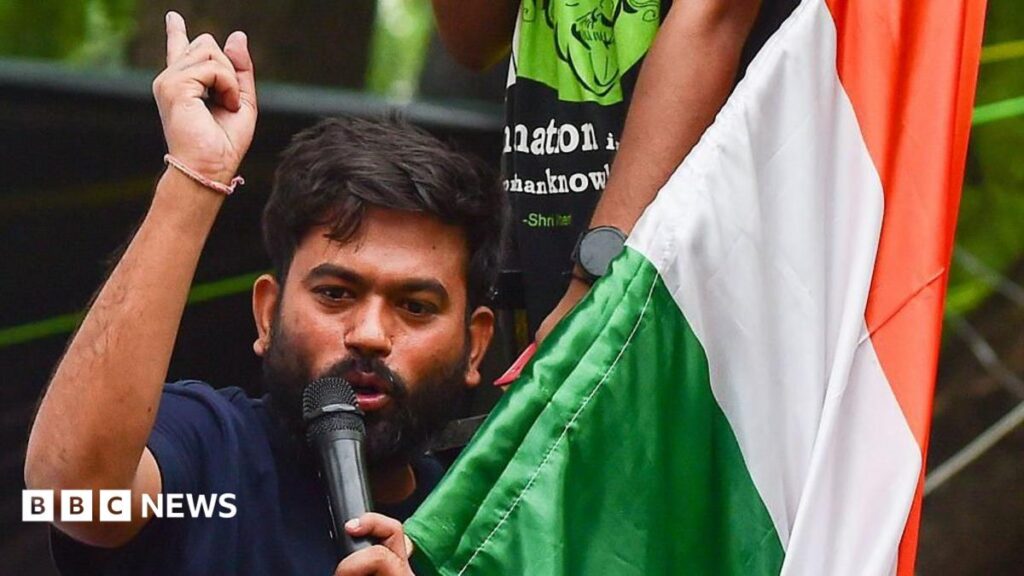
India has witnessed a significant youth-led protest movement known as the Cockroach Janta Party (CJP) that has captured national and international attention. Emerging in response to a scandal involving the leak of the National Eligibility cum Entrance Test (NEET), a pivotal medical entrance examination taken by over two million students, the protests centre in Delhi but resonate nationwide. Tens of thousands of young people have taken to the streets calling for the resignation of Education Minister Dharmendra Pradhan and broader reforms to India's education system. Despite facing police crackdowns involving batons, tear gas, and mass detentions, the movement has persisted, highlighting deep-seated frustrations among India's youth regarding educational integrity, employment prospects, and governmental accountability. This article examines the origins, developments, and implications of the CJP protests.
The Cockroach Janta Party began as a satirical response to controversial remarks made by a senior Indian judicial figure, who characterised certain unemployed youths pursuing journalism or activism as 'cockroaches'. Though the official later clarified his comments were directed at individuals with fraudulent qualifications, the term ignited widespread offence among young Indians. Activists seized upon the label, transforming it into a symbol of resistance and youth empowerment. What started as online commentary quickly evolved into a mobilised street movement, particularly after the NEET exam leak scandal provided a concrete focal point for grievances. The CJP is not a registered political party but functions as a decentralised platform uniting students, young professionals, and activists around shared demands for transparency in education and accountability from public officials.
The immediate trigger for the CJP’s surge in activity was the leak of the NEET examination papers in May, an event that compromised the integrity of one of India’s most high-stakes academic assessments. Taken by approximately 2.28 million candidates aspiring to enter medical and dental colleges, the NEET is a gateway to prestigious careers and social mobility. When news broke that the papers had been leaked prior to the exam date, widespread outrage followed, particularly as the incident led to the cancellation of the original test and a stressful re-test process weeks later. More tragically, the scandal has been linked to over 20 student suicides, with families citing the psychological toll of uncertainty, disappointment, and perceived injustice as contributing factors. For protesters, the leak represents more than a administrative failure; it symbolises systemic flaws in how high-stakes examinations are administered and secured. The demand for Education Minister Dharmendra Pradhan’s resignation stems from a belief that he bears moral responsibility for safeguarding the integrity of such a critical national process.
The government’s response to the CJP demonstrations has been marked by a significant security crackdown. During a major protest at Jantar Mantar in Delhi coinciding with the opening of the monsoon session of parliament, demonstrators attempted to march toward parliament despite a police ban. Authorities responded with baton charges, tear gas dispersal, and mass detentions. Official reports indicated at least 60 protesters were injured, including women, and around 70 were detained, while police also acknowledged injuries to 118 of their personnel. Social media footage circulated widely showing confrontations between security forces and demonstrators, including instances of protesters appearing to be beaten while unconscious and allegations of gender-targeted violence, which the police denied. Despite the crackdown, protesters have repeatedly reassembled at Jantar Mantar, repairing makeshift stages and tents after they were torn down by authorities. This resilience indicates a sustained commitment to the cause, even in the face of adversity.
The CJP has attracted backing from a diverse array of public figures, lending visibility and credibility to its cause. Notable supporters include education reform advocate Sonam Wangchuk, who undertook an indefinite hunger strike to amplify the protesters’ demands before being temporarily detained by police. Opposition leaders such as Rahul Gandhi have publicly endorsed the movement, framing it as a legitimate expression of youth frustration and criticising the current administration as particularly dismissive of young people’s concerns. Support has also come from farmer unions, civil society activists, and figures from India’s entertainment industry, including Bollywood celebrities, who have used their platforms to amplify the call for educational reform. Nevertheless, the administration’s response has remained largely procedural. A brief meeting between Health Minister JP Nadda and CJP representatives yielded no concrete outcomes, with protesters describing the encounter as unproductive.
The Cockroach Janta Party protests represent more than a localised reaction to an exam scandal in India; they reflect a deeper, transnational current of youth dissatisfaction with systems perceived as unfair, opaque, or unresponsive. As tens of thousands of young Indians continue to demand accountability and reform despite official resistance, their actions resonate with similar struggles seen in Nigeria and elsewhere, where young people are increasingly asserting their right to fair access to education, transparent governance, and meaningful economic participation. For businesses, educators, and policymakers operating in emerging markets, the CJP episode offers a timely reminder that education is not merely a social service but a cornerstone of societal trust. When that trust is eroded—whether through exam leaks, perceived favouritism, or lack of opportunity—the consequences can extend far beyond the classroom, influencing everything from consumer confidence to political stability. Moving forward, the ability of institutions to listen, adapt, and demonstrate genuine commitment to fairness will likely determine whether such movements lead to constructive reform or deepen societal divides.
Originally reported by bbc.co.uk. Adapted for our readers with AI assistance.
Keep reading
Business
Nigeria's economic landscape in the second quarter of 2026 presents a mixed picture of fiscal press...
Business
Liverpool manager Andoni Iraola is confronting a significant selection headache as two key forwards, Cod...
News
Health News tamfitronics [Editor’snote:[Editor’snote: This transcript was generated using both transcription ...
TAMFIS NIG LTD
Electrical and instrumentation engineering, bid preparation and consulting, IT and software.