
Business
Nigeria’s Economic Performance: Domestic Debt Rise and Agriculture Trade Shift in Q2 2026
Nigeria's economic landscape in the second quarter of 2026 presents a mixed picture of fiscal press...
TAMFIS NIG LTDRC 8067447CAC ACTIVEFinima, Bonny Island, Rivers State

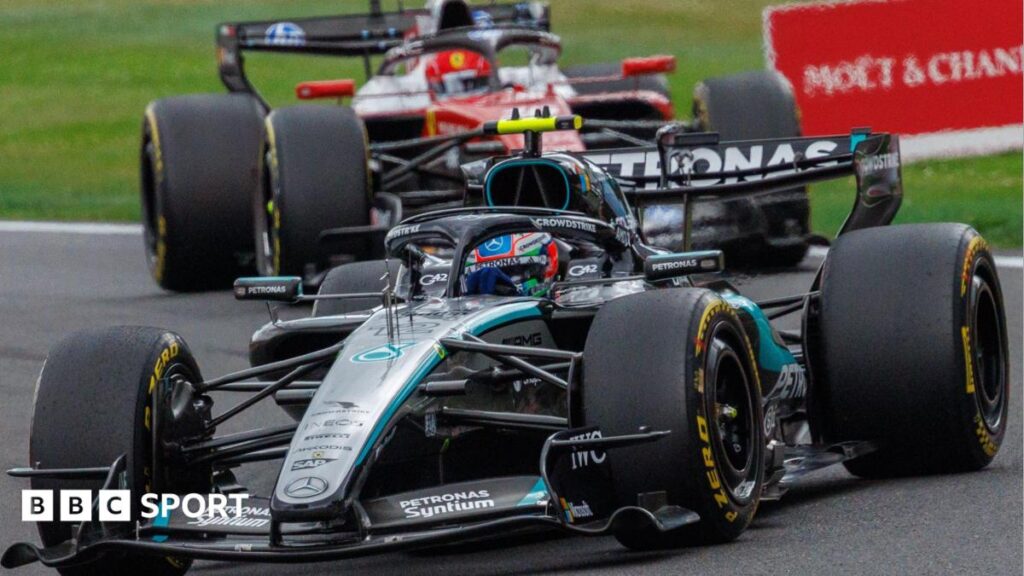
The 2026 Belgian Grand Prix at Spa-Francorchamps delivered a dramatic turn in the Formula 1 World Championship, as Mercedes' Kimi Antonelli secured his sixth win of the season while team-mate George Russell was eliminated in an opening-lap collision with Lewis Hamilton. The result restored Antonelli's points advantage and reignited discussions about consistency, team orders, and the psychological impact of mid-season volatility in one of sport's most demanding competitions. For business observers and motorsport enthusiasts, the race offered a case study in how external factors like virtual safety cars and split-second decisions can reshape competitive landscapes over a long season.
Kimi Antonelli won the Belgian Grand Prix for the sixth time in ten races this season, driving a composed recovery after being delayed by a virtual safety-car period. The victory allowed him to re-establish a championship lead that had been narrowed over the previous three rounds. Starting from a strong position, Antonelli managed his tyres and pace effectively, ultimately passing Ferrari's Charles Leclerc in the latter stages to claim the win. The result marked a significant rebound after a period where his advantage had eroded due to inconsistent finishes and strategic challenges at earlier circuits.
In stark contrast, George Russell's race ended within seconds of the start when he collided with Lewis Hamilton while attempting to gain position. The incident eliminated both drivers from immediate contention, though Hamilton was later able to recover and finish fourth, earning valuable championship points. Russell, who had shown improved form in recent races, dropped to third in the drivers' standings, 50 points behind Antonelli. The collision prompted immediate reactions from both drivers and teams, with Russell stating post-race that he did not intend to blame Hamilton for the incident.
The virtual safety car, deployed early in the race following an initial incident, played a pivotal role in shaping the outcome. It neutralised the field at a critical moment, disrupting Russell's momentum and giving Leclerc an unexpected opportunity to challenge for victory. Lando Norris, who had started 13th after a penalty, also saw his prospects for a podium finish affected by the VSC period, highlighting how race-control interventions can alter strategies and outcomes across the field.
The Belgian Grand Prix result reinforced a widely held view in Formula 1 that sustained consistency often outweighs the value of isolated victories over a long season. Antonelli's ability to regularly score points, even when not winning, has been a key factor in maintaining his position at the top of the standings. His sixth win in ten races reflects not only pace but also reliability—a combination that proves decisive when margins are tight and errors are heavily penalised.
Russell's collision, while a significant setback, is viewed by analysts as part of the natural ebb and flow of a championship campaign rather than a terminal blow. With numerous races remaining, the potential for momentum shifts remains high, particularly as different circuits favour varying car characteristics and team setups. Historical precedents show that leads of 50 points or more have been overturned in the past, especially when reliability issues or strategic missteps accumulate over several rounds.
Constructors' championship implications add another layer of complexity. While Antonelli's win contributed valuable points to Mercedes' tally, Russell's retirement meant the team lost out on a potential double points finish. This dynamic forces teams to continually weigh individual driver ambitions against the collective goal of maximizing constructor points, a balance that becomes especially delicate when team-mates are in direct competition for the drivers' title.
The collision between Russell and Hamilton prompted immediate internal reviews at both Mercedes and Ferrari, as is standard procedure following any incident involving title-contending drivers. Engineers and strategists examined telemetry, driving lines, and decision-making in the build-up to the crash to determine whether adjustments to setup, strategy, or driver communication could reduce the likelihood of similar events in future races. Such debriefs are routine but take on added significance when championship points are at stake.
Team principals typically emphasise that no single race defines a season, especially one as long as the current 24-round calendar. The focus remains on executing race-by-race, learning from mistakes, and adapting to evolving conditions. In the aftermath of Spa, both Mercedes and Ferrari are expected to analyse not only the opening-lap incident but also how virtual safety car periods influenced tyre strategy and track position—factors that proved decisive in the race's final outcome.
The incident also drew commentary from manufacturer representatives and technical experts, who noted that while driver error is often cited in such collisions, external factors like visibility, closing speeds, and the compressed nature of the opening lap can contribute to unavoidable contact. These insights feed into broader discussions about safety, race format, and the sporting regulations that govern on-track behaviour.
The 2026 Belgian Grand Prix served as a potent reminder that Formula 1 championships are rarely won through dominance at individual events alone, but through the ability to endure, adapt, and capitalise on opponents' misfortunes over a sustained campaign. Kimi Antonelli's win, born of recovery and composure, re-established his lead not through sheer speed but through consistent execution—a trait increasingly recognised as vital in elite sport and comparable to long-term success in business and investment. Meanwhile, George Russell's early exit, while disappointing, does not define his season; the long calendar ensures ample opportunity for recovery and renewed challenge. As the season progresses, the interplay between individual brilliance, team strategy, and uncontrollable variables like virtual safety cars will continue to shape the narrative. For audiences, analysts, and commercial stakeholders, the race provided not just excitement but insight into the complex dynamics that underpin one of the world's most technologically advanced and fiercely competitive sports.
Originally reported by bbc.co.uk. Adapted for our readers with AI assistance.
Keep reading
Business
Nigeria's economic landscape in the second quarter of 2026 presents a mixed picture of fiscal press...
Business
Liverpool manager Andoni Iraola is confronting a significant selection headache as two key forwards, Cod...
News
Health News tamfitronics [Editor’snote:[Editor’snote: This transcript was generated using both transcription ...
TAMFIS NIG LTD
Electrical and instrumentation engineering, bid preparation and consulting, IT and software.

