Italian Officials Sentenced Over Genoa Bridge Collapse That Claimed 43 Lives
The tragic collapse of the Morandi bridge in Genoa, Italy, in August 2018 remains one of the most devastating infrastructure failures in recent European history. The disaster, which occurred during a rainstorm at the height of the holiday season, caused the deaths of 43 people and left a scar on the city and the nation. After years of investigation and a lengthy trial, the Italian justice system has delivered its verdict, sentencing several high-ranking officials for their roles in the tragedy. This article examines the court’s decision, the background of the disaster, and the broader implications for infrastructure oversight and public safety.
Italian Officials Sentenced Over Genoa Bridge Collapse That Claimed 43 Lives
The Morandi Bridge Collapse: A Devastating Event
On August 14, 2018, a large section of the Morandi bridge, a vital motorway viaduct in Genoa, suddenly gave way during a heavy rainstorm. The collapse sent vehicles, including lorries and cars, plummeting dozens of meters to the ground below. The bridge, designed by engineer Riccardo Morandi and constructed in 1967, was a crucial artery for transportation through the city.
The disaster struck at a particularly busy time, just as many Italians were traveling for summer holidays, amplifying its tragic impact. Forty-three people lost their lives, and many more were injured or displaced. The event shocked the nation and prompted urgent calls for accountability and improved infrastructure safety measures.
The Trial and Sentencing of Key Officials
Following extensive investigations, a trial involving 57 defendants was held in Genoa to determine responsibility for the collapse. The accused included former executives of Autostrade per l’Italia (Aspi), the motorway operator responsible for the bridge’s maintenance, engineers from the maintenance firm Spea, and officials from Italy’s transport ministry and Atlantia, Aspi’s parent company.
Giovanni Castellucci, the former head of Aspi, received the most severe sentence: 12 years in prison. Prosecutors had sought a longer term, but the court’s ruling reflects the gravity of his role in the failure to maintain the bridge. Castellucci was already serving a six-year sentence for a separate road disaster dating back to 2013.
Another senior motorway official, Michele Donferri Mitelli, was sentenced to 11 years, while Paolo Berti, the former deputy at Aspi, received five and a half years—less than the seven years prosecutors requested. Antonino Galatà, former CEO of Spea, was also sentenced to five and a half years, and Mauro Coletta, a former top official in the transport ministry, received five years.
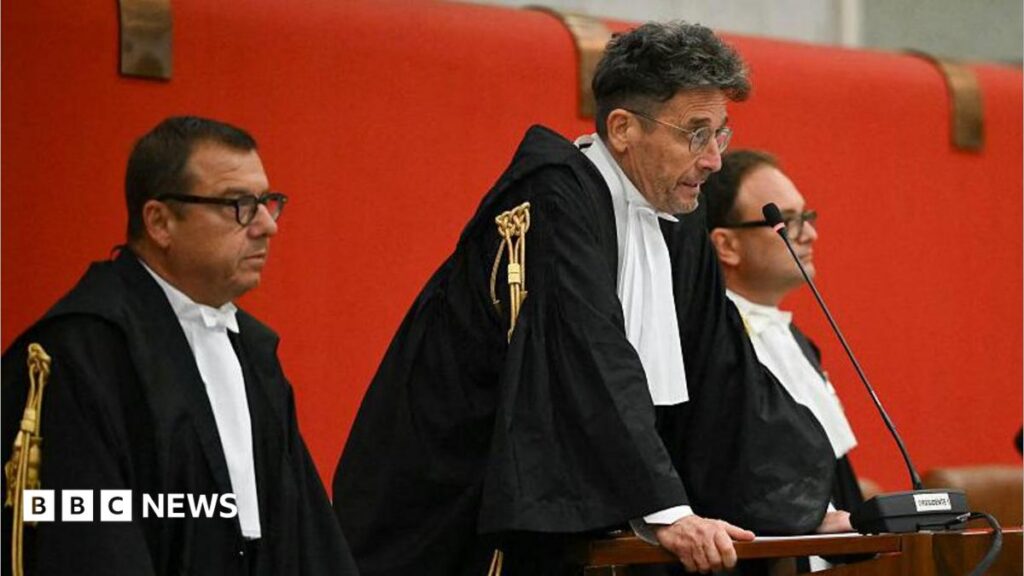
The court’s verdict was read by Judge Paolo Lepri in Genoa, although Castellucci was not present in court to hear the decision.
Arguments and Defenses Presented During the Trial
Throughout the trial, all defendants denied wrongdoing. Prosecutors argued that the collapse was a direct consequence of repeated delays in maintenance and ignored warning signs about the structure’s deteriorating condition. They emphasized that the aging bridge required urgent and consistent upkeep, which was neglected.
In contrast, defense lawyers contended that the disaster was primarily due to a design flaw inherent in the bridge’s construction, particularly the fact that a critical cable was encased in concrete, complicating inspection and repair efforts. This argument sought to shift responsibility away from the maintenance teams and onto the original engineering design.
The debate highlighted the complex challenges of managing aging infrastructure, where both design limitations and maintenance practices can contribute to catastrophic failures.
Reactions from Victims’ Families and Public Officials
The sentencing elicited varied reactions from families of the victims. Emmanuel Diaz, who lost his brother Henry in the collapse, expressed satisfaction with the verdict, viewing it as a measure of justice. Similarly, Egle Possetti, whose sister and her family perished in the disaster, described the 12-year sentence for Castellucci as acceptable, reflecting a degree of closure for those affected.
On the eve of the trial, the current head of Aspi, Arrigo Giana, issued the company’s first public apology for the tragedy. He acknowledged that decisions and actions by certain individuals had caused “indelible scars,” signaling a recognition of corporate responsibility and the need for accountability.
These responses underscore the human cost of infrastructure failures and the importance of transparent and responsible governance.
Broader Implications for Infrastructure Safety and Accountability
The Genoa bridge disaster and subsequent trial have brought renewed attention to the state of Italy’s infrastructure and the mechanisms in place to ensure its safety. The Morandi bridge, built in the late 1960s, exemplifies challenges faced by many countries with aging public works requiring ongoing maintenance and modernization.
The court’s decision to hold high-level executives and officials criminally responsible sends a strong message about the legal and ethical obligations of those overseeing critical infrastructure. It highlights the potential consequences of neglect and mismanagement, encouraging more rigorous inspection regimes and proactive maintenance strategies.
Moreover, the case raises questions about public-private partnerships in infrastructure management, as Aspi is a private company entrusted with a public asset. Balancing profit motives with public safety remains a key concern for policymakers and regulators worldwide.
What this means
The Genoa Morandi bridge disaster remains a stark reminder of the devastating consequences that can arise from lapses in infrastructure maintenance and oversight. The recent sentencing of key officials marks a significant step towards accountability and justice for the victims and their families. Beyond the courtroom, the case serves as a crucial lesson for governments, companies, and engineers worldwide about the imperative of prioritizing public safety in the management of aging infrastructure. As nations grapple with similar challenges, the Genoa tragedy underscores the need for transparent governance, rigorous inspection, and sustained investment to prevent such catastrophes in the future.
Originally reported by bbc.co.uk. Adapted for our readers with AI assistance.
Thousands of young protesters in Delhi continue to demand education reforms and the resignation of Education Minister Dharmendra Pradhan after a police crackdown. The…
Facing a looming financial collapse, Thames Water’s main lenders have offered the UK government a ‘golden share’ and increased local authority involvement to avoid…
Facing record-breaking temperatures and severe drought, Thames Water has introduced a hosepipe ban impacting over 10 million customers across parts of southern England to…