
Top Stories
KFF Health News’ ‘What the Health?’: The Supreme Court and the Abortion Pill
Since the Supreme Court overturned Roe v. Wade in 2022, the landscape of abortion rights in the United S...
TAMFIS NIG LTDRC 8067447CAC ACTIVEFinima, Bonny Island, Rivers State

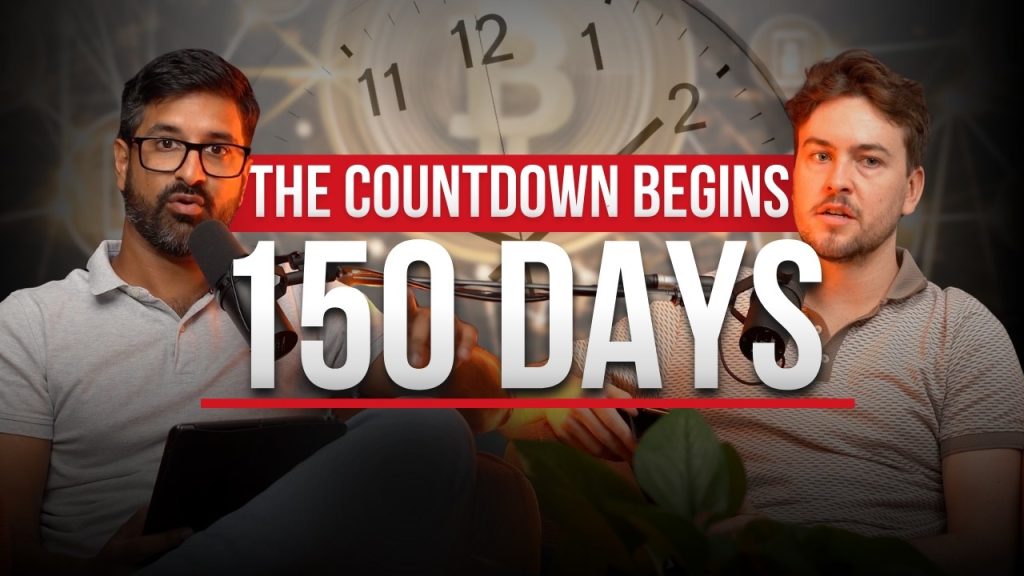
The cryptocurrency market stands at a crossroads, with the next 150 days potentially determining its near-term trajectory. According to Pav Hundal, analyst at Australian exchange Swyftx, this window is critical due to two converging factors: the implementation and potential rollback of new US tariffs under Donald Trump, and the uncertain legislative fate of the CLARITY Act. Speaking on the Tapping Into Crypto podcast, Hundal emphasized that markets are forward-looking, pricing in expectations of future policy shifts. With sentiment data pointing to extreme fear and on-chain metrics showing minimal holder profitability, the analyst suggests the market may be approaching a bottom — a view that contrasts with recent price action but aligns with historical cycle patterns. For Nigerian investors and global traders alike, understanding these macro drivers is essential for navigating volatility and identifying strategic entry points.
The 150-day timeframe stems from the temporary nature of Trump's recently imposed tariffs, which require congressional approval to remain in force beyond this period — approval analysts widely believe is unlikely. This creates a binary outcome: either a resolution supporting global trade and risk appetite, or continued disruption weighing on risk-sensitive assets like crypto. The U.S. remains the world's largest consumer base, so any shift in trade policy ripples through supply chains, inflation expectations, and investor sentiment worldwide. In Nigeria, where crypto adoption grows amid currency fluctuations and remittance needs, such external shocks influence local trading volumes and peer-to-peer pricing. Hundal warned that if the U.S. government faces pressure to compensate consumers for tariff-induced costs, it could trigger unforeseen fiscal responses further destabilising markets.
Beyond tariffs, the CLARITY Act — legislation designed to provide regulatory clarity for digital assets — represents another key variable. Its passage would reduce regulatory overhang and encourage institutional participation. However, political polarisation has made the bill's prospects increasingly uncertain, with shifting odds on prediction markets reflecting declining confidence in bipartisan support.
Trump's tariff strategy has reintroduced uncertainty into global trade dynamics, directly affecting assets perceived as risky. Cryptocurrencies, which correlate with risk-on sentiment during stability, suffer when investors flee to safe havens amid geopolitical tension. The current tariff regime, while temporary, has already influenced market psychology before its long-term fate is decided. The mere prospect of escalating trade barriers can trigger risk-off behaviour, pressuring crypto prices despite underlying fundamentals.
Yet Hundal highlighted a potential upside: if the tariff situation resolves in a way that stabilises or liberalises trade, it could catalyse renewed risk appetite. In such a scenario, crypto might benefit from improved global liquidity and reduced hedging demand for traditional safe havens. This duality underscores why the next 150 days are viewed as make-or-break. For businesses and traders in emerging markets, including Nigeria's growing crypto ecosystem, monitoring U.S. policy developments directly affects access to global capital, cross-border transaction costs, and international partners' willingness to engage in crypto-related commerce.
While tariffs dominate headlines, the CLARITY Act remains a quieter but potentially transformative force for crypto's long-term prospects. The bill aims to establish a clear federal framework distinguishing securities from commodities, providing guidance for exchanges, custodians, and issuers. Passage would likely reduce regulatory arbitrage and encourage compliant innovation within the U.S. — a development with cascading effects globally, including in Nigeria, where regulatory uncertainty often hinders institutional involvement.
Recent trends suggest declining optimism. Polymarket data cited by podcast co-host Ted Coaldrake showed odds of passage falling to 39% earlier in the week before recovering to 65%, reflecting volatile sentiment driven by partisan divides. Coaldrake observed Republicans increasingly embrace crypto as pro-innovation, while Democrats grow more sceptical, viewing digital assets through consumer protection and financial stability lenses. This polarisation makes bipartisan support harder to secure, especially ahead of November mid-terms that could shift congressional control. Coaldrake lamented the trajectory is "not super positive as it once was," warning a Democratic House takeover could further diminish prospects.
Despite external uncertainties, Hundal pointed to encouraging signs from sentiment and blockchain data suggesting Bitcoin may be nearing a cyclical bottom. The Fear and Greed Index has dropped to 5 out of 100 — levels not seen since the 2018 bear market. Bitcoin has endured four consecutive months of negative returns, a streak last observed in 2018. Hundal noted that while past performance doesn't guarantee future results, the similarity in selling pressure warrants attention.
On-chain metrics reinforce this view: only about 30% of long-term Bitcoin holders are currently in profit, while virtually none of short-term holders are experiencing gains. This widespread unrealised loss position mirrors conditions seen prior to past recoveries. "How many more weeks we can put up with that being the reality?" Hundal asked, implying capitulation may be near. For investors employing long-term strategies, such data can signal the worst of the downturn may be behind us, even if short-term volatility persists. This perspective is particularly relevant for Nigerian investors using dollar-cost averaging or accumulation strategies during downturns. While timing the absolute bottom remains impossible, recognising historical patterns can help mitigate emotional decision-making and support disciplined investing through cycle lows.
The cryptocurrency market's near-term fate hinges on a delicate interplay of trade policy, regulatory clarity, and investor psychology. As Pav Hundal suggests, the next 150 days could either usher in renewed confidence or prolong the current period of caution. While no outcome is certain, the convergence of deeply oversold sentiment, historical cycle parallels, and external catalysts creates a unique moment for reflection and strategic positioning. For Nigerian traders navigating local currency pressures and global investors assessing portfolio exposure, staying informed about U.S. developments — without reacting impulsively to every headline — remains a prudent approach. In markets where uncertainty is the only constant, understanding the drivers behind volatility can turn anxiety into opportunity.
Originally reported by cryptonews.com.au. Adapted for our readers with AI assistance.
Keep reading
Top Stories
Since the Supreme Court overturned Roe v. Wade in 2022, the landscape of abortion rights in the United S...
Top Stories
Top Stories Tamfitronics One evening in May, nursing assistant Debra Ragoonanan’s vision blurred during her shift at a state-run Massachusetts vet...
TAMFIS NIG LTD
Electrical and instrumentation engineering, bid preparation and consulting, IT and software.

