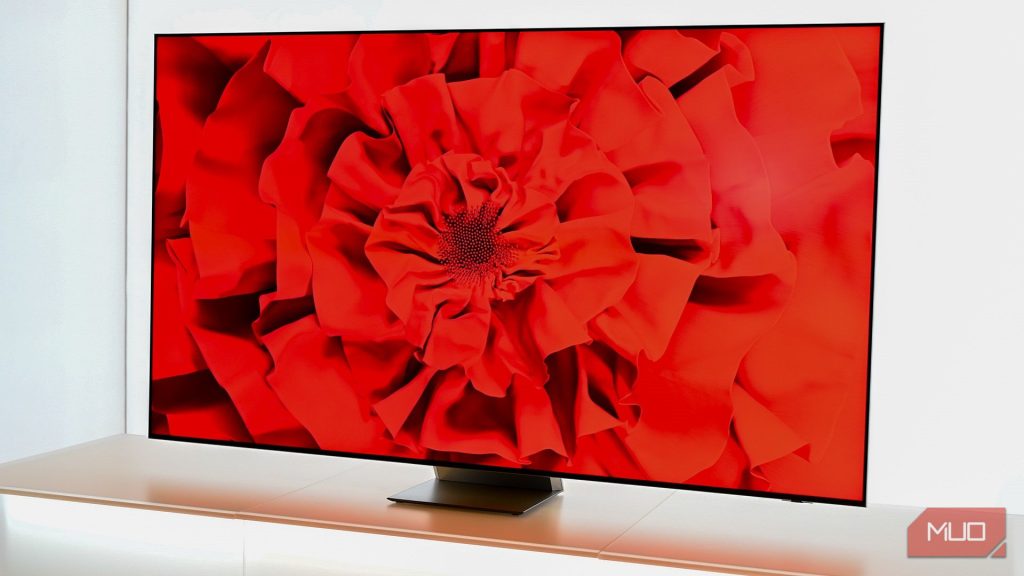

Consumers know to avoid low-quality liquid-crystal displays (LCD) when shopping for a new monitor or TV, but what should they buy instead? A more advanced LCD panel with local backlight dimming is a good start, but other display technologies like OLED are even better. In particular, people like organic light-emitting diode (OLED) displays due to their self-emitting nature. Compared to display technologies that use backlighting, OLED panels offer deeper blacks and a richer high dynamic range (HDR) viewing experience. That said, OLED technology comes with real drawbacks, and it’s not the right fit for every use case.
Mini-LED is an alternative that splits the middle between LCD and OLED technology. Mini-LED uses backlighting, like LCD panels, but it also offers better contrast and color reproduction. It’s not a replacement for OLED for those who crave vibrant colors and great viewing angles, though. The best overall display uses none of the aforementioned panel types — it’s Micro-LED, a technology that’s self-emmissive with high contrast, high brightness, and great longevity. The only major drawback is the price, but as the sticker shock fades away, you can expect Micro-LED to surpass OLED as the superior display technology.
OLED technology isn’t flawless
Lower peak brightness, screen burn-in concerns, and shorter lifespans are key cons
The benefits of OLED are clear. OLED displays use self-emitting diodes that can be turned on or off individually, creating what is known as “true blacks.” Even with localized backlight dimming technology, LCD panels simply can’t match the vibrant colors and deep blacks afforded by OLED monitors and TVs. OLED displays are everywhere, as they can be found on smartphones, smartwatches, foldables, laptops, monitors, TVs, and other device types. They deliver excellent contrast, great viewing angles, and high response times.
However, OLED is not perfect. The biggest problem with OLED technology is its peak brightness levels, which lag behind other technologies. The brightest OLED televisions reach between 2,000 and 2,500 nits in real-world conditions, and that’s not on-par with emerging technologies like Micro-LED. The latter can easily reach double the peak brightness levels of an OLED screen, if not more. As the consumer technology is still in its infancy, there’s room for Micro-LED to improve.
Another downside of OLED is its short lifespan and screen burn-in concerns. The “O” in OLED stands for organic, and this simply means these displays use organic emmissive materials that produce light when the organic molecules are electrified. The organic material degrades quicker than displays using inorganic materials, and the display brightness capabilities worsen over time as it ages. The degradation process can also manifest as screen artifacts because digital images can burn into the OLED panel. These concerns are just a few reasons OLED isn’t the endgame for display technology.
Display burn-in is possible with any display technology and is highly dependent on usage; however, it affects OLED screens disproportionally because the organic material degrades and loses brightness at quicker rates, causing the burn-in effect.
Micro-LED and OLED have a lot in common
They’re both emissive displays with perfect blacks and great viewing angles
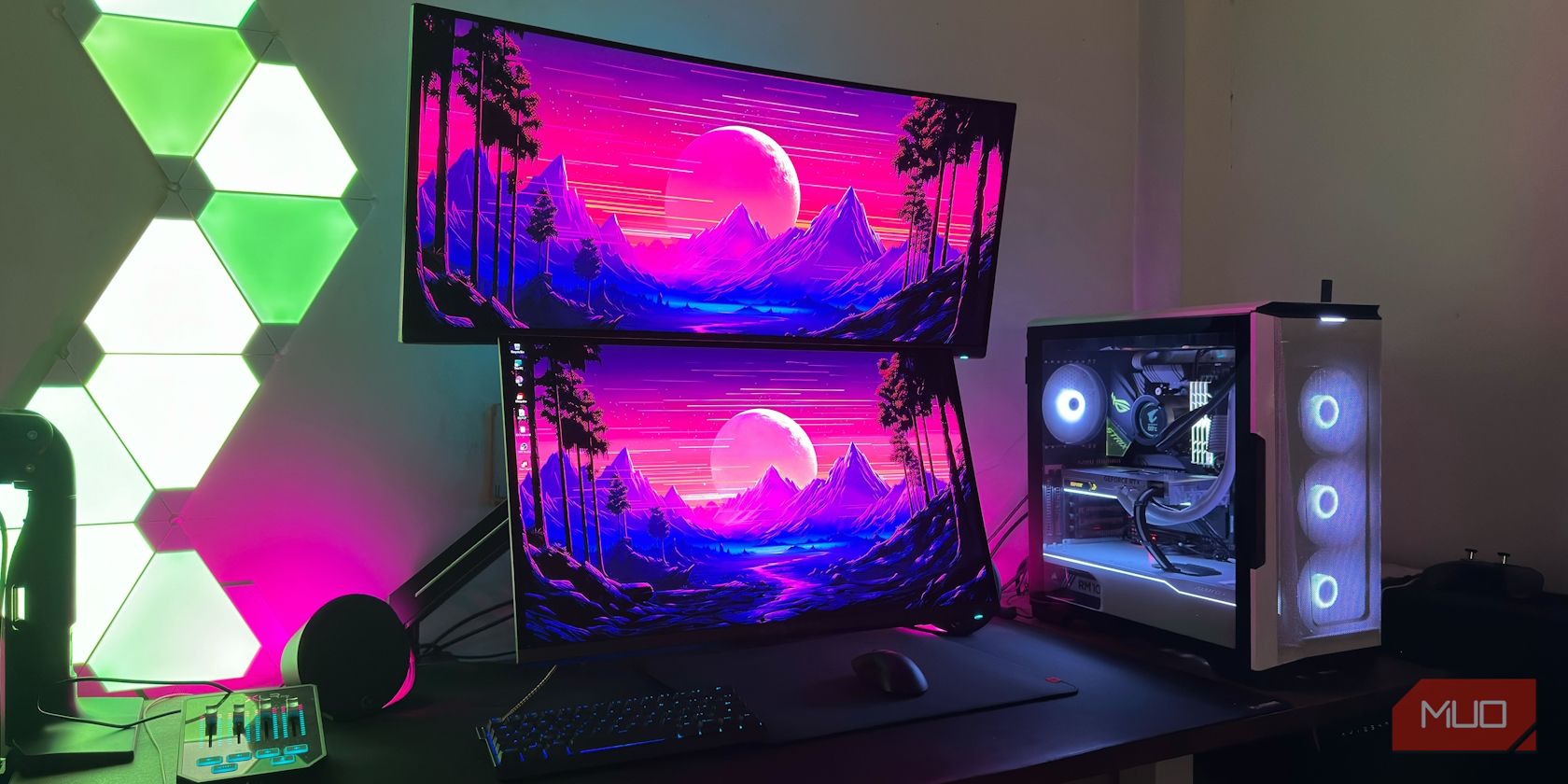
For OLED-lovers, it’s important to mention that Micro-LED offers many of the same benefits as OLED. Both technologies use self-emmitting diodes. The major difference is that OLED uses organic material while Micro-LED uses inorganic material structures. Since the two technologies are self-emmitting, both OLED and Micro-LED support turning off the diodes at the pixel level. These characteristics help OLED and Micro-LED provide rich colors, high dynamic range support, and true blacks.
Similarly, the two leading display technologies can be viewed at various angles while retaining visibility. Compared to QLED and Mini-LED displays available now, both OLED and Micro-LED provide stronger contrast. They also do not fall victim to viewing effects like light bloom or backlight bleed that affect display technologies that rely on backlighting. With that being said, Micro-LED starts to pull away from OLED when you consider its longer lifespan and the lower likelihood of screen burn-in over time.

I thought OLED burn-in was a myth — boy, was I wrong
I ignored the burn-in warnings, and now my display has the scars to prove it.
Micro-LED displays are brighter and more efficient
They’re still very expensive, and this is the biggest thing spurning adoption

Hannah Stryker / MakeUseOf
To sum up, Micro-LED is like OLED but without the downsides of low brightness and a shorter lifespan. Micro-LED doesn’t suffer from screen burn-in at the rate of OLED because it uses inorganic, microscopic LEDs rather than organic material. Micro-LED is more power efficient than OLED and supports an even higher response time.
The big advantage is brightness, as it’s the one area OLED is truly deficient in. High-end commercial Micro-LED panels can hit between 2,000 and 10,000 nits today, and that’s roughly five times as bright as the best OLED panels. It’s possible Micro-LED could reach theoretical brightness levels of 10 times as bright as OLED’s maximum, which would be game-changing.
It’s worth noting that the technology behind Micro-LED isn’t new — it was first invented back in 2000 by researchers. However, consumer-ready Micro-LED displays are just starting to make noise. Samsung showed off the first modular consumer-oriented Micro-LED television as its “The Wall” at CES in 2018, while mainstream TVs with Micro-LED technology didn’t appear until the early 2020s. You can definitely buy a TV with Micro-LED today, but it’ll bankrupt the best of us. The cheapest one from Samsung available at Best Buy is $110,000. No, that’s not a typo.
We’re still many years, if not a decade or more, away from Micro-LED displays being commercially viable. The technology is extremely expensive to produce, requires expensive materials, and comes with higher failure rates, which all contribute to the exorbitant price tags. That leads us to the main dilemma here. Yes, Micro-LED is better than OLED. No, you probably can’t buy it. That might change one day, but for now, you’ll need to stick with OLED if you want a self-emmitting display with rich colors.