Breaking News
Trump says federal deployment to San Francisco called off after conversation with Mayor Daniel Lurie
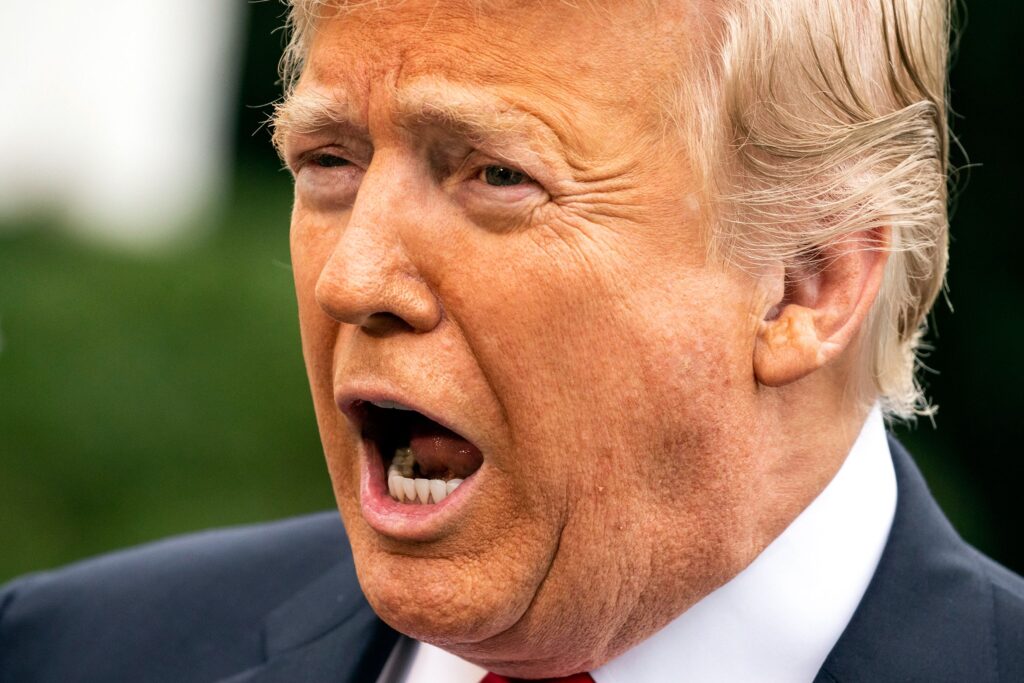
On October 23, 2025, President Donald Trump announced the cancellation of a planned federal deployment to San Francisco via Truth Social, after speaking with Mayor Daniel Lurie and tech leaders including Jensen Huang of Nvidia and Marc Benioff of Salesforce. The decision followed claims of substantial progress in public safety and reflects a shift toward collaborative urban safety management. For businesses and residents, it underscores how municipal leadership and private sector engagement now shape federal responses to urban challenges.
The Federal Rollback: What Prompted the Change
Trump stated he spoke with Mayor Lurie the previous evening, during which the mayor requested a chance to demonstrate progress without federal intervention. Trump framed the cancellation as a response to this appeal, emphasizing Lurie’s courteous approach and the city’s potential for improvement. This exchange was the immediate catalyst for reversing a planned 'surge' operation involving Border Patrol agents scheduled for Saturday.
Trump also noted that senior technology executives had urged against the deployment, later identified as Jensen Huang and Marc Benioff. They conveyed confidence in San Francisco’s trajectory, saying the city deserved a 'shot' to continue its efforts. Their intervention highlights how business leaders headquartered in or invested in the Bay Area now actively participate in public discourse on urban governance and safety policy.
Tech Sector Voices: Benioff, Huang and the Business Perspective
Marc Benioff, CEO and co-founder of Salesforce—headquartered in San Francisco with its annual Dreamforce convention there—had previously suggested in a New York Times interview that Trump deploy the National Guard to address crime. After pushback from local officials and a successful Dreamforce, Benioff apologized. His shift from advocating federal involvement to supporting local-led solutions reflects an understanding of urban policy complexities and the importance of community trust.
Jensen Huang, CEO of Nvidia—a firm central to global technology supply chains and AI development—further underscores the tech sector’s stakes. San Francisco and the Bay Area remain critical hubs for innovation, talent, and venture capital. Perceptions of instability or federal overreach risk disrupting operations, morale, and investment. Executives intervening signals how corporate interests are intertwined with municipal governance outcomes.
Local Leadership and Crime Data: Lurie’s Case for Confidence
Mayor Daniel Lurie welcomed the rollback as validation of his administration’s approach, stating he received Trump’s call late Wednesday night. He told the president what he told residents: San Francisco is experiencing a resurgence with returning visitors, increasing commercial leasing, and rebounding office occupancy. Lurie framed these as evidence of broader recovery and resilience.
At a Thursday afternoon news conference, Lurie cited recent crime statistics: citywide crime down nearly 30%, violent crime at levels not seen since the 1950s, car break-ins at 22-year lows, and homicides on track for 70-year lows. While requiring independent verification, he presented these as proof his public safety strategy was delivering results. Lurie also noted productive talks with Homeland Security Secretary Kristi Noem and Attorney General Pam Bondi on fentanyl coordination, indicating a preference for partnership over unilateral federal action.
Broader Implications: Immigration Enforcement and Community Response
The aborted deployment was part of a wider Trump administration initiative to expand immigration enforcement into the Bay Area, with Border Patrol agents expected at Coast Guard Island in Alameda the same day the San Francisco plan was cancelled. In Oakland, Mayor Barbara Lee and community leaders protested outside City Hall, condemning the move as a 'political stunt' designed to divide and intimidate rather than enhance safety. Lee echoed civil rights concerns that federal immigration sweeps often undermine trust with local law enforcement.
Lee acknowledged uncertainty about similar operations in Oakland or neighboring cities, stating she had received no direct communication from the White House or DHS. Nevertheless, she affirmed Oakland’s readiness to monitor developments and uphold its commitment to being welcoming to immigrants. This contrast—federal retreat in San Francisco amid tension elsewhere—illustrates the uneven, often politicized nature of immigration enforcement across metropolitan regions.
The episode drew support from prominent California Democrats. Governor Gavin Newsom, a former San Francisco mayor, praised Trump’s reversal as belated recognition of local expertise, saying the president had 'finally, for once, listened to reason.' Former House Speaker Nancy Pelosi similarly commended Mayor Lurie’s leadership, emphasizing that public safety must be rooted in local priorities and community values rather than imposed from above. These endorsements reflect a broader political consensus favoring devolved, collaborative models for urban challenges.
What This Means for Shoppers, Businesses and Urban Economies
For consumers and businesses, the outcome reinforces that urban stability depends less on episodic federal interventions and more on sustained, locally driven strategies that build trust and encourage investment. Retailers, hospitality providers, and office-based employers in San Francisco benefit from perceptions of safety and continuity. A reversal influenced by tech leaders may shore up consumer confidence and business expansion or relocation plans.
More broadly, it illustrates how public-private dialogue is evolving in urban governance. When global corporate CEOs weigh in on municipal safety policies, it signals city performance is a material factor in corporate risk assessment and location strategy. This dynamic incentivizes mayors to deliver improvements not just for residents, but also for the business ecosystems sustaining urban vitality. In an era where talent mobility and brand reputation matter, cities demonstrating competence and cohesion gain advantages in attracting people and capital.
What this means
The withdrawal of federal deployment plans for San Francisco serves as a case study in how urban policy is increasingly shaped by dialogue between city halls, corporate suites, and federal agencies—not through unilateral action, but through negotiation and mutual accountability. For shoppers navigating city centres and businesses evaluating where to invest, the message is clear: sustained progress in safety and civic cohesion is best achieved when local leadership is empowered, not overridden. While immigration enforcement remains a contentious national issue, this episode suggests that even in polarised times, pragmatic engagement can yield de-escalation and space for locally tailored solutions. As metropolitan economies continue to recover and evolve, the ability of cities to demonstrate self-reliance and collaborative governance will likely become a defining factor in their long-term competitiveness and appeal.
Originally reported by news.google.com. Adapted for our readers with AI assistance.