Politics
How Minnesota Figures Into the Presidential Politics of Insulin Prices
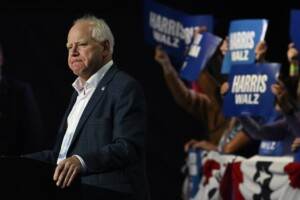
Politics tamfitronics Minnesota Gov. Tim Walz attends a rally in Asheville, North Carolina, on Sept. 17. Minnesota led the way on in...
TAMFIS NIG LTDRC 8067447CAC ACTIVEFinima, Bonny Island, Rivers State


The journey from Thomas Pynchon's 1990 novel 'Vineland' to Paul Thomas Anderson's 2025 film 'One Battle After Another' offers a rich tapestry of American cultural and political narratives. Both works engage deeply with the turbulence of the 1960s leftist movements, the conservative backlash epitomized by Nixon and Reagan, and the ongoing repercussions manifest in contemporary political phenomena such as the drug war and Trumpism. This article explores how the cinematic adaptation expands upon and dialogues with the novel’s themes, drawing connections across decades of American history and ideology. Through this exploration, we gain insight into the enduring struggles and battles shaping the nation's social fabric.
'Vineland,' published in 1990, is a dense, multifaceted novel by Thomas Pynchon that captures the complex tensions within American society during the 1980s. Set against the backdrop of California’s political and cultural landscape, the novel delves into the legacies of the 1960s counterculture, the rise of conservative politics, and the pervasive surveillance state. Pynchon’s narrative style blends dark humor with sharp critique, offering a panoramic view of a society grappling with its ideals and contradictions.
At its core, 'Vineland' wrestles with themes of resistance and repression, individuality and conformity. The characters embody various facets of American life, from former radicals to government agents, illustrating the interplay between personal histories and larger political forces. Pynchon’s exploration of the drug war, media manipulation, and governmental overreach resonates with contemporary concerns about civil liberties and state power.
Pynchon’s novel also engages philosophically with ideas of justice and morality, notably through references to Emerson’s concept of divine justice. This philosophical underpinning adds depth to the narrative, inviting readers to consider how historical and political battles reflect broader existential struggles. 'Vineland' thus serves as both a historical document and a timeless meditation on American identity.
Paul Thomas Anderson’s 2025 film 'One Battle After Another' is a cinematic adaptation inspired by the themes and narratives of Pynchon’s 'Vineland.' Rather than a direct retelling, the film expands on the novel’s exploration of American political and cultural conflicts, contextualizing them within a contemporary framework. Anderson’s approach emphasizes the ongoing nature of societal struggles, highlighting how battles over ideology, power, and identity persist across generations.
The film employs a nuanced narrative structure, weaving together personal stories with broader political commentary. Through compelling characters and evocative imagery, Anderson captures the emotional and psychological dimensions of activism, repression, and resilience. The visual medium allows for a visceral engagement with themes such as the drug war, surveillance, and political polarization, making the story accessible to a wider audience.
'One Battle After Another' also integrates contemporary political references, bridging the historical context of the 1960s and 1980s with present-day issues like Trumpism and immigration debates. This temporal layering underscores the cyclical nature of American political battles and invites viewers to reflect on the legacies of past movements in shaping current realities.
The 1960s were a defining era for American political activism, characterized by widespread social movements advocating for civil rights, anti-war protests, and cultural liberation. Both 'Vineland' and 'One Battle After Another' delve into this period, examining the hopes and disillusionments that emerged from the leftist movements. These works portray the 1960s left not only as idealistic but also as complex and sometimes conflicted, grappling with internal divisions and external opposition.
Opposing the leftist wave was the Nixonian right, a conservative political force that sought to restore traditional values and law-and-order policies. The Nixon administration’s aggressive stance on the drug war and political dissent significantly influenced the cultural landscape, fostering an atmosphere of surveillance and repression. This clash between progressive activism and conservative retrenchment forms a central tension in both the novel and the film.
By exploring this ideological battleground, the works highlight how the political strategies and cultural narratives of the 1960s continue to reverberate. The Nixonian right’s legacy, particularly in shaping the punitive approaches to crime and dissent, informs contemporary debates on policing, civil liberties, and government accountability.
The rise of Ronald Reagan in the 1980s marked a significant shift in American politics, consolidating conservative ideals that emphasized free-market economics, traditional social values, and a tough stance on crime and drugs. 'Vineland' captures this era’s ethos, portraying how Reaganism influenced public policy and cultural attitudes. The novel critiques the commodification of rebellion and the co-option of countercultural symbols by corporate and political interests.
Reagan’s policies on the drug war, welfare reform, and law enforcement intensified social inequalities and criminalization, themes that resonate in 'One Battle After Another.' The film illustrates how these policies contributed to systemic challenges, including mass incarceration and the marginalization of dissenting voices. Anderson’s portrayal underscores the human cost of political decisions, emphasizing personal stories within broader historical trends.
Both works suggest that Reaganism laid the groundwork for subsequent political developments, including the rise of right-wing populism. By tracing the ideological lineage from Reagan to Trumpism, they reveal continuities in rhetoric, policy, and cultural polarization, offering critical insights into the dynamics shaping modern America.
The war on drugs, initiated in the Nixon era and escalated under Reagan, is a central theme in both 'Vineland' and 'One Battle After Another.' These works expose the war on drugs as a tool for political control and social marginalization, disproportionately affecting communities of color and dissenters. Through vivid storytelling, they highlight the human toll of policies that prioritize punishment over rehabilitation.
Pynchon’s novel critiques the pervasive surveillance and policing that accompanied the drug war, weaving these elements into the broader narrative of governmental overreach. The film adaptation visualizes these themes, portraying the tension between individual freedom and state power. This focus invites reflection on the ethical and practical implications of punitive drug policies.
The ongoing nature of the drug war, as depicted in 'One Battle After Another,' underscores its entrenchment in American political culture. The film situates this conflict within a continuum of battles over civil rights, personal autonomy, and justice, emphasizing the need for critical examination and reform.
The emergence of Trumpism represents a continuation and intensification of the cultural and political conflicts explored in 'Vineland' and expanded upon in 'One Battle After Another.' Both works engage with the rise of populist nationalism, the erosion of democratic norms, and the resurgence of identity-based politics. They analyze how these trends reflect unresolved tensions from previous decades.
Through character-driven narratives and political commentary, the film examines Trumpism’s impact on immigration debates, media discourse, and social cohesion. It portrays the fracturing of American society into competing factions, each vying for legitimacy and power. This fragmentation echoes the struggles depicted in Pynchon’s novel, illustrating the cyclical nature of political battles.
By connecting historical movements to present-day phenomena, 'One Battle After Another' encourages viewers to consider the roots of contemporary polarization. The film serves as a cautionary tale about the consequences of divisive rhetoric and the importance of dialogue and understanding in bridging ideological divides.
Both 'Vineland' and 'One Battle After Another' engage with philosophical ideas, notably Ralph Waldo Emerson’s concept of divine justice. Emerson proposed that justice is an inherent, moral force guiding history toward balance and equity. This notion provides a lens through which the works examine the recurring cycles of conflict and reconciliation in American society.
The narratives suggest that despite setbacks and repression, there is a persistent striving toward justice and liberation. Characters embody this tension, caught between despair and hope, complicity and resistance. This philosophical layer adds depth to the portrayal of political struggles, framing them as part of a larger moral journey.
By invoking Emerson, the novel and film invite audiences to reflect on the ethical dimensions of activism and governance. They challenge viewers and readers to consider their roles in shaping the moral arc of history, emphasizing the importance of perseverance and integrity in the face of adversity.
The dialogue between 'Vineland' and 'One Battle After Another' offers a profound meditation on American cultural legacy and the enduring nature of social battles. Both works underscore how historical moments inform contemporary identities and political realities, revealing the interconnectedness of past and present struggles.
They also highlight the importance of storytelling—whether through literature or film—in preserving collective memory and fostering critical engagement. By revisiting the cultural and political upheavals of the past, these works encourage renewed reflection on the possibilities for social change and justice.
Looking forward, the narratives suggest that battles over ideology, power, and identity will continue to shape America’s future. However, they also affirm the potential for resilience, creativity, and solidarity in navigating the challenges ahead, inspiring audiences to participate actively in the ongoing quest for a more just society.
The journey from Thomas Pynchon’s 'Vineland' to Paul Thomas Anderson’s 'One Battle After Another' illustrates the enduring complexity of American cultural and political identity. By engaging with themes of activism, repression, ideology, and justice, both works offer insightful critiques and reflections on the nation’s past and present. Their dialogue invites audiences to consider the cyclical nature of political struggles and the moral imperatives that accompany them. Ultimately, these narratives challenge us to recognize our roles in the ongoing battles shaping America’s future, emphasizing the power of resilience, reflection, and collective action.
Originally reported by rollcall.com. Adapted for our readers.
Keep reading
Politics
Politics tamfitronics Minnesota Gov. Tim Walz attends a rally in Asheville, North Carolina, on Sept. 17. Minnesota led the way on in...
Politics
Nigerian human rights lawyer Deji Adeyanju has joined a Federal Government inquiry into the deaths of 37...
Politics
Democracy, Featured, Global, Global Governance, Headlines, International Justice, IPS UN: Insid...
TAMFIS NIG LTD
Electrical and instrumentation engineering, bid preparation and consulting, IT and software.