Politics
Yari’s 2027 Campaign Strategy: How to Evaluate Claims About Tinubu’s Record
Yari says the APC will emphasise Tinubu’s achievements in 2027. This analysis explains how voters can examine outcomes, baselines and campaign evidence.
TAMFIS NIG LTDRC 8067447CAC ACTIVEFinima, Bonny Island, Rivers State

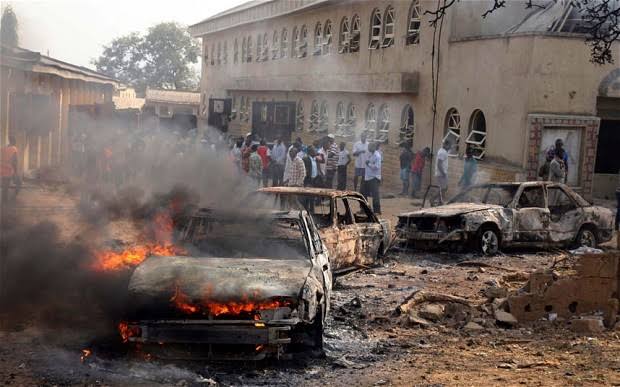
Nigeria’s religious diversity has long been a cultural strength, but it is increasingly a source of instability for businesses. As faith intersects with politics and daily life, extremist ideologies, selective religious laws, and violent reprisals over perceived blasphemy are eroding trust in institutions. For companies operating in Africa’s largest economy, these dynamics translate into legal unpredictability, disrupted supply chains, and a higher cost of doing business in one of the continent’s most promising yet precarious markets.
Since 1999, the integration of Sharia law into northern state constitutions has sparked debate over fairness and equality. Though intended to govern personal matters, its application often appears selective. Residents report that poor people face severe punishments—amputations for theft, stonings for adultery—while politically connected officials accused of embezzling public funds escape scrutiny.
This inconsistency weakens confidence in the rule of law, a foundation for commerce. Businesses depend on predictable contract enforcement and property rights; when legal outcomes seem tied to status or religion rather than evidence, long-term investment in affected regions becomes riskier. The rise in blasphemy cases adds another layer of uncertainty, as accusations can bypass courts entirely and trigger mob violence.
The Kano blasphemy trial of musician Yahaya Sharif-Aminu, sentenced to death for sharing a song deemed offensive, illustrates the pattern. A senior lawyer in the case stated that even if the Supreme Court ruled in Sharif-Aminu’s favour, the community would execute him anyway. Such statements signal that religious fervour can override judicial process, deterring investors who need credible state protection.
The 2022 lynching of Deborah Samuel, a Christian student in Sokoto who was burned alive over alleged blasphemous remarks in a WhatsApp group, shocked Nigeria and exposed both deep intolerance and political cowardice. Former Vice President Atiku Abubakar initially condemned the killing online but deleted the post after northern supporters objected, threatening his presidential ambitions.
That retreat illustrates how electoral calculations can silence condemnation of violence, creating a permissive environment for extremism. For businesses, the fallout is concrete: religious unrest can halt trade, damage infrastructure, and disrupt transportation routes. In an agrarian economy, such shocks inflate food prices, delay deliveries, and increase operational costs across supply chains.
Intolerance has also reached educated, supposedly moderate circles. In 2018, students at the Nigerian Law School’s Lagos campus threatened to lynch a classmate accused of blasphemy, requiring security intervention. When future lawyers resort to vigilante threats, the credibility of the very institutions meant to protect commerce suffers, and interfaith cooperation in the workplace grows more fragile.
Organised violence by groups such as Boko Haram and Fulani militants adds a sustained economic threat. Since 2009, reports indicate that more than 100,000 Christians have been killed and over 18,000 churches destroyed, a scale highlighted by U.S. comedian Bill Maher, who criticised global media silence on the issue.
Al Jazeera has cautioned that genocide claims oversimplify complex conflicts, including resource-driven farmer-herder clashes. Still, in the Middle Belt, attackers raid villages, displace residents, rename conquered lands, and seize arable territory—tactics widely viewed as land grabbing under the guise of jihad. The result is devastated agriculture, reduced harvests, and higher food prices nationwide.
Sectarian tensions have also been shaped by politics. The 2015 election of a Christian president intensified anxieties, and unrest has persisted under Muslim-led administrations, including the current Muslim-Muslim ticket of President Bola Tinubu and Vice President Kashim Shettima. Critics argue this pairing alienates Christians, deepening divisions that investors in emerging markets watch closely.
The role of figures who mediate between militants and the state raises alarms. Cleric Sheikh Ahmad Gumi has styled himself as an intermediary with bandits, while his son was recently commissioned from the Nigerian Defence Academy—prompting questions about vetting, conflicts of interest, and the credibility of state security institutions.
Government policies, such as reintegrating “repentant” Boko Haram members into society and recruiting ex-convicts into police units, have drawn criticism for insufficient screening. Critics see this as intentional porosity in security systems, raising risks of insider threats, compromised intelligence, and uneven protection for businesses and communities.
The federal response to violence against Christian communities has been widely described as inadequate. While Al Jazeera has framed some persecution narratives as anti-Muslim propaganda, affected communities—from Southern Kaduna and Bokkos in Plateau to Agatu in Benue, Dekina in Kogi, and Oke-Ode in Kwara—continue to suffer. These assaults halt farming and trade in regions vital to national output, undermining both local livelihoods and investor confidence.
Nigeria’s vast population, entrepreneurial energy, and natural resources give it enormous economic potential, but religious extremism and institutional fragility threaten to squander it. Prolonged instability could trigger capital flight and economic stagnation, as businesses favour markets where safety, predictability, and trust in institutions are stronger.
Leaders must enforce impartial justice, ensuring laws apply equally regardless of religion or social status, and protect courts from political or religious interference. Bridging divides through inclusive dialogue and equitable resource distribution, while condemning violence from any source, is essential to rebuilding national cohesion and commercial confidence.
Security reform must address both enforcement and root causes, including poverty, unemployment, and land disputes. Vetting processes for security personnel should be transparent and rigorous, and reintegration programmes must include robust monitoring to prevent recidivism. As an African adage holds, truth is like oil: no matter how much water is poured on it, it will always float. Acknowledging the reality of these threats is the first step toward resolving them and attracting the investment Nigeria needs.
Nigeria cannot afford to normalise religious violence or legal selectivity. For businesses, operating where justice appears arbitrary, blasphemy accusations can spark mob action, and supply chains are vulnerable to sectarian disruption is increasingly untenable. Yet the opportunity remains: through judicial reform, accountable security practices, and genuine reconciliation, Nigeria can turn its diversity into a foundation for resilient, inclusive growth. The path forward requires courage, consistency, and a shared commitment to ensuring that faith serves to unite, not divide, the nation.
Originally reported by hallmarknews.com. Adapted for our readers with AI assistance.
Keep reading
Politics
Yari says the APC will emphasise Tinubu’s achievements in 2027. This analysis explains how voters can examine outcomes, baselines and campaign evidence.
Lifestyle
Obi says his wife funds her own purchases. This analysis separates his explanation, unverified handbag prices and the evidence needed to assess public spending.
Politics
Politics tamfitronics Minnesota Gov. Tim Walz attends a rally in Asheville, North Carolina, on Sept. 17. Minnesota led the way on in...
TAMFIS NIG LTD
Electrical and instrumentation engineering, bid preparation and consulting, IT and software.