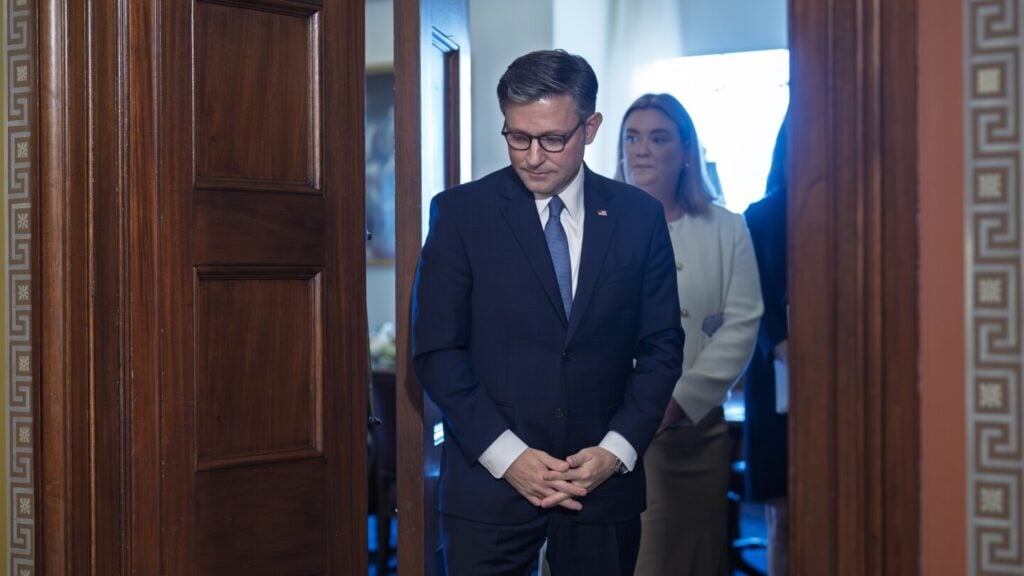
GOP leaders reject Democratic demands for bill to avoid shutdown
With the federal government’s funding set to expire at the end of September, lawmakers in Washington face a familiar and high-stakes dilemma: pass a stopgap spending bill to keep the government open or risk a shutdown that could disrupt services and affect millions of Americans. This year, the debate is sharply focused on Democratic demands to extend Affordable Care Act (ACA) health care subsidies and reverse recent Medicaid cuts, demands Republican leaders in the House and Senate have firmly rejected. As the clock ticks down, the standoff underscores the ongoing partisan tensions over health care funding and government spending priorities.
Republicans Propose a Clean Funding Bill Without Health Care Subsidies
Republican leaders in both chambers of Congress have put forward a stopgap spending bill designed to keep federal agencies funded through November 21. Their proposal generally maintains current funding levels and avoids including controversial policy provisions, a strategy Republicans say aligns with past Democratic preferences for “clean” funding bills free of partisan riders.
Senate Majority Leader John Thune of South Dakota emphasized that Democrats face a choice: cooperate with Republicans on the stopgap measure or risk a government shutdown. House Speaker Mike Johnson echoed this stance, stating that inserting unrelated issues, such as health care subsidies, into the funding bill is unacceptable.
The GOP bill includes a few exceptions to current funding levels, notably an $88 million increase to enhance security measures for lawmakers, the Supreme Court, and executive branch members. This increase comes amid growing concerns over personal threats to government officials, heightened by recent violent incidents such as the assassination of conservative activist Charlie Kirk.
Democrats Demand Extension of ACA Subsidies and Medicaid Reversals
Democrats have responded with a counterproposal that includes an extension of health care subsidies for low- and middle-income Americans purchasing insurance through the ACA. These subsidies, which have made health insurance more affordable since the COVID-19 pandemic, are set to expire at the end of the year.
Additionally, Democrats seek to reverse Medicaid cuts enacted earlier this year in a Republican-led spending bill dubbed the “big beautiful bill.” Their counterproposal also includes increased funding for congressional security and federal courts, with allocations exceeding those in the Republican measure.
Senate Democratic Leader Chuck Schumer stressed the willingness of Democrats to negotiate but insisted that helping the American people through health care support is a priority. He acknowledged that there is no “red line” but emphasized the need for meaningful assistance.
The Political Calculus and Risks of a Shutdown
The approaching deadline has set the stage for a high-stakes game of brinkmanship. Republicans need at least seven Democratic votes to pass the stopgap funding bill, but Democrats have so far resisted supporting a measure that excludes their health care demands.
Democratic lawmakers face pressure from their base to hold firm, with some believing that a government shutdown could force Republicans back to the negotiating table on health care and other issues. However, a shutdown would also have significant consequences, including the closure of most federal agencies and the furlough of millions of federal employees deemed non-essential, including many military personnel.
The uncertainty surrounding the potential shutdown is compounded by the lack of guarantee that the two parties will reach an agreement quickly if the government does close. This situation recalls a similar standoff in March when Schumer voted with Republicans to avoid a shutdown, a decision that caused friction within the Democratic caucus.
Internal Democratic Dynamics and Leadership Unity
The March vote by Schumer to keep the government open despite Democratic opposition revealed divisions within the party, notably between Schumer and House Democratic Leader Hakeem Jeffries. Jeffries opposed the GOP spending bill and refused to be complicit in Schumer’s decision.
Currently, both leaders assert that they are united in their approach, with Schumer noting that the political landscape has shifted since the spring. The passage of Medicaid cuts and changing public opinion have heightened Democratic resolve to secure health care subsidies and oppose spending bills that do not address these priorities.
This internal unity is crucial as Democrats weigh the risks and benefits of supporting or opposing the GOP stopgap bill.
Trump’s Role and Messaging Amid the Standoff
Former President Donald Trump has taken a dismissive tone toward Democratic threats of a shutdown, stating last week that negotiations are futile because Democrats would not vote for any proposal, even if it met all their demands.
Democrats have used Trump’s statements to argue that the former president would bear responsibility for a shutdown, pointing out that passing a budget requires a supermajority in the Senate, which Democrats control.
Senator Tammy Baldwin of Wisconsin suggested that Trump’s comments signal a preference for a shutdown, framing the situation as a political gamble with serious consequences for government operations and public services.
What this means
As the September 30 deadline approaches, the impasse between Republican and Democratic leaders over health care subsidies and government funding highlights the enduring challenges of bipartisan cooperation in Washington. While Republicans advocate for a clean funding bill to avoid a shutdown, Democrats insist on extending vital health care subsidies and reversing recent Medicaid cuts. The outcome of this standoff will have significant implications not only for government operations but also for millions of Americans relying on affordable health care. Both parties face difficult choices, balancing political strategy with the practical needs of the public. Whether compromise can be reached in time remains uncertain, making the coming days critical for lawmakers and citizens alike.
Originally reported by apnews.com. Adapted for our readers with AI assistance.
Governor Babagana Zulum's administration transformed Borno's devastated health infrastructure into a regional centre of excellence, committing over 15 percent of the state budget to…