
Politics
Science vs politics: Kiwi’s long road to EU health-claim approval
In August 2025, Zespri, the world’s largest marketer of kiwifruit, announced that the European Commission had approved what it described as the first health…
TAMFIS NIG LTDRC 8067447CAC ACTIVEFinima, Bonny Island, Rivers State

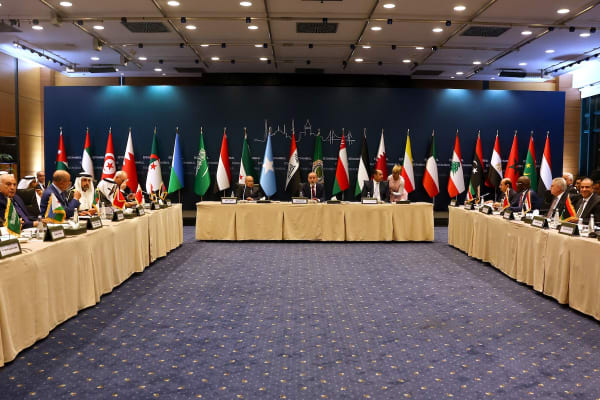
In a landmark development, the Arab League has formally condemned Hamas’s October 7, 2023, attack and called for the group’s disarmament and cessation of its rule in Gaza. This unprecedented stance breaks with decades of either tacit support or silence toward Hamas and signals a fundamental shift in the Arab world’s approach to the Palestinian cause and its relations with Israel. The move reflects a complex interplay of factors, including renewed efforts toward a two-state solution, the desire for regional stability, the impact of the humanitarian crisis in Gaza, and evolving diplomatic ties with Israel. Understanding this shift is crucial to grasping the emerging dynamics shaping Middle East politics and the potential for a new chapter in the Israeli-Palestinian conflict.
The Arab League’s explicit condemnation of Hamas’s October 7 attack marks a decisive break from past Arab political norms. Historically, many Arab nations either supported Hamas directly or refrained from openly criticizing its armed resistance against Israel. This new declaration signals a clear preference for political statehood over militant struggle as the pathway to Palestinian sovereignty.
Central to this reassessment is the renewed emphasis on a two-state solution. Hamas’s control over Gaza and its charter advocating for Israel’s destruction have long been obstacles to peace negotiations. The Arab League now insists that a viable Palestinian state must be governed by a unified Palestinian Authority, underscoring that Hamas’s military presence is not a legitimate form of resistance but a threat to Palestinian nationhood itself.
This shift reflects a pragmatic recognition that armed conflict has not advanced the Palestinian cause but instead undermined prospects for statehood and international support. Arab states are increasingly viewing Hamas’s armed rule as an impediment to both diplomatic progress and the establishment of a sovereign Palestinian state recognized by the international community.
The brutal Hamas attack on October 7, 2023, and the ensuing war in Gaza have profoundly altered regional perceptions. While initial Arab responses were cautious and carefully worded, the unprecedented scale of violence and humanitarian devastation prompted a reevaluation of Hamas’s tactics and objectives.
The Arab League’s public denunciation of the attack breaks a long-standing taboo against criticizing Palestinian resistance methods. This move indicates that many Arab states now view Hamas’s actions as strategic failures that have set back the Palestinian cause and destabilized the region.
By openly condemning the attack, the Arab League is prioritizing regional stability and national interests over ideological solidarity with Hamas, signaling a new political pragmatism. This shift also reflects a growing awareness that violent escalation only exacerbates suffering and diminishes prospects for peace.
The Arab League’s stance is closely linked to broader trends of normalization between Arab states and Israel, exemplified by the Abraham Accords. These agreements reflect a willingness among key Arab nations to engage diplomatically and economically with Israel, motivated by shared concerns such as countering Iranian influence and fostering regional security.
The October 7 attack disrupted this momentum, but the Arab League’s demand for Hamas’s disarmament aims to remove a major obstacle to renewed normalization efforts. By distancing themselves from Hamas’s militant agenda, Arab states are signaling readiness to revive diplomatic ties and economic cooperation with Israel.
This collective position suggests that many Arab countries see integration and cooperation with Israel as essential to their long-term prosperity and security, marking a significant realignment in Middle Eastern geopolitics. It also reflects a pragmatic approach to addressing common regional challenges, including security threats and economic development.
The devastating humanitarian situation in Gaza, exacerbated by the conflict triggered by Hamas’s attack, has placed immense pressure on Arab governments to act decisively. The war has led to widespread suffering, displacement, and a dire need for humanitarian aid and reconstruction.
The Arab League’s declaration acknowledges the suffering of Gaza’s civilian population and frames Hamas’s continued rule as a barrier to ending the war and enabling humanitarian aid delivery and reconstruction. The call for Hamas to relinquish power is presented as a necessary step toward alleviating the crisis and restoring stability.
This humanitarian imperative reflects widespread concern within the Arab world and a desire to find a sustainable resolution that prioritizes the welfare of Palestinians living in Gaza. It underscores the recognition that political and military strategies must ultimately serve the people’s needs and well-being.
The Arab League’s unified position also exerts pressure on countries historically supportive of Hamas, notably Qatar and Turkey. These nations have often played mediator roles but now face a collective Arab stance opposing Hamas’s armed governance.
This new alignment may compel these countries to leverage their influence to push Hamas toward compliance with the Arab League’s demands or risk diplomatic isolation within the Arab world. The shift challenges the traditional roles and strategies of these regional actors, potentially reshaping alliances.
Such dynamics could influence the future trajectory of the Israeli-Palestinian conflict by altering the balance of support for Hamas and encouraging a political rather than military resolution. It also highlights the increasing complexity of regional diplomacy and the interconnectedness of Middle Eastern states’ interests.
The Arab League’s break with Hamas marks a pivotal moment in Middle East politics, signaling a strategic realignment that could reshape the Israeli-Palestinian conflict and broader regional relations. By prioritizing political solutions, regional stability, and humanitarian needs over militant resistance, the Arab world is charting a new course that may revive the prospects for a two-state solution and renewed cooperation with Israel. While challenges remain—including the complex dynamics involving Hamas’s supporters and the ongoing humanitarian crisis—this shift reflects a pragmatic recalibration of priorities. It opens potential pathways toward peace and stability in a historically volatile region, emphasizing diplomacy, unity, and the welfare of the Palestinian people as central to future progress.
Originally reported by allisraelnews.com. Adapted for our readers with AI assistance.
Keep reading
Politics
In August 2025, Zespri, the world’s largest marketer of kiwifruit, announced that the European Commission had approved what it described as the first health…
News
By Engr. Tamunofiniarisa BrownReading Time: 6 Minutes The conflict between Russia and Ukraine is often framed in the media as a simple battle between…
Politics
Twenty-five years after the September 11 attacks, the family of Marine Travis Fuller reflects on his death in the Iraq War, grappling with the…
TAMFIS NIG LTD
Electrical and instrumentation engineering, bid preparation and consulting, IT and software.