Politics
How Minnesota Figures Into the Presidential Politics of Insulin Prices
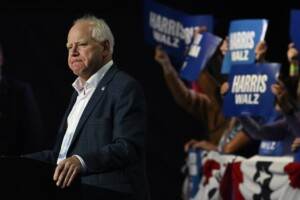
Politics tamfitronics Minnesota Gov. Tim Walz attends a rally in Asheville, North Carolina, on Sept. 17. Minnesota led the way on in...
TAMFIS NIG LTDRC 8067447CAC ACTIVEFinima, Bonny Island, Rivers State


The political landscape in Kakamega County is heating up as the 2027 general election draws nearer. Senator Boni Khalwale has recently issued a sharp warning to Deputy President Kithure Kindiki, cautioning him against interfering in Kakamega’s political affairs. This development follows Kindiki’s public endorsement of Governor Fernandes Barasa’s re-election bid, a move that Khalwale vehemently opposes. Khalwale, who aims to clinch the Kakamega governorship in 2027 after a previous unsuccessful attempt, insists that the people of Kakamega are capable of making their own informed decisions without external influence. This article delves into the dynamics of this political tussle, exploring the backgrounds, motivations, and implications for Kakamega’s political future.
Kakamega County has long been a hotspot for vibrant political activity, with leaders vying to influence the region’s governance and development trajectory. Senator Boni Khalwale, a seasoned politician with a strong following, has been a central figure in this political theater. Elected as Kakamega’s first senator in 2013, Khalwale has since been an influential voice in county and national politics.
The rivalry intensified after Khalwale’s unsuccessful bid for the governorship in 2017, where he was defeated by Wycliffe Oparanya. Despite the defeat, Khalwale remained active in politics, maintaining his influence and preparing for another attempt at the governorship in 2027. His political journey has been marked by a commitment to representing Kakamega’s interests and challenging perceived external interference.
On the other hand, Deputy President Kithure Kindiki, a prominent figure in Kenya’s national government, recently made headlines by endorsing Governor Fernandes Barasa’s re-election campaign. Kindiki’s involvement in Kakamega politics, particularly his public support for Barasa, has been perceived by Khalwale as unwarranted meddling, sparking tensions between the two leaders.
Deputy President Kithure Kindiki publicly declared his support for Governor Fernandes Barasa’s bid for a second term in office, praising Barasa’s performance and leadership since his election on an ODM ticket three years ago. Kindiki highlighted Barasa’s achievements and urged the electorate to consider continuity for sustained development in the county.
This endorsement was made during a series of empowerment programs in Kakamega and was intended to consolidate political support for Barasa ahead of the 2027 elections. Kindiki’s endorsement also aligns with the broader political strategy of the ruling party, which seeks to maintain influence in key counties such as Kakamega.
However, Kindiki’s declaration was met with resistance from other political actors in Kakamega, especially Boni Khalwale, who views the endorsement as an overstep by a national figure into local politics. Khalwale argued that such interference undermines the autonomy of Kakamega’s electorate.
In response to Kindiki’s endorsement, Senator Boni Khalwale issued a firm warning to the deputy president, asserting his seniority in Kakamega’s political arena. Khalwale emphasized that Kindiki lacks the political experience and authority to dictate who the people of Kakamega should elect as their governor.
During a public function in Shimanyiro, Kakamega, Khalwale stated, "Professor Kindiki was here, and told everyone that he is now experienced, and that he can tell Kakamega people who will be their governor. He should know that he does not have the capacity to decide for the people of Kakamega." This remark underscored Khalwale’s view that local political decisions should be left to the county’s electorate and political leaders.
Moreover, Khalwale urged Kindiki to focus his political efforts on his home region, specifically on consolidating support for President William Ruto’s re-election in Mt. Kenya, rather than interfering in Kakamega’s leadership choices. This response highlights the growing regional political sensitivities ahead of the 2027 elections.
Senator Boni Khalwale has made no secret of his ambitions to become the governor of Kakamega in the 2027 general election. Having previously contested the position in 2017 and lost, Khalwale is now intensifying his political activities to secure a win in his second attempt. His campaign is rooted in his long-standing commitment to the county and his belief that he is best positioned to lead Kakamega towards progress.
To enhance his political prospects, Khalwale recently launched his own political party, the United Patriotic Movement (UPM). The party, which has a nationwide presence, focuses on youth empowerment and represents a strategic shift from his earlier affiliation with the ruling UDA party. Khalwale’s decision to form UPM reflects his desire to create an independent political platform free from the constraints of national party politics.
Khalwale’s break from UDA also signals a broader political realignment, especially after President William Ruto openly declared support for Governor Barasa’s re-election. Khalwale’s new party and campaign strategy position him as a formidable contender who is determined to challenge both Barasa and any external influences in Kakamega’s political scene.
The political contest in Kakamega cannot be fully understood without considering the broader regional dynamics in Kenya. Western Kenya, where Kakamega is located, has its own unique political landscape shaped by ethnic, social, and economic factors. Leaders from this region often assert their independence from national political pressures to protect local interests.
Deputy President Kindiki’s attempt to influence Kakamega’s gubernatorial race is viewed by some as an extension of national politics into regional affairs. This has raised concerns among local leaders about the autonomy of Kakamega’s political process and the importance of allowing local voters to decide without external interference.
Boni Khalwale’s rebuke of Kindiki reflects a common sentiment in Western Kenya that local politics should be driven by homegrown leadership and grassroots support. This regional assertion of political independence is likely to shape the strategies and alliances formed as the 2027 elections approach.
The public exchange between Boni Khalwale and Kithure Kindiki has energized political discussions among Kakamega residents. Voters are keenly observing how these political figures position themselves, as their endorsements and rivalries influence public opinion and electoral choices.
Khalwale’s emphasis on the electorate’s ability to make informed decisions resonates with many Kakamega citizens who value political autonomy. His message challenges voters to critically assess candidates based on performance and vision rather than external endorsements.
At the same time, the heightened political activity is contributing to a charged atmosphere in the county, with political campaigns expected to intensify in the coming months. The electorate will be pivotal in determining whether Khalwale’s call for local leadership prevails over national political influence.
As the 2027 general election approaches, Kakamega’s political landscape remains fluid and competitive. Boni Khalwale’s assertiveness and strategic moves position him as a leading contender for the governorship, especially with his new political party and focused campaign agenda.
Governor Fernandes Barasa, backed by Deputy President Kindiki and the ruling party, will also be a formidable candidate, seeking to leverage incumbency and national support. The contest between these two political heavyweights is expected to dominate the county’s political discourse.
Observers predict that the election will be closely fought, with voter turnout and grassroots mobilization playing crucial roles. The outcome will not only determine Kakamega’s leadership but also reflect broader political trends in Western Kenya and the nation as a whole.
The ongoing political rivalry between Boni Khalwale and Kithure Kindiki offers several insights into Kenya’s political culture. It highlights the tension between national political figures and regional leaders over influence and authority in local governance.
It also underscores the importance of respecting the electorate’s autonomy and the need for political leaders to engage communities authentically rather than imposing decisions from above. This dynamic is crucial for democratic development and political stability.
Lastly, the Kakamega case exemplifies how political ambition, party realignments, and regional identities converge to shape electoral outcomes. Understanding these factors is essential for stakeholders aiming to navigate Kenya’s complex political environment effectively.
The warning issued by Senator Boni Khalwale to Deputy President Kithure Kindiki marks a significant moment in Kakamega’s political narrative as the 2027 general election approaches. Khalwale’s insistence on local autonomy and his challenge to Kindiki’s endorsement of Governor Barasa underscore the vibrant and sometimes contentious nature of Kenyan politics. With Khalwale’s renewed ambitions and the formation of his own political party, the political landscape in Kakamega is set for a dynamic contest that will test the strength of regional identity against national political influence. Ultimately, the people of Kakamega hold the power to decide their future leaders, and their choice will resonate beyond county borders, shaping the political discourse in Kenya for years to come.
Originally reported by tuko.co.ke. Adapted for our readers.
Keep reading
Politics
Politics tamfitronics Minnesota Gov. Tim Walz attends a rally in Asheville, North Carolina, on Sept. 17. Minnesota led the way on in...
Politics
Nigerian human rights lawyer Deji Adeyanju has joined a Federal Government inquiry into the deaths of 37...
Politics
Democracy, Featured, Global, Global Governance, Headlines, International Justice, IPS UN: Insid...
TAMFIS NIG LTD
Electrical and instrumentation engineering, bid preparation and consulting, IT and software.