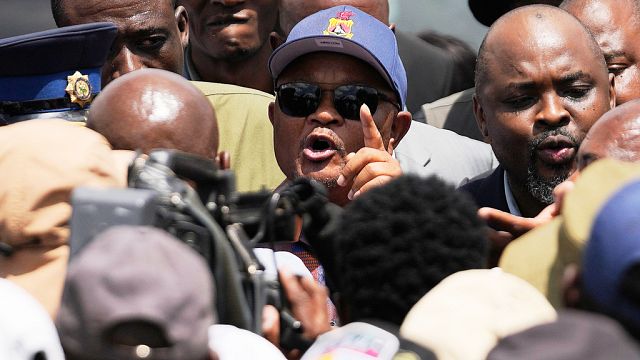
Top South African official accuses police minister of colluding with crime syndicates
South Africa has long battled high crime rates and systemic corruption within its law enforcement agencies. Recently, these challenges have taken a dramatic turn with General Nhlanhla Mkhwanazi, the head of police in KwaZulu-Natal province, publicly accusing Police Minister Senzo Mchunu and Deputy National Commissioner Shadrack Sibiya of collaborating with criminal syndicates. These allegations include interference in sensitive investigations and disbandment of specialized crime units tasked with tackling politically motivated killings. This article explores the background of these accusations, responses from involved parties, and the potential ramifications for South Africa’s security landscape.
Background of the Allegations
The allegations surfaced during a press conference held by General Nhlanhla Mkhwanazi in KwaZulu-Natal on a recent Sunday. Mkhwanazi claimed that Police Minister Senzo Mchunu and Deputy National Commissioner Shadrack Sibiya had obstructed police investigations into politically motivated killings linked to crime syndicates. The accused allegedly disbanded a critical crime unit responsible for these investigations, raising suspicions of deliberate interference.
Mkhwanazi’s accusations are unprecedented in South Africa’s law enforcement history, as they involve high-ranking officials openly accusing each other of criminal collusion. The general further alleged that various sectors, including politicians, law enforcement officers, metro police, correctional services, prosecutors, and judiciary members, are compromised and influenced by drug cartels and business interests.
These claims come at a time when South Africa faces one of the highest crime rates globally, with organized crime and corruption deeply embedded in some institutions. The gravity of the allegations has triggered widespread public concern and calls for transparent investigations to restore trust in the police service.
Details of the Accused Officials’ Alleged Actions
According to General Mkhwanazi, Police Minister Senzo Mchunu and Deputy National Commissioner Shadrack Sibiya took deliberate steps to disrupt investigations into politically motivated murders linked to crime syndicates. The disbandment of the specialized crime unit was particularly significant, as it had been making headway in uncovering criminal networks operating within KwaZulu-Natal.
Mkhwanazi’s investigation purportedly uncovered evidence that powerful individuals within law enforcement and government institutions are under the influence of criminal organizations, particularly drug cartels. This alleged collusion compromises the integrity of critical crime-fighting mechanisms and undermines efforts to bring criminals to justice.
The general emphasized that while he has amassed evidence to support his claims, this information has yet to be publicly disclosed. The anticipation of these revelations has heightened public interest and scrutiny of the police ministry’s activities.
Responses from Police Minister Senzo Mchunu and Deputy National Commissioner Shadrack Sibiya
In response to the accusations, Police Minister Senzo Mchunu categorically denied any involvement in colluding with crime syndicates. He described the allegations as baseless and defamatory, emphasizing his commitment to maintaining the integrity of the police ministry and the South African Police Service (SAPS).
Mchunu issued a formal statement asserting that he would not allow unsubstantiated insinuations, especially from high-ranking officers like Lieutenant General Mkhwanazi, to undermine the reputation of the ministry or SAPS. His response highlighted the importance of due process and evidence in addressing such serious claims.
Deputy National Commissioner Shadrack Sibiya has remained largely silent publicly but is understood to be cooperating with internal investigations. The police ministry has indicated that it will rigorously investigate the allegations to ensure accountability and transparency within its ranks.
Political and Public Reactions to the Allegations
The accusations have sparked intense debate within South Africa’s political landscape. The ruling African National Congress (ANC) expressed grave concern over Mkhwanazi’s claims and assured the public that President Cyril Ramaphosa would address the matter promptly upon his return from the BRICS Leaders' Summit in Brazil.
President Ramaphosa’s office described the situation as a matter of national security requiring urgent attention, acknowledging the risk that such internal disputes and accusations could erode public confidence in law enforcement institutions. The president’s response underscores the seriousness with which the government is treating these developments.
Civil society organizations, including the Institute for Security Studies, have called for independent and thorough investigations to validate the claims. They warn that failure to address potential corruption at high levels could further undermine South Africa’s efforts to combat crime and restore public trust.
The Impact of Alleged Corruption on South Africa’s Security Environment
South Africa’s security environment is already challenged by high crime rates, including violent crimes, organized syndicates, and politically motivated killings. Allegations of collusion between senior police officials and criminal networks exacerbate these challenges by potentially enabling impunity and weakening law enforcement effectiveness.
Corruption within law enforcement agencies can lead to compromised investigations, reduced morale among honest officers, and diminished public cooperation, all of which hinder crime prevention and prosecution. Such systemic issues may allow criminal syndicates to operate with greater freedom, posing a threat to national stability.
If substantiated, the claims made by General Mkhwanazi could reveal deep-rooted vulnerabilities within South Africa’s policing structures. Addressing these concerns is vital to restoring institutional integrity and ensuring that justice is served without fear or favor.
The Role of Media and Public Perception
The media has played a crucial role in bringing these allegations to the forefront, providing a platform for public discourse on police corruption and governance. Coverage of the accusations has sparked widespread debate on social media and traditional news outlets, reflecting public frustration with ongoing crime and corruption issues.
Public perception of the police service is at a critical juncture, with many citizens expressing skepticism about the ability of law enforcement to act impartially and effectively. Transparency and accountability in handling these allegations are essential to rebuilding trust between the community and the police.
The unfolding situation also highlights the importance of investigative journalism and independent oversight bodies in holding public officials accountable. Continued media scrutiny will be necessary to ensure that the matter is not swept under the rug and that justice prevails.
Potential Legal and Institutional Outcomes
The South African government and police ministry have signaled intentions to conduct thorough investigations into the allegations. This process may involve internal disciplinary hearings, criminal probes, and possibly parliamentary inquiries to determine the veracity of the claims against the police minister and deputy commissioner.
Legal consequences could range from administrative sanctions to criminal charges if evidence of collusion and corruption is substantiated. Such outcomes would have significant implications for governance and law enforcement accountability in South Africa.
Institutionally, these developments may prompt reforms within SAPS to strengthen oversight, enhance transparency, and prevent future interference in investigations. The crisis could serve as a catalyst for broader anti-corruption measures aimed at restoring public confidence and improving policing effectiveness.
Looking Ahead: The Future of Policing and Crime Control in South Africa
The allegations against senior police officials represent a critical test for South Africa’s commitment to fighting crime and corruption. How the government and law enforcement institutions respond will shape the future trajectory of policing and public safety in the country.
Restoring trust requires not only addressing the immediate accusations but also implementing systemic reforms to ensure independence, accountability, and integrity within the police service. Engaging communities and civil society in these efforts will be crucial to fostering cooperation and enhancing security.
Ultimately, South Africa’s ability to overcome these challenges will depend on transparent investigations, decisive leadership, and sustained commitment to upholding the rule of law. The nation’s security and democratic stability hinge on the outcomes of this unfolding scandal.
Conclusion
The startling accusations made by General Nhlanhla Mkhwanazi against top police officials have brought to light troubling concerns about corruption and collusion within South Africa’s law enforcement agencies. As the nation grapples with these revelations, the imperative for transparent investigations and institutional reforms has never been clearer. The outcome of this crisis will significantly influence South Africa’s ability to combat crime effectively and uphold the rule of law. Restoring public confidence demands unwavering commitment from government leaders, rigorous accountability measures, and active engagement with civil society. Only through these combined efforts can South Africa hope to overcome the challenges posed by corruption and secure a safer future for its citizens.
Originally reported by africanews.com. Adapted for our readers.
Discover how emotionally intelligent couples use a simple 'capacity check' question every morning to strengthen their relationships, reduce conflicts, and navigate daily challenges with…