
Breaking News
A road collision kills at least 21 people in northwestern Nigeria
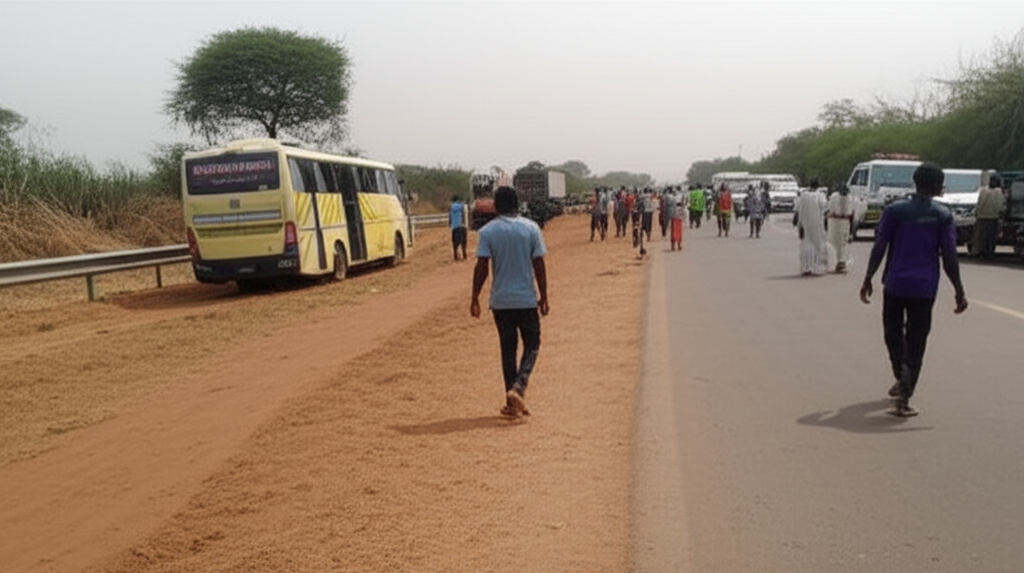
On Sunday, July 6, 2025, a devastating head-on collision occurred along the heavily trafficked Zaria–Kano expressway in Kano State, northwestern Nigeria. This tragic accident claimed the lives of at least 21 people, including 19 men and two women, and left three others injured. The crash involved a commercial passenger vehicle, commonly known as a “danfo,” traveling in the wrong direction, and a heavy-duty truck. This incident highlights the persistent road safety issues faced by Nigeria, especially along its northern corridors, and raises urgent questions about traffic regulation enforcement and infrastructure development.
The Incident: A Deadly Collision on Zaria–Kano Expressway
The collision took place on a busy Sunday afternoon, involving a commercial passenger bus and a heavy-duty truck. According to the Federal Road Safety Corps (FRSC), the passenger vehicle was driving against traffic regulations by moving in the wrong lane, leading to a catastrophic head-on crash. The force of the impact was so severe that it resulted in 21 fatalities, with only three survivors who sustained non-life-threatening injuries.
This expressway is a key transport artery connecting major cities in northwestern Nigeria, frequently bustling with commercial and passenger traffic. The high volume of vehicles, combined with challenging road conditions, makes it a hotspot for accidents. This recent tragedy has once again brought attention to the dangers that motorists face daily on these routes.
Emergency response teams, including the FRSC and local authorities, arrived promptly at the scene to conduct rescue operations and clear the wreckage. Investigations are ongoing to determine the precise factors that led to the passenger vehicle's wrong-way movement and to prevent similar future incidents.
Road Safety Context in Nigeria’s Northwestern Region
Road traffic accidents remain a significant public safety concern in Nigeria, with the northwestern region experiencing a disproportionate share of incidents. In 2024 alone, Nigeria recorded over 9,500 road traffic accidents, resulting in more than 5,400 deaths nationwide. Many of these accidents occur on major expressways like the Zaria–Kano route, which connects populous urban centers and rural areas.
Factors such as inadequate road infrastructure, poor enforcement of traffic laws, and vehicle overloading contribute to the high accident rates. Additionally, the region’s transport ecosystem relies heavily on commercial passenger vehicles, including danfos and buses, which often operate under challenging conditions with limited regulatory oversight.
These systemic challenges are compounded by socio-economic pressures that push drivers to take risks, such as speeding, wrong-way driving, and fatigue. The recurring nature of fatal crashes on these highways underscores the urgent need for comprehensive road safety reforms in the region.
Underlying Causes of Frequent Road Accidents in Northwestern Nigeria
The FRSC and road safety experts identify multiple interrelated causes behind the high incidence of road accidents in northwestern Nigeria. Wrong-way driving, as seen in the recent collision, often stems from driver impatience, poor navigation, or deliberate attempts to take shortcuts to avoid traffic congestion.
Driver fatigue is another critical factor, particularly among commercial drivers who work long hours without adequate rest. This exhaustion impairs judgment and reaction times, increasing the likelihood of mistakes on busy roads. Enforcement of mandatory rest periods remains inconsistent, allowing fatigue-related accidents to persist.
Additionally, speeding contributes to over half of road accidents in some northern states. Coupled with poor road signage, inadequate lighting, and pothole-damaged surfaces, these conditions create a hazardous driving environment. Vehicle maintenance issues, especially among public transport fleets, further exacerbate risks by increasing the chances of mechanical failure.
The Federal Road Safety Corps’ Response and Initiatives
In the aftermath of the accident, the FRSC has reiterated its commitment to improving road safety through stricter enforcement of traffic regulations. The agency emphasizes the importance of pre-trip vehicle inspections to ensure mechanical soundness and compliance with safety standards before journeys commence.
The FRSC also advocates for mandatory rest breaks for commercial drivers to combat fatigue-related crashes. Educational campaigns targeting both drivers and passengers are being intensified to raise awareness of safe driving practices and the dangers of violating traffic rules.
Despite these efforts, the FRSC acknowledges the challenges posed by regulatory gaps and limited resources. The agency calls for enhanced collaboration with other governmental bodies and private stakeholders to strengthen road safety frameworks and reduce preventable fatalities.
Broader Implications for Nigeria’s Road Transport Sector
The recent tragedy is emblematic of the wider challenges facing Nigeria’s road transport sector. Frequent fatal accidents undermine public confidence in road safety and hinder socio-economic development by disrupting trade and mobility. The loss of lives also places emotional and financial burdens on families and communities.
Moreover, recurring crashes strain emergency response systems and healthcare facilities, which often operate under resource constraints. This cyclical pressure highlights the need for a multi-faceted approach that includes infrastructure investment, regulatory reform, and behavioral change among road users.
The government’s response, including statements from President Bola Tinubu, reflects growing recognition of these issues. His calls for intensified safety measures and systemic reforms signal a potential turning point, but effective implementation remains critical to achieving tangible improvements.
Lessons Learned from Previous Major Road Accidents
Earlier in 2025, a similar tragic accident occurred on the Kaduna–Kano expressway, involving a bus carrying athletes from the National Sports Festival. That crash resulted in 21 to 22 fatalities and was mainly attributed to excessive speed and driver fatigue. These incidents collectively illustrate persistent risk factors that have yet to be adequately addressed.
Analysis of these accidents reveals recurring patterns such as non-compliance with traffic regulations, insufficient driver training, and poor vehicle maintenance. Each tragedy provides critical data to inform policy changes and safety protocols aimed at preventing future occurrences.
Learning from past events also highlights the importance of community engagement and public education. Encouraging responsible driving behaviors and fostering a culture of safety are essential components of a sustainable road safety strategy.
Recommendations for Enhancing Road Safety in Northwestern Nigeria
Experts recommend a multi-pronged approach to reduce road accidents, starting with stronger enforcement of existing traffic laws. Increasing the presence of traffic police and FRSC personnel along key routes can deter dangerous behaviors such as wrong-way driving and speeding.
Investment in road infrastructure is equally critical. Upgrading highways with better lighting, clearer signage, and timely road repairs can significantly improve driving conditions. Introducing advanced technologies like speed cameras and automated traffic monitoring may also enhance compliance.
Furthermore, improving driver training programs and instituting rigorous vehicle inspection regimes will help ensure that only qualified drivers operate roadworthy vehicles. Public awareness campaigns should continue to emphasize the human cost of road accidents and promote safer travel habits.
The Path Forward: Building Safer Roads for Nigeria’s Future
Addressing the high toll of road accidents in northwestern Nigeria requires coordinated efforts from government agencies, transport operators, and the public. Political will to allocate resources and enforce regulations must be matched by community participation in promoting road safety culture.
Long-term strategies should incorporate data-driven policymaking, leveraging accident statistics to identify hotspots and prioritize interventions. Collaboration with international road safety organizations can also provide valuable expertise and funding support.
Ultimately, the goal is to transform Nigeria’s road transport environment into one where mobility is safe, reliable, and conducive to economic growth. The recent tragic collision serves as a stark reminder of the urgency to act decisively and prevent further loss of life.
Conclusion
The tragic loss of at least 21 lives in the recent road collision on the Zaria–Kano expressway serves as a somber reminder of the urgent road safety challenges facing northwestern Nigeria. While enforcement agencies like the FRSC are taking steps to curb dangerous driving practices, the complexity of underlying causes demands a holistic approach involving infrastructure development, regulatory reform, and behavioral change. Only through sustained commitment and coordinated action can Nigeria hope to reduce its high rate of road traffic fatalities and ensure safer journeys for all its citizens.
Originally reported by news.google.com. Adapted for our readers.