
Business
Abbey Bank’s 56% Profit Surge Signals Strategic Shift to Commercial Banking in Nigeria
Abbey Bank Plc's profit after tax rose 55.9 percent to N2.26 billion in the nine months to September 2026, driven by a 120 percent…
TAMFIS NIG LTDRC 8067447CAC ACTIVEFinima, Bonny Island, Rivers State

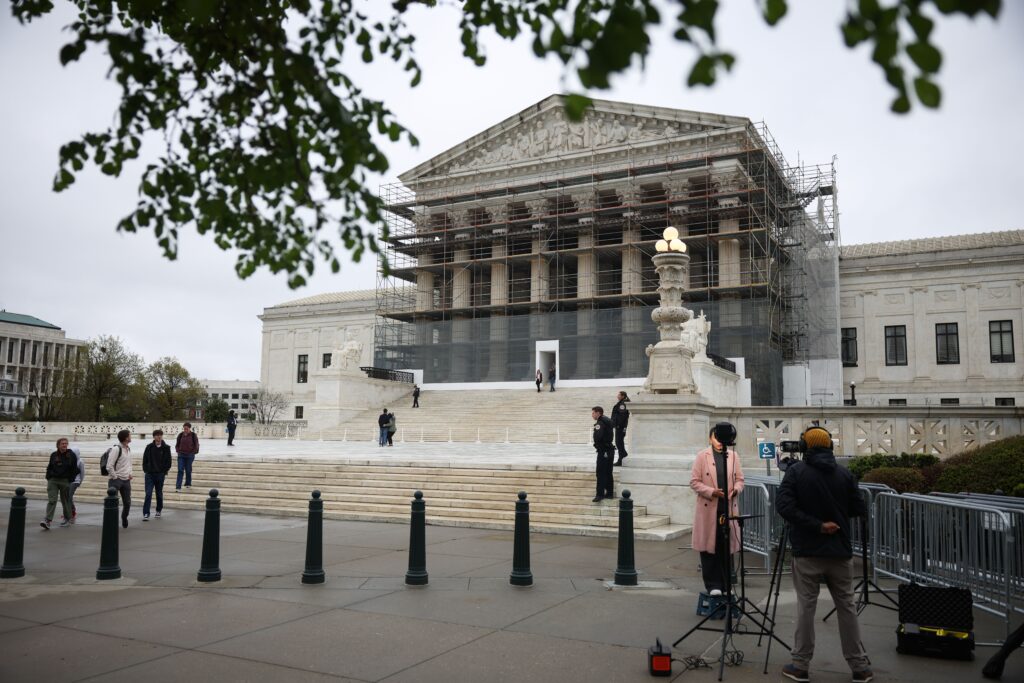
In a closely watched case involving the Trump administration’s deportation policies, the Supreme Court issued a 5-4 ruling that lifted a temporary block on the removal of Venezuelan migrants accused of gang affiliations under the nearly 225-year-old Alien Enemies Act. This decision has been widely misunderstood, with some officials claiming it authorizes broad wartime powers to expedite deportations. However, the Court’s ruling focused primarily on procedural issues, leaving critical questions about due process and migrants’ rights unresolved. This article explores the background, legal reasoning, and implications of this pivotal ruling, emphasizing why it should not be seen as a blanket approval for mass deportations without judicial oversight.
The Alien Enemies Act, enacted in 1798, is a wartime statute that allows the U.S. government to detain and deport non-citizens from hostile nations during periods of declared war. Its invocation in the Trump administration’s efforts to deport Venezuelan migrants marked a significant and controversial application of a centuries-old law in a modern context. The migrants were accused of being members of the Tren de Agua gang, a claim that has been met with skepticism and legal challenges.
In late 2023, the administration used the Act to deport 238 Venezuelan men to El Salvador, many without proper notice or opportunity to contest their removal. This mass deportation raised alarm among human rights advocates and legal experts who argued that the government was circumventing established immigration procedures and due process protections.
Following these deportations, lawyers representing the migrants filed a lawsuit in the U.S. District Court for the District of Columbia, claiming the administration’s use of the Alien Enemies Act during peacetime was unlawful and violated constitutional rights. The district court responded by temporarily blocking further deportations to allow time for judicial review.
When the Trump administration appealed the district court’s order, the Supreme Court stepped in with a narrow 5-4 decision. The majority lifted the temporary restraining order, allowing deportations to proceed, but crucially, the ruling did not address the legality of invoking the Alien Enemies Act itself.
Instead, the Court’s majority focused on the question of venue, determining that the lawsuit challenging the deportations was filed in the wrong jurisdiction. Since the detainees were held in Texas, the Court reasoned, the District of Columbia was not the proper venue for the case. This technicality formed the basis for vacating the lower court’s order.
Importantly, the Court underscored that it was not granting the government a free pass to bypass due process. The majority emphasized that migrants remain entitled to notice and the opportunity to challenge their removal, but these challenges must be heard in the appropriate court—presumably in Texas.
Following the ruling, several Trump administration officials and allies celebrated the decision as a sweeping endorsement of executive authority to deport migrants swiftly and without judicial interference. Social media posts hailed it as confirmation of the President’s wartime powers to combat what they described as an invasion by criminal elements.
However, these interpretations misrepresent the Court’s actual ruling. The Court explicitly refrained from endorsing the government’s broader claims regarding wartime authority or the substantive merits of the deportations. Instead, it limited its decision to a procedural matter concerning the proper venue for litigation.
Legal experts and immigrant advocacy groups quickly pushed back against the narrative that the ruling granted the government carte blanche. They warned that conflating a procedural victory with a substantive endorsement risks undermining migrants’ fundamental rights and due process protections.
The Supreme Court’s majority opinion reaffirmed that migrants subject to removal under the Alien Enemies Act are entitled to meaningful notice and a chance to challenge their deportation orders. This acknowledgment is critical because it preserves a key safeguard against arbitrary government action.
Despite this, the ruling leaves unresolved how migrants who have already been deported—many without criminal records—can seek redress or return to the United States. Once outside U.S. jurisdiction, accessing legal remedies becomes nearly impossible, raising significant humanitarian and legal concerns.
The case highlights gaps in the existing legal framework for migrants accused under wartime statutes. Without clear procedural protections and accessible courts, individuals face the risk of indefinite detention or removal based on insufficient evidence or flawed accusations.
Liberal Justice Sonia Sotomayor issued a pointed dissent, criticizing the Court’s decision to intervene on an emergency basis as both inexplicable and dangerous. She argued that the district court was prepared to hear the case imminently, making Supreme Court intervention premature.
Sotomayor expressed deep concern about the potential consequences of the ruling, including the erosion of due process and the risk of unlawful deportations continuing without adequate judicial oversight. She also highlighted related cases where administrative errors led to wrongful deportations, underscoring systemic problems.
Her dissent serves as a powerful reminder of the stakes involved for migrants’ rights and the importance of careful judicial scrutiny when fundamental liberties are at risk. It calls attention to the potential for abuse when executive power is unchecked.
The deportation of Venezuelan migrants under the Alien Enemies Act has profound humanitarian ramifications. Many deported individuals have no criminal records, and their families in the United States face uncertainty and distress. Investigations have revealed that a significant portion of those deported may have been wrongfully targeted.
The conditions in El Salvador’s prisons, where many deported migrants have been sent, are harsh and raise serious human rights concerns. Deportation without due process not only endangers individual migrants but also undermines international norms on the treatment of vulnerable populations.
Advocates emphasize the need for policies that balance national security with compassion and respect for human dignity. They call for transparent investigations, fair hearings, and avenues for migrants to challenge their deportations effectively.
With the Supreme Court’s ruling focusing on venue, the lawsuit challenging the deportations is expected to proceed in Texas courts. This phase will be crucial in determining whether the government’s use of the Alien Enemies Act withstands constitutional scrutiny and whether migrants receive due process protections.
Legal advocates are preparing to press for comprehensive hearings that examine the evidence against the migrants and challenge the government’s claims. The outcome will have significant implications for immigration law and executive authority in future cases.
Meanwhile, policymakers and courts will need to grapple with how to ensure that deportation procedures align with constitutional guarantees and international human rights standards, preventing unlawful or arbitrary removals.
The Supreme Court’s ruling underscores the ongoing tension between protecting national security and upholding individual rights. While the government has a legitimate interest in addressing gang violence and criminal activity, this must not come at the expense of basic legal protections.
Effective immigration enforcement requires transparent procedures, evidence-based decisions, and respect for due process. Overreliance on outdated wartime statutes without proper judicial checks risks abuse and undermines public trust in the justice system.
Going forward, a balanced approach that involves legislative clarity, judicial oversight, and humanitarian considerations will be essential to navigate the complex challenges posed by immigration enforcement in a modern context.
The Supreme Court’s recent decision on the deportation of Venezuelan migrants under the Alien Enemies Act serves as a cautionary tale about the complexities of immigration enforcement and judicial oversight. Far from providing a free pass for mass deportations without due process, the ruling highlights procedural nuances and preserves critical rights for migrants to challenge their removals. As the case moves forward in Texas courts, it will test the balance between national security priorities and the protection of fundamental human rights. Policymakers, advocates, and the judiciary must remain vigilant to ensure that immigration policies are executed fairly, transparently, and in accordance with constitutional principles.
Originally reported by vanityfair.com. Adapted for our readers.
Keep reading
Business
Abbey Bank Plc's profit after tax rose 55.9 percent to N2.26 billion in the nine months to September 2026, driven by a 120 percent…
Business News
Abuja partners with defence and private sector to create secure farming environment for soybean and sugarcane projects across northern states.
AI in Business
Kenya's telecom giant dismissed 118 staff for fraud as FirstRand eyes a Kenyan banking licence, Moniepoint restructures its engineering teams, and Circle backs stablecoin…
TAMFIS NIG LTD
Electrical and instrumentation engineering, bid preparation and consulting, IT and software.