Politics
How Minnesota Figures Into the Presidential Politics of Insulin Prices
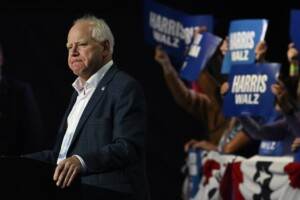
Politics tamfitronics Minnesota Gov. Tim Walz attends a rally in Asheville, North Carolina, on Sept. 17. Minnesota led the way on in...
TAMFIS NIG LTDRC 8067447CAC ACTIVEFinima, Bonny Island, Rivers State

Ghana’s political arena has long been dominated by two major parties: the National Democratic Congress (NDC) and the New Patriotic Party (NPP). Since the inception of the Fourth Republic in 1992, power has alternated primarily between these two giants, creating a duopoly that has shaped the nation’s governance and electoral processes. However, rising public dissatisfaction with both parties’ performances has paved the way for new political movements. The Alliance for Revolutionary Change (ARC), led by former Trade and Industry Minister Alan Kyerematen, is now poised to test the loyalty of Ghanaian voters and challenge this entrenched duopoly. This article delves into the significance of ARC’s emergence, the historical roots of Ghana’s political duopoly, and the implications for the 2024 elections and beyond.
The ban on party politics in Ghana was lifted on May 18, 1992, setting the stage for multi-party elections that birthed the Fourth Republic. The first presidential election was held on November 3, 1992, followed by parliamentary elections at the end of December the same year. Since then, Ghana has adhered to a four-year electoral cycle, during which eight general elections have taken place.
Throughout these elections, power has oscillated exclusively between the NDC and NPP. The NDC, founded by former President Jerry John Rawlings, secured victories in 1992 and 1996, maintaining an eight-year rule before losing to the NPP in 2000. The NPP, under the leadership of John Agyekum Kufuor, then governed from 2001 to 2009. The pendulum swung back to the NDC with John Dramani Mahama’s presidency from 2009 to 2017, followed by the NPP’s return under Nana Addo Dankwa Akufo-Addo from 2017 onwards.
This duopoly has, over the decades, shaped Ghana’s political narrative, with each party promising transformative governance but often falling short of public expectations. The cyclical nature of their dominance has led to a political landscape where alternative voices struggle to gain traction.
Despite Ghana’s reputation as a stable democracy in Africa, many citizens have expressed growing dissatisfaction with both the NDC and NPP. Issues such as economic stagnation, unemployment, corruption, and inadequate social services have fueled a sense of disenchantment among the electorate.
The recurring pattern of alternating power has, in some quarters, been seen as a political stagnation rather than progress. This has created a fertile ground for alternative political movements that promise to break the cycle and deliver fresh leadership.
Notably, younger voters and marginalized groups, including women and ethnic minorities, have voiced the need for inclusive governance that transcends the traditional party lines. This demand for an alternative political narrative has catalyzed the formation of alliances like ARC.
The Alliance for Revolutionary Change (ARC) is a coalition of nine political groups united by the shared ambition to dismantle the NDC-NPP duopoly. Spearheaded by Alan Kyerematen, a seasoned politician and former Minister of Trade and Industry, ARC aims to offer Ghanaians a credible and inclusive alternative in the 2024 general elections.
Kyerematen, known for his technocratic approach and broad appeal across ethnic and political divides, brings a wealth of experience and a vision centered on economic transformation, social justice, and national unity. ARC’s platform emphasizes mobilizing youth, women, and other marginalized groups to participate actively in the political process.
The alliance stresses its commitment to transcending religious, ethnic, and traditional political affiliations, positioning itself as a unifying force dedicated to revolutionary change that reflects the aspirations of ordinary Ghanaians.
To effectively challenge the entrenched duopoly, ARC has adopted a grassroots mobilization strategy aimed at galvanizing support from all corners of Ghana. This involves engaging communities directly, leveraging social media, and organizing nationwide campaigns to raise political awareness.
A key focus is empowering the youth, who constitute a significant portion of the electorate but often feel disenfranchised by traditional politics. By addressing issues such as unemployment, education, and youth participation, ARC seeks to create a robust support base.
Additionally, ARC emphasizes transparency and accountability in its internal governance structures, seeking to distinguish itself from the perceived opacity and corruption associated with the two dominant parties. This approach is designed to build trust and credibility among skeptical voters.
The 2024 general elections in Ghana are shaping up to be unprecedented in the nation’s political history. While the ruling NPP aims to ‘break the eight’ by securing a third consecutive term, the NDC is equally determined to reclaim power and continue its legacy of governance.
In this high-stakes environment, ARC’s independent candidacy introduces a new dynamic that could disrupt traditional voting patterns. If successful, ARC would become the first coalition to break the longstanding two-party dominance, signaling a paradigm shift in Ghanaian politics.
Even if ARC does not win the presidency, its presence could influence electoral outcomes by drawing votes away from the NDC and NPP, potentially leading to a more pluralistic political landscape and encouraging greater accountability among all parties.
Despite its promising vision, ARC faces significant challenges in breaking the duopoly. The entrenched political machinery, deep-rooted party loyalties, and established networks of the NDC and NPP present formidable barriers to entry for any new political force.
Moreover, the financial demands of running a nationwide campaign and the need to build organizational capacity across all regions require substantial resources and strategic planning.
ARC must also navigate skepticism from voters who may perceive alternative parties as fragmented or lacking the experience to govern effectively. Overcoming these perceptions will be critical to gaining widespread support.
The rise of ARC reflects a maturing democracy where citizens are increasingly willing to explore alternatives beyond traditional parties. This diversification can strengthen democratic practices by fostering competition, encouraging policy innovation, and enhancing political accountability.
A successful challenge to the duopoly could inspire similar movements across Africa, where dominant party systems often hinder political pluralism and democratic deepening.
Ultimately, the evolution of Ghana’s political landscape through initiatives like ARC underscores the importance of responsive governance that aligns with the evolving needs and aspirations of its people.
As the 2024 elections approach, Ghanaian voters face a historic choice: continue with the familiar alternating governance of the NDC and NPP or embrace a new political paradigm offered by ARC.
Voters should anticipate robust debates, increased political engagement, and a broader spectrum of policy options. This environment provides an opportunity for citizens to hold all political actors accountable and demand substantive change.
Regardless of the election outcome, the entry of ARC into the political contest signals a shift towards greater inclusivity and competitiveness, which is essential for the health and vibrancy of Ghana’s democracy.
The emergence of the Alan-led Alliance for Revolutionary Change represents a significant inflection point in Ghana’s political history. By challenging the entrenched duopoly of the NDC and NPP, ARC offers a fresh vision rooted in inclusivity, accountability, and transformative governance. While the road ahead is fraught with challenges, the alliance’s ability to galvanize diverse segments of the population underscores a growing appetite for political change. As Ghana approaches the 2024 general elections, the nation stands on the cusp of unprecedented electoral dynamics that could redefine its democratic trajectory. Ultimately, the success of ARC or any alternative political force will depend on its capacity to resonate with the electorate’s aspirations and deliver on its promises for a better Ghana.
Originally reported by ghanaiantimes.com.gh. Adapted for our readers.
Keep reading
Politics
Politics tamfitronics Minnesota Gov. Tim Walz attends a rally in Asheville, North Carolina, on Sept. 17. Minnesota led the way on in...
Politics
Deji Adeyanju; Niger State Mining Victims Human rights lawyer and activist, Deji Adeyanju, has accepted his appointment as a member of the Federal Government’s…
Politics
Democracy, Featured, Global, Global Governance, Headlines, International Justice, IPS UN: Inside the Glasshouse, TerraViva United Nations UNITED NATIONS, Sep 11 2026 (IPS) – When…
TAMFIS NIG LTD
Electrical and instrumentation engineering, bid preparation and consulting, IT and software.