NASA’s End to Space Community Permits PACE Climate Mission to ‘Phone Home’
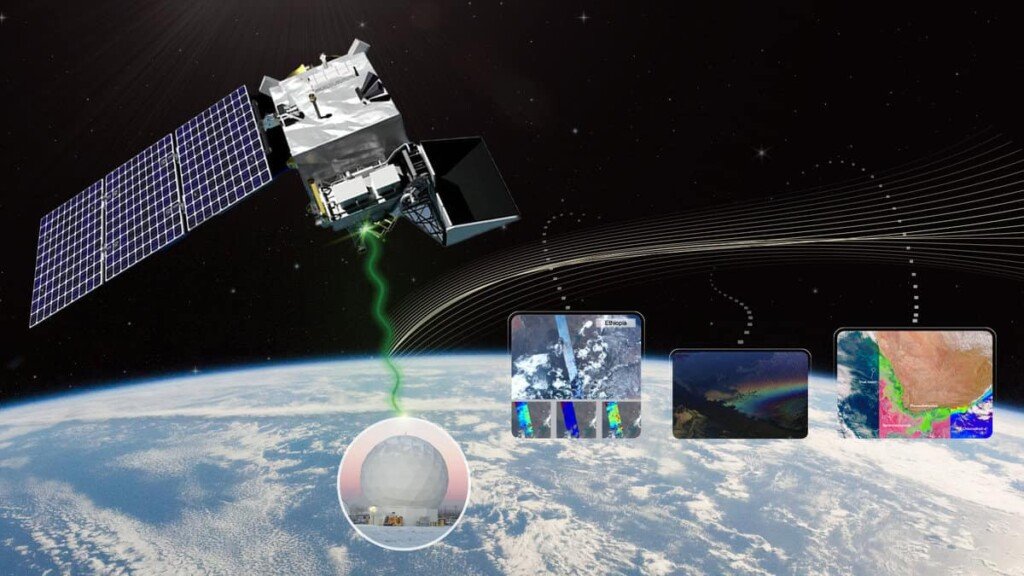
NASA’s PACE (Plankton, Aerosol, Cloud, ocean Ecosystem) mission represents a pivotal advancement in Earth science, focusing on the intricate interactions between oceans, atmosphere, and ecosystems. Launched to gather essential climate data, PACE relies heavily on robust communication systems to transmit vast amounts of information back to Earth. NASA’s End to Space Community, a vital network supporting near-Earth missions, has integrated cutting-edge Delay/Disruption Tolerant Networking (DTN) technology and expanded ground antenna infrastructure to ensure PACE can effectively ‘phone home’ with uninterrupted data flow. This article explores how these technological enhancements are transforming space communications, supporting climate science, and setting new standards for future missions.
Understanding the PACE Mission and Its Scientific Importance
The PACE mission is designed to study Earth’s ocean and atmosphere, focusing on phytoplankton, aerosols, clouds, and their role in the global carbon cycle. Positioned approximately 250 miles above Earth, PACE collects detailed spectral imagery and environmental data that help scientists monitor ocean health, track air quality, and understand climate dynamics. This mission is critical for improving climate models and informing policy decisions related to environmental sustainability.
Phytoplankton, tiny marine plants, play a fundamental role in carbon sequestration and oxygen production. PACE’s advanced sensors measure the distribution and health of these organisms, providing valuable insights into ocean ecosystems and their response to climate change. Additionally, PACE monitors aerosols and clouds, which influence weather patterns and the Earth’s energy balance.
The vast amounts of data generated by PACE require sophisticated transmission methods. Reliable and timely downlink of this information is essential for researchers worldwide to analyze and apply findings rapidly. The mission’s success hinges on NASA’s ability to maintain continuous, high-capacity communication with the spacecraft.
NASA’s End to Space Community: Backbone of Near-Earth Space Communications
The End to Space Community is NASA’s dedicated network for communicating with spacecraft orbiting within approximately 1.2 million miles of Earth. It supports a variety of missions by providing a robust infrastructure of ground antennas, communication protocols, and data handling systems. This community ensures that critical telemetry, tracking, and science data are reliably transmitted between satellites and mission operators.
Supporting missions like PACE requires advanced capabilities to handle large volumes of data and overcome challenges such as signal disruptions caused by atmospheric interference or orbital dynamics. NASA continuously upgrades the End to Space Community to meet evolving mission demands, focusing on flexibility, reliability, and throughput.
The network’s success is grounded in its strategic global antenna locations, which maintain near-continuous contact with spacecraft. These antennas receive data, send commands, and facilitate real-time monitoring, empowering mission teams to respond promptly to spacecraft health and scientific needs.
Innovating Space Communications with Delay/Disruption Tolerant Networking (DTN)
One of the most significant advancements integrated into the End to Space Community is Delay/Disruption Tolerant Networking (DTN). This innovative technology addresses the challenges of intermittent connectivity and data loss commonly experienced in space communications. DTN enables data to be stored temporarily onboard the spacecraft or at ground stations and forwarded once communication links are restored.
DTN operates by breaking data into bundles, which are transmitted opportunistically when network paths become available. This approach prevents data loss from disruptions such as signal blockage or transmission delays, ensuring mission-critical information reaches Earth intact. For PACE, DTN safeguards telemetry data, including spacecraft health metrics like battery status and orbital parameters.
By employing DTN, NASA has enhanced the reliability and efficiency of data transfer for near-Earth missions. PACE is the first operational science mission to fully leverage DTN, demonstrating the technology’s value in maintaining continuous communication despite space environment challenges.
Expanding Ground Infrastructure: New Antennas for Enhanced Data Reception
Complementing DTN technology, NASA has collaborated with commercial partner Kongsberg Satellite Services to integrate four new ground antennas into the End to Space Community. Located in Fairbanks (Alaska), Wallops Island (Virginia), Punta Arenas (Chile), and Svalbard (Norway), these antennas provide expanded geographic coverage and increased data reception capabilities.
These strategically placed antennas enable PACE to downlink terabytes of scientific data multiple times daily, significantly boosting the mission’s data throughput. By increasing the frequency and capacity of communication windows, scientists receive near-real-time updates essential for monitoring dynamic Earth systems.
The new antennas also enhance operational resilience, allowing the network to reroute data through alternate stations in case of localized disruptions. This redundancy ensures that critical climate data from PACE remains accessible and reliable, supporting ongoing research and mission success.
PACE’s Data Transmission: Meeting the Demands of Modern Climate Research
PACE generates approximately 3.5 terabytes of science data each day, a volume that underscores the mission’s complexity and the scale of environmental monitoring it supports. To manage this data, the End to Space Community schedules 12 to 15 downlink sessions daily through its enhanced antenna network.
The integration of DTN and new antennas allows PACE to maintain consistent communication even when facing challenges such as orbital dynamics or weather-related signal disruptions. This capability is vital for delivering timely data that researchers depend on to analyze atmospheric composition, oceanic ecosystems, and climate interactions.
Efficient data handling also supports mission health monitoring, enabling operators to track spacecraft systems continuously. This dual focus on science and operations ensures PACE remains functional and productive throughout its lifecycle, maximizing scientific return.
Broader Impacts: Advancing NASA’s Communications for Future Missions
The successful integration of DTN and new antennas within the End to Space Community sets a precedent for upcoming NASA missions. These technologies enhance communication reliability, data integrity, and operational flexibility, which are critical as missions become more complex and data-intensive.
Future Earth science and exploration missions will benefit from this scalable infrastructure, capable of supporting higher data volumes and more frequent communications. The advancements also contribute to human spaceflight by providing robust communication links for crewed missions in low Earth orbit and beyond.
Moreover, NASA’s collaboration with commercial partners exemplifies a public-private approach to space infrastructure development. This model accelerates innovation, reduces costs, and expands capabilities, positioning NASA at the forefront of space communication technology.
Challenges and Future Developments in Space Data Communications
Despite significant progress, space communication faces ongoing challenges such as signal interference, limited bandwidth, and latency. NASA continues researching methods to optimize data compression, error correction, and autonomous network management to further enhance communication efficiency.
The End to Space Community is actively exploring additional antenna upgrades, software improvements, and integration of artificial intelligence to predict and mitigate communication disruptions. These efforts aim to provide seamless, high-speed data flow for increasingly demanding scientific and exploratory missions.
Looking ahead, NASA envisions a communication ecosystem that supports a diverse constellation of satellites, interplanetary probes, and crewed spacecraft, all interconnected through resilient and adaptive networks. The lessons learned from PACE and related missions contribute directly to realizing this vision.
Conclusion
NASA’s integration of Delay/Disruption Tolerant Networking and expanded ground antenna infrastructure within the End to Space Community marks a transformative leap in space communication capabilities. The PACE mission’s ability to consistently ‘phone home’ with vast quantities of climate data exemplifies how these innovations empower Earth science and environmental monitoring. As NASA continues to refine and expand these technologies, the future of space communication promises greater reliability, efficiency, and reach—enabling more ambitious missions to explore, understand, and protect our planet and beyond.
Originally reported by nasa.gov. Adapted for our readers.
Author of the article: Published Sep 18, 2026 11 minute read Article content Kyndryl Canada has been engaged to deliver a commercialization strategy and…
The National Agency for Science and Engineering Infrastructure (NASENI) on Friday 4th September 2026, marked three years of institutional transformation under its Executive Vice…
Municipal Administration Minister P. Narayana speaks to residents after laying the foundation stone for the slum redevelopment project at Velampeta, near Lakshmi Nagar in…