Politics
Science vs politics: Kiwi’s long road to EU health-claim approval
In August 2025, Zespri, the world’s largest marketer of kiwifruit, announced that the European Commission had approved what it described as the first health…
TAMFIS NIG LTDRC 8067447CAC ACTIVEFinima, Bonny Island, Rivers State

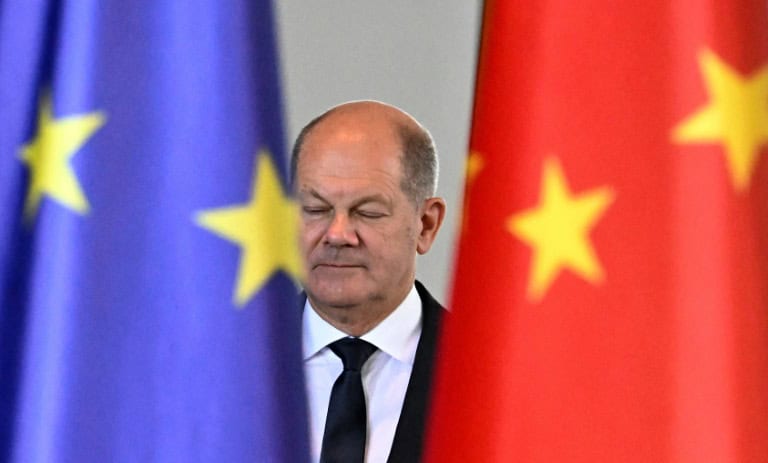
German Chancellor Olaf Scholz embarked on a significant diplomatic mission to China, underscoring the intricate interplay between economic interests and geopolitical realities. Arriving in Chongqing with a large delegation of ministers and business leaders, Scholz’s visit comes at a time when Western nations are intensifying scrutiny of China’s policies and its close ties with Russia. For Germany, China remains a crucial trading partner, and Scholz’s challenge lies in reinforcing these economic connections without alienating Western allies or overlooking broader political concerns. This article explores the multifaceted dimensions of Scholz’s visit, examining the economic imperatives, political pressures, and strategic calculations shaping Germany’s approach to China today.
China is Germany’s largest trading partner outside the European Union, making it an indispensable market for German exports, especially in the automotive, machinery, and chemical sectors. The German economy’s reliance on Chinese demand supports millions of jobs domestically, reinforcing the importance of maintaining robust commercial ties. Scholz’s delegation, which includes prominent ministers and industry executives, reflects this economic priority, aiming to secure fair access and address trade imbalances.
Despite global tensions, Scholz has emphasized Germany’s commitment to continued economic engagement with China, rejecting calls led by the United States to decouple from the Asian giant. This stance acknowledges the complexity of disentangling deeply integrated supply chains and the potential economic fallout of abrupt disengagement. Maintaining a level playing field for German companies operating in China remains a central goal, especially amid concerns about Beijing’s subsidies for local industries.
However, Germany’s economic landscape is currently fragile, with a slight contraction in GDP last year and subdued growth forecasts for 2024. This economic slowdown increases the urgency for Germany to nurture its trade relationships to stimulate growth. Meanwhile, China’s economic outlook also faces challenges, with export declines and ambitious GDP growth targets signaling the need for external demand. Scholz’s visit thus represents a strategic effort to bolster mutual economic recovery.
Scholz’s visit occurs against a backdrop of rising geopolitical tensions involving China, the United States, and European allies. Western governments have increasingly criticized China for its expansive subsidies, human rights record, and refusal to distance itself from Russia amid the Ukraine war. This has led to intensified scrutiny of Chinese technology imports and heightened security concerns, particularly in sectors like electric vehicles and renewable energy.
The United States, in particular, has taken a firm stance against China’s actions in the South China Sea and its posture toward Taiwan, strengthening defense commitments to regional allies such as Japan and the Philippines. These moves contribute to a climate of strategic competition that complicates Germany’s diplomatic calculus. Scholz must carefully navigate these pressures, balancing solidarity with Western partners while preserving Germany’s economic interests in China.
In Europe, leaders including French President Emmanuel Macron have called for a recalibration of relations with China, advocating a more assertive but balanced approach. Scholz’s discussions with Macron prior to his trip highlight a coordinated effort to manage the EU’s complex relationship with Beijing. The challenge lies in addressing systemic issues while avoiding an outright rupture that could jeopardize economic and diplomatic stability.
Beyond trade, Scholz’s visit includes a crucial diplomatic dimension focused on geopolitical stability. One key objective is to persuade Chinese President Xi Jinping to leverage Beijing’s influence over Moscow to encourage a resolution to the war in Ukraine. Germany views China as a pivotal actor capable of facilitating dialogue, given its strategic partnership with Russia.
Scholz’s efforts to engage China on the Ukraine conflict underscore the broader international expectation for Beijing to play a constructive role in global peace efforts. This diplomatic overture, however, is fraught with challenges, as China maintains a delicate balance of supporting Russia without overtly violating international sanctions or alienating the West.
Simultaneously, Scholz seeks to address trade disputes and regulatory hurdles that German companies face in China. His agenda aims to secure commitments from Beijing to improve market access and reduce unfair competition, thereby fostering a more equitable business environment. This dual focus on economic and political issues defines the complexity of Scholz’s China visit.
Scholz’s diplomatic tightrope walk is complicated by divergent expectations from Germany’s Western allies and domestic stakeholders. While Washington advocates for stronger measures to counter China’s influence and reduce economic dependence, Berlin prioritizes pragmatic engagement to safeguard its industrial base and employment.
Within Germany, voices from political parties and industry stress the risks of overreliance on China, drawing lessons from past dependencies on Russia for energy supplies. The Green Party, for example, warns against ignoring long-term geopolitical risks in favor of short-term economic gains. Scholz must therefore reconcile these competing perspectives in formulating a coherent China policy.
This balancing act also extends to the European Union, where member states have varying degrees of economic exposure to China and differing strategic priorities. Germany’s leadership role in the EU means that Scholz’s approach could influence broader European strategies toward China, underscoring the high stakes of his diplomatic mission.
Supply chain resilience has become a central issue for Germany following disruptions experienced during the COVID-19 pandemic. Scholz’s visit aims to address these vulnerabilities by promoting diversification while maintaining key trade flows with China. Efforts to negotiate fairer terms and reduce dependence on single sources are integral to this approach.
At the same time, Germany is grappling with the challenge of competing against heavily subsidized Chinese industries, particularly in sectors like solar panels and electric vehicles. Scholz’s delegation seeks to raise these concerns directly with Chinese counterparts, advocating for a more level playing field that supports innovation and sustainability in German manufacturing.
Industrial policy considerations also extend to technology transfers and intellectual property protections. German businesses demand stronger enforcement mechanisms to prevent unfair practices and ensure that collaboration with Chinese firms benefits both parties. Scholz’s visit is expected to include discussions on these critical issues to secure a fairer economic partnership.
From Beijing’s perspective, maintaining strong economic ties with Germany is vital to supporting its long-term growth and technological advancement. China views Scholz’s visit as an opportunity to showcase its openness to foreign investment and willingness to engage constructively on trade matters, despite geopolitical frictions.
China also seeks to leverage its partnership with Germany to counterbalance pressure from the United States and its allies. By engaging with a leading European economy, Beijing aims to demonstrate that it remains an indispensable player in global commerce and diplomacy, capable of managing complex international relationships.
However, China’s response to calls for greater influence over Russia’s actions in Ukraine is cautious. Beijing’s strategic interests in maintaining a stable partnership with Moscow limit its willingness to take overt steps that could jeopardize this alliance. Scholz must therefore navigate this delicate dynamic, seeking incremental progress amid competing priorities.
Looking ahead, Germany’s relationship with China is poised to remain a key focus of its foreign and economic policy amid ongoing global uncertainties. Scholz’s visit signals a pragmatic recognition that engagement, rather than isolation, is necessary to manage risks and seize opportunities presented by China’s economic power.
Yet, the path forward is fraught with challenges, including managing Western alliance cohesion, addressing human rights concerns, and adapting to shifting geopolitical landscapes. Germany will need to continue balancing its economic interests with its values and strategic commitments, a complex task requiring nuanced diplomacy.
Ultimately, Scholz’s diplomatic efforts in China reflect broader questions about Europe’s role in a changing world order, where economic interdependence and political rivalry coexist. The success of this balancing act will shape not only bilateral relations but also the broader contours of international cooperation in the years to come.
German Chancellor Olaf Scholz’s visit to China epitomizes the intricate balancing act that defines contemporary international relations. As Germany’s economy remains intertwined with China’s market, Scholz must navigate the competing demands of sustaining economic growth, addressing Western allies’ concerns, and engaging China on geopolitical issues such as the Ukraine war. This tightrope walk underscores the complexity of managing a relationship that is simultaneously cooperative and competitive. The outcomes of Scholz’s diplomatic efforts will have lasting implications for Germany, Europe, and the broader global order, highlighting the need for strategic patience and pragmatic dialogue in an increasingly multipolar world.
Source: digitaljournal.com. Originally reported there; this article has been adapted for Tamfitronics readers.
Keep reading
Politics
In August 2025, Zespri, the world’s largest marketer of kiwifruit, announced that the European Commission had approved what it described as the first health…
News
By Engr. Tamunofiniarisa BrownReading Time: 6 Minutes The conflict between Russia and Ukraine is often framed in the media as a simple battle between…
Politics
Twenty-five years after the September 11 attacks, the family of Marine Travis Fuller reflects on his death in the Iraq War, grappling with the…
TAMFIS NIG LTD
Electrical and instrumentation engineering, bid preparation and consulting, IT and software.