Politics
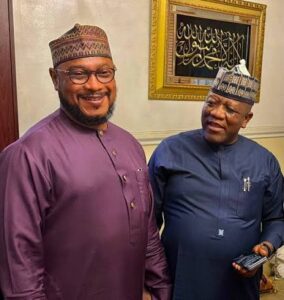
Yari’s 2027 Campaign Strategy: How to Evaluate Claims About Tinubu’s Record
Yari says the APC will emphasise Tinubu’s achievements in 2027. This analysis explains how voters can examine outcomes, baselines and campaign evidence.
TAMFIS NIG LTDRC 8067447CAC ACTIVEFinima, Bonny Island, Rivers State


In a development that has stirred political debates in Kerala, the Congress party has accused Chief Minister Pinarayi Vijayan of deliberately excluding Scheduled Caste (SC) representation from his cabinet. This move has been interpreted as a denial of political empowerment for Dalits, with Congress leaders emphasizing the historic absence of an SC minister in the current government. The controversy gained momentum during the final days of the election campaign, bringing to the forefront issues of caste representation, leadership prospects, and political strategy in Kerala’s complex socio-political landscape.
On the closing day of election campaigning, the Congress party publicly criticized Chief Minister Pinarayi Vijayan for excluding a Scheduled Caste minister from his cabinet. The party alleged that this exclusion effectively prevents Dalits from ascending to higher political roles, including the potential to become Kerala’s Chief Minister in the future. This accusation reflects the long-standing demand for adequate representation of marginalized communities in governance.
Congress MLA Mathew Kuzhalnadan highlighted that by nominating K Radhakrishnan, a prominent Dalit leader, to contest the Alathur Lok Sabha seat— which he subsequently won— the Chief Minister has sidelined a key Dalit figure from state-level ministerial responsibilities. Kuzhalnadan argued that this decision has created a cabinet devoid of Scheduled Caste ministers for the first time in Kerala’s history.
The Congress party has consistently emphasized the absence of Dalit ministers during its election rallies and grassroots meetings, framing it as a deliberate political oversight. This issue has become a focal point for the Congress, which seeks to position itself as a champion of social justice and inclusivity.
K Radhakrishnan has been a significant figure in Kerala politics, especially among Dalit communities. His political career dates back to 1996 when he first became a minister in the E K Nayanar Cabinet. Over the years, he has held multiple important positions, including the Speaker of the Kerala Assembly and various ministerial roles, gaining a reputation as a competent leader.
Radhakrishnan’s stature within the Communist Party of India (Marxist) and the Left Democratic Front (LDF) has led many to view him as a potential future Chief Minister candidate. His experience and leadership credentials have made him a prominent Dalit face in Kerala’s political arena.
By moving Radhakrishnan to the Lok Sabha, the Congress contends that the Chief Minister has curtailed his influence at the state level. They argue that retaining him within the Kerala cabinet could have strengthened Dalit representation and leadership prospects within the state government.
In response to Congress’s allegations, CPM state secretary M.V. Govindan accused the opposition of indulging in caste-based political tactics to gain electoral advantage. He argued that the Congress is attempting to divide people along caste lines by focusing on Dalit representation in the cabinet.
Govindan emphasized that K Radhakrishnan’s nomination as the leader of the CPM parliamentary party in the Lok Sabha is a recognition of his leadership rather than a marginalization. He highlighted that the CPM parliamentary party has only four members, three of whom were elected with Congress support, thereby challenging Congress’s criticism.
The CPM leadership also asserted that Radhakrishnan’s political identity transcends his caste background, pointing towards his diverse roles and responsibilities. This stance, however, has been contested by Congress leaders who cite CPM’s involvement in Dalit-specific organizations as contradictory.
The Congress camp has questioned CPM’s claim that Radhakrishnan’s persona is not confined to his Dalit identity. They point out that CPM appointed him as the national convenor of the Dalit Shoshan Mukti Manch, an organization committed to fighting caste discrimination and promoting Dalit rights.
Furthermore, Congress leaders highlight the CPM’s establishment of the Pattika Jati Samrkashna Samithi, a separate wing dedicated to Scheduled Castes in Kerala. These affiliations underscore the CPM’s acknowledgment of caste identities, which seems at odds with their current stance regarding Radhakrishnan’s political role.
This contradiction has fueled the debate on whether CPM’s decision to exclude Dalit ministers from key portfolios is a political strategy or an oversight, with Congress urging the party to reconcile its actions with its stated commitment to social justice.
A recurring concern raised by political observers and opposition parties is the pattern of portfolio allocation to Dalit leaders in Kerala. Often, Dalit ministers are assigned the SC/ST Welfare portfolio, sometimes accompanied by secondary portfolios such as law, culture, or parliamentary affairs, but are rarely given control over key departments like finance, home, agriculture, or education.
This trend has been observed across both the Left Democratic Front (LDF) and the Congress-led United Democratic Front (UDF) governments, suggesting a systemic issue rather than isolated incidents. Critics argue this limits the influence and decision-making power of Dalit leaders within the state government.
Such portfolio assignments are seen as symbolic rather than substantive, which impacts the ability of Dalit ministers to address broader governance challenges and contribute meaningfully to state policy formulation.
The issue of Dalit underrepresentation extends beyond the cabinet to the organizational framework of the CPM in Kerala. Despite Scheduled Castes constituting nearly 17% of the party’s membership in the state, their presence in state and district leadership positions remains disproportionately low.
Data from CPM’s internal assessments reveal that while SC and Scheduled Tribes (ST) make up over 28% of the party’s national membership, their representation in state and district committees is significantly lower, at 8.47% and 15.45% respectively. This disparity indicates structural challenges within the party’s leadership selection processes.
Such underrepresentation raises questions about the inclusivity of CPM’s leadership and its commitment to genuinely empowering marginalized communities within the party’s ranks.
The controversy over the exclusion of a Scheduled Caste minister has broader political implications in Kerala’s competitive electoral landscape. It fuels debates on social justice, caste-based representation, and leadership opportunities for marginalized groups, which are critical issues for the state’s electorate.
Public perception is shaped by how parties address these concerns, with Congress positioning itself as a defender of Dalit rights and CPM defending its governance choices. The narrative of exclusion versus inclusion plays a pivotal role in influencing voter sentiment, especially among Dalit communities and other marginalized groups.
As Kerala moves forward, the handling of such representation issues will likely impact political alliances, voter alignments, and the broader discourse on caste and governance in the state.
The ongoing debate highlights the urgent need for political parties in Kerala to reassess their approaches to Dalit representation and leadership. Ensuring meaningful participation of Scheduled Castes in decision-making roles is essential for fostering social equity and political inclusiveness.
Greater transparency in portfolio allocation and organizational representation can help address feelings of marginalization among Dalit communities. Political parties must move beyond symbolic gestures and work towards empowering Dalit leaders with substantive roles and responsibilities.
Ultimately, the future of Kerala’s political landscape depends on how effectively parties integrate social justice principles into their governance practices, enabling all communities to contribute equally to the state’s development.
The exclusion of Scheduled Caste ministers from Kerala’s current cabinet has ignited a critical debate on caste representation and political inclusivity in the state. While the Congress party positions itself as a vocal advocate for Dalit empowerment, the CPM maintains its defense against accusations of caste-based marginalization. This controversy underscores deeper structural issues related to the allocation of portfolios and organizational representation of Dalits within major political parties. Moving forward, Kerala’s political landscape must prioritize genuine inclusivity, ensuring that marginalized communities have equitable access to leadership and decision-making roles. Addressing these challenges is vital not only for social justice but also for the health and vibrancy of Kerala’s democracy.
Originally reported by deccanchronicle.com. Adapted for our readers.
Keep reading
Politics
Yari says the APC will emphasise Tinubu’s achievements in 2027. This analysis explains how voters can examine outcomes, baselines and campaign evidence.
Lifestyle
Obi says his wife funds her own purchases. This analysis separates his explanation, unverified handbag prices and the evidence needed to assess public spending.
Politics
Politics tamfitronics Minnesota Gov. Tim Walz attends a rally in Asheville, North Carolina, on Sept. 17. Minnesota led the way on in...
TAMFIS NIG LTD
Electrical and instrumentation engineering, bid preparation and consulting, IT and software.