Top Stories
Discovery beneath soccer field reveals massive medieval convent lost for centuries
NEWYou can now listen to Fox News articles! Researchers recently uncovered a long-lost medieval convent in an unusual location in Denmark: a soccer field…
TAMFIS NIG LTDRC 8067447CAC ACTIVEFinima, Bonny Island, Rivers State

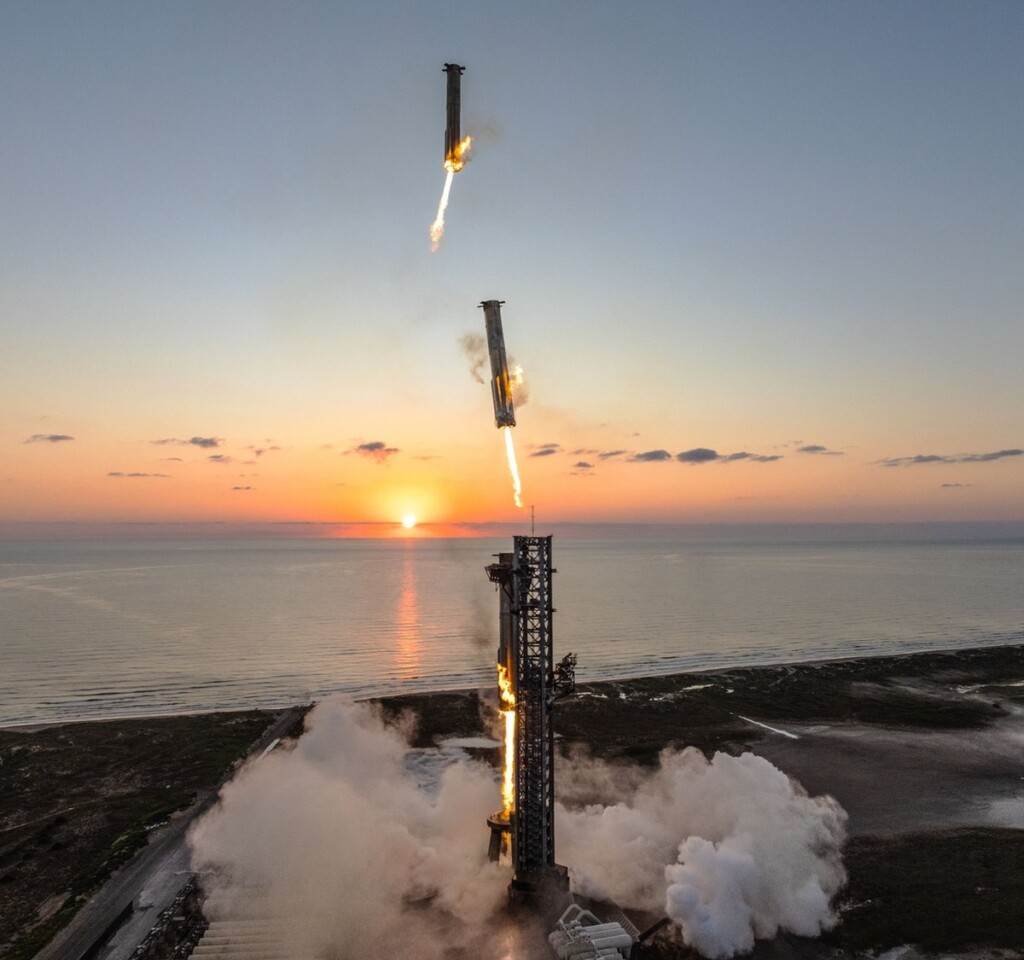
SpaceX continues to make rapid strides in its Starship program, with the next integrated flight of the Starship spacecraft and Super Heavy booster planned for mid-November 2023. Following the recent October test flight, this mission aims to deepen the understanding of the vehicle’s capabilities, focusing on reusability, thermal protection, and controlled descent techniques. The upcoming flight from SpaceX’s Starbase in Boca Chica, Texas, will test new engineering improvements and operational strategies that could revolutionize space travel by enabling fully reusable, cost-effective access to orbit and beyond. This article explores the detailed plans, technical enhancements, and strategic objectives behind SpaceX’s ambitious Starship test program.
SpaceX’s Starship system comprises a two-stage fully reusable launch vehicle designed to carry humans and cargo to Earth orbit, the Moon, Mars, and beyond. The Super Heavy booster provides the necessary thrust to lift the Starship spacecraft off the ground, after which Starship continues its journey into space. This architecture aims to dramatically reduce launch costs through rapid reusability and high payload capacity.
The program has undergone multiple test flights, progressively refining vehicle design, software, and operational procedures. Each flight builds on lessons learned, with SpaceX targeting rapid turnaround times between launches to accelerate development. The Boca Chica Starbase in Texas serves as the primary launch and manufacturing site, enabling integrated testing of Starship and Super Heavy stages.
Recent flights have demonstrated key capabilities such as booster recovery attempts using a novel 'catch' method involving the launch tower, and suborbital flight profiles that simulate reentry conditions. These tests are critical precursors to orbital launches and eventual commercial operations.
SpaceX has officially scheduled the sixth integrated Starship/Super Heavy flight for November 18, 2023, marking the fastest turnaround between flights in the program’s history. This accelerated timeline reflects improvements in vehicle refurbishment, testing procedures, and streamlined regulatory approvals.
The Federal Aviation Administration (FAA) released airspace restrictions supporting this flight, confirming regulatory clearance. Notably, the previous license granted for the fifth flight also encompassed authorization for this sixth mission, facilitating rapid progression without awaiting separate approvals.
The mid-November launch window is set for late afternoon Eastern Time, a departure from prior morning launches. This timing adjustment enables Starship’s splashdown to occur during daylight hours over the Indian Ocean, improving visibility and data collection during recovery operations.
One of the primary technical goals for this flight is to demonstrate the relight capability of a Raptor engine on Starship during flight. This maneuver is crucial for executing deorbit burns on future orbital missions, allowing the spacecraft to control its descent and landing precisely.
SpaceX is also testing modifications to the thermal protection system (TPS) by removing entire sections of heat shield tiles on both sides of Starship. These areas are being studied for future integration of catch-enabling hardware, which will facilitate the innovative recovery method using the launch tower.
The flight will feature a higher angle of attack during the final descent, intentionally pushing the flap control system to its limits. This stress test aims to collect valuable data on aerodynamic control during landing, informing future improvements for safe and reliable touchdowns.
The Super Heavy booster will incorporate additional redundancy in its propulsion system, enhancing reliability during ascent and recovery phases. These updates aim to reduce risks associated with engine performance and ensure mission success under various scenarios.
Structural reinforcements have been made in key areas of the booster to increase durability during flight stresses and landing impacts. These improvements support the goal of rapid refurbishment and reuse, a cornerstone of SpaceX’s cost-saving strategy.
Post-flight procedures will benefit from reduced time required to drain propellants from the booster after return, accelerating turnaround between launches. Software controls governing launch and recovery sequences have also been updated, incorporating lessons learned from previous flights to refine abort criteria and commit parameters.
SpaceX pioneered a unique method to recover the Super Heavy booster by using the launch tower’s mechanical arms to ‘catch’ the descending vehicle, avoiding the need for traditional landing legs. This approach reduces mass and complexity on the booster, improving overall performance.
During the previous flight, the catch maneuver came within one second of an abort due to a misconfigured parameter related to the booster’s Raptor engines. SpaceX engineers have since analyzed the data and made necessary adjustments to software and hardware to prevent similar occurrences.
The upcoming flight will test this catch technique again, incorporating new abort and commit criteria to ensure safety and success. Mastery of this recovery method is vital for achieving rapid reusability and lowering the cost per launch.
Launching later in the day allows SpaceX to observe the vehicle’s reentry and splashdown in daylight conditions, improving visual and sensor data quality. This operational shift supports more accurate assessment of vehicle behavior and environmental effects during recovery.
The higher angle of attack during descent will challenge the vehicle’s aerodynamic surfaces, providing insights into flap control effectiveness and potential areas for refinement. These data points are essential for validating flight control algorithms and hardware design.
By removing specific heat shield tiles, SpaceX can study thermal loads and material performance in exposed areas. This experiment informs the development of catch-enabling hardware, which must withstand intense heat and mechanical stress during reentry and recovery.
The FAA’s approval of the sixth integrated flight as part of the earlier license demonstrates regulatory confidence in SpaceX’s safety and operational protocols. This streamlined approval process enables rapid succession of test flights, accelerating the Starship program’s development timeline.
Frequent flights allow SpaceX to iterate quickly on design and operational changes, collecting real-world data that inform continuous improvements. This cadence is unprecedented in large-scale rocket development and positions SpaceX as a leader in reusable launch technology.
As SpaceX progresses toward orbital and commercial missions, maintaining regulatory compliance while pushing technical boundaries will be critical. The partnership between SpaceX and regulatory bodies serves as a model for balancing innovation with safety.
Successful completion of the mid-November flight will mark a significant milestone toward operationalizing the Starship system. Demonstrated engine relight, improved thermal protection, and booster catch techniques are essential capabilities for orbital missions and beyond.
SpaceX envisions Starship playing a pivotal role in missions to the Moon under NASA’s Artemis program, as well as eventual human exploration of Mars. Achieving full reusability and rapid turnaround is key to making these ambitions economically viable.
Continued innovation and testing at Boca Chica will refine vehicle performance and operational workflows. Each flight brings SpaceX closer to transforming space travel with a fully reusable, heavy-lift launch system capable of supporting a new era of exploration and commercial activity.
SpaceX’s upcoming mid-November Starship flight represents a critical step forward in developing a fully reusable, high-capacity launch system. By integrating technical enhancements such as engine relight capabilities, advanced thermal protection testing, and innovative recovery techniques, SpaceX is methodically pushing the boundaries of rocket technology. The accelerated flight schedule supported by regulatory approvals highlights the company’s commitment to rapid iteration and operational readiness. As these tests accumulate, the vision of affordable, reliable, and frequent access to space through Starship becomes increasingly tangible, promising transformative impacts on space exploration and commercialization.
Originally reported by spacenews.com. Adapted for our readers.
Keep reading
Top Stories
NEWYou can now listen to Fox News articles! Researchers recently uncovered a long-lost medieval convent in an unusual location in Denmark: a soccer field…
News
By Engr. Tamunofiniarisa BrownReading Time: 6 Minutes The conflict between Russia and Ukraine is often framed in the media as a simple battle between…
TAMFIS NIG LTD
Electrical and instrumentation engineering, bid preparation and consulting, IT and software.