
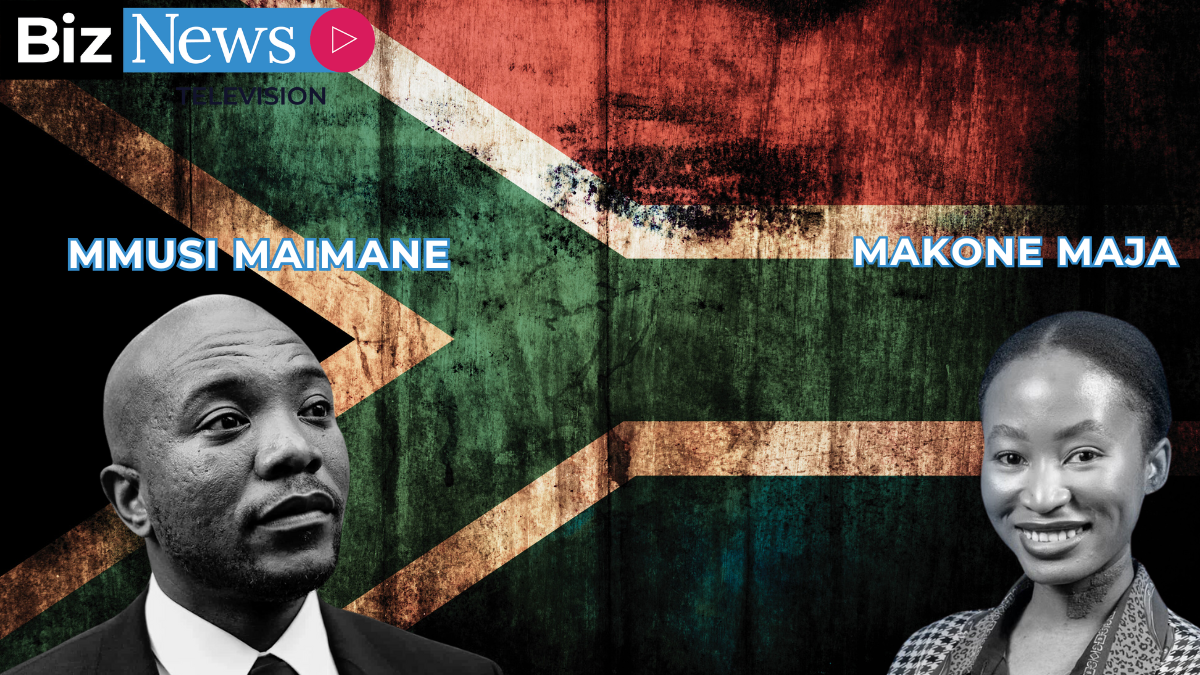
South Africa’s political landscape is at a pivotal moment, grappling with the fallout from decades of governance challenges under the African National Congress (ANC). In a recent discussion on the BizNews Briefing podcast, Makone Maja of the Institute for Race Relations and Mmusi Maimane, leader of Build One South Africa, offered candid assessments of the nation’s political and municipal crises. Their analysis touches on the erosion of public trust in justice institutions, the complexities of political coalitions, and the dire state of key municipalities like Johannesburg and Tshwane. This article explores their insights and the broader implications for South Africa’s political future.
Eroding Trust in Justice and Governance
Makone Maja opened the conversation by addressing the National Prosecuting Authority’s (NPA) struggles to effectively pursue prosecutions stemming from the Zondo Commission’s investigations into state capture. The failure to hold powerful figures accountable threatens to deepen public cynicism toward the justice system. Maja warned that without prosecutorial follow-through, frustrations over government corruption and mismanagement will intensify, undermining confidence in democratic institutions.
Despite official claims that South Africa has met most Financial Action Task Force (FATF) requirements to exit its grey list, unresolved cases of financial misconduct continue to cast a shadow over the country’s economic reputation. This ongoing uncertainty may hinder investment and economic growth, compounding the challenges facing the nation.
Political Alliances: The Risks of Compromise
The discussion turned to the controversial government of national unity (GNU) formed between the Democratic Alliance (DA) and the ANC. Maja expressed skepticism about the benefits of this alliance for South Africans, arguing that the DA risks diluting its core values by partnering with a party historically linked to corruption and mismanagement. She suggested that the DA would have been more effective in promoting accountability had it aligned with the Rainbow Coalition instead.
This coalition, Maja cautioned, could lead to weakened policy positions that fail to address the root causes of governance failures. The alliance raises questions about the balance between political pragmatism and maintaining principled opposition, a dilemma that South Africa’s opposition parties continue to navigate.
Municipal Crisis: Johannesburg and Tshwane Under Strain
Focusing on local governance, Maja highlighted the severe infrastructure problems afflicting Johannesburg and Tshwane, particularly regarding water supply. Contrary to claims that Johannesburg is managing better, research from the Institute for Race Relations reveals that both cities face critical challenges. Johannesburg’s aging water network, plagued by frequent leaks and insufficient maintenance, exemplifies a broader pattern of neglect that threatens long-term sustainability.
Maja emphasized the need for increased civic engagement and potential legal action to compel municipalities to prioritize infrastructure repairs. She referenced the failure of projects like the Lesotho Highlands Water Project as symptomatic of deeper governance issues that jeopardize the city’s future water security.
The water crisis in Johannesburg has been described as a symptom of poor planning and underinvestment over many years. Without urgent intervention, the city risks facing severe shortages that would impact millions of residents and the broader economy.
Regional Political Shifts and Lessons for South Africa
Mmusi Maimane drew attention to recent political developments in Botswana, where the ruling party was ousted after nearly six decades in power. He interpreted this change as a sign of growing impatience among Southern African voters with liberation movements that prioritize their historical legacy over effective governance.
Maimane argued that parties like the ANC have lost touch with their foundational values, focusing more on maintaining power than delivering services. This trend has fueled voter disenchantment across the Southern African Development Community (SADC), with electorates increasingly favoring leaders who emphasize accountability and tangible service delivery.
Highlighting differences in electoral systems, Maimane contrasted Botswana’s first-past-the-post model with South Africa’s proportional representation system. He advocated for electoral reform in South Africa, proposing a mixed system that combines constituency-based and proportional representation. Such a system could enhance accountability by enabling voters to hold individual politicians responsible rather than relying solely on party lists, which can shield corrupt members.
Opportunities Amidst Challenges
Despite the daunting challenges, both Maja and Maimane expressed cautious optimism about South Africa’s potential for reform. Maja underscored the importance of restoring accountability at the municipal level as a critical step toward rebuilding public trust and improving service delivery.
Maimane emphasized the need for comprehensive national electoral reform to foster greater political accountability and responsiveness. Together, their perspectives suggest that South Africa stands at a crossroads where decisive leadership and structural changes could set the country on a more sustainable and equitable path.
What this means
South Africa’s political trajectory is at a critical juncture marked by governance failures, contested political alliances, and deteriorating municipal infrastructure. The insights from Makone Maja and Mmusi Maimane illuminate the complexities underlying these challenges and highlight the urgent need for reform. Strengthening prosecutorial effectiveness, reconsidering political coalitions, addressing municipal crises, and reforming electoral systems are pivotal steps toward restoring public trust and improving governance. While the path forward is fraught with difficulties, the potential for meaningful change exists if South Africa’s leaders and citizens commit to accountability and structural transformation. The nation’s future depends on navigating this crossroads with clarity, resolve, and a renewed focus on service delivery and democratic integrity.
This article was curated with AI assistance and reviewed according to Tamfis editorial settings.