
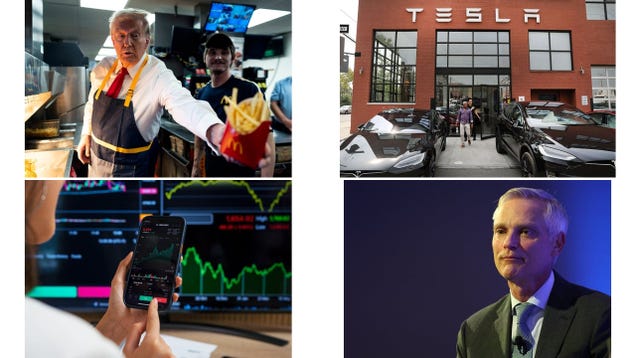
In a week filled with compelling headlines, the intersection of politics, public health, and corporate rivalry took center stage. McDonald’s faced a significant challenge as an E.coli outbreak linked to its Quarter Pounders prompted recalls and public scrutiny. Meanwhile, Tesla is making headlines again with ambitious plans to reassert its dominance in the automotive and autonomous ride-hailing sectors. On the aviation front, American Airlines’ growing frustration with Boeing signals deeper tensions in the industry’s supply chain and partnership dynamics. This article explores these key stories in detail, providing an in-depth look at the political, economic, and health-related factors shaping the current landscape.
McDonald’s and the E.coli Outbreak: A Public Health and Political Flashpoint
McDonald’s recently found itself at the center of a public health concern after the Centers for Disease Control and Prevention (CDC) linked an E.coli outbreak to the chain’s Quarter Pounder burgers. This revelation triggered immediate recalls at multiple locations, leading to widespread consumer concern and media attention. The outbreak highlights the ongoing challenges fast-food giants face in maintaining stringent food safety standards amid complex supply chains.
The implications of this outbreak extend beyond food safety, as it became a political talking point. Former President Donald Trump’s recent stunt, where he dressed as a McDonald’s worker, added a layer of political theater to the situation, drawing criticism and commentary from various quarters. This event underscored how food safety issues can quickly become intertwined with political narratives, influencing public perception and brand reputation.
Moreover, the outbreak prompted discussions about regulatory oversight and corporate responsibility. The Food and Drug Administration (FDA) and the U.S. Department of Agriculture (USDA) have been actively investigating the source of contamination, underscoring the importance of robust monitoring systems. For McDonald’s, the incident serves as a critical reminder of the need for transparency and swift action to restore consumer trust.
Tesla’s Resurgence: Innovation and Expansion in a Competitive Market
Tesla’s recent announcements signal a strong resurgence as the company plans to roll out a ride-hailing service similar to Uber in select states that favor autonomous vehicle testing. This move aligns with Tesla CEO Elon Musk’s vision of transforming urban transportation through electric and self-driving technology, potentially disrupting the traditional ride-sharing industry.
The company’s innovative approach includes leveraging its advanced Full Self-Driving (FSD) software, which has been under continuous development and testing. By integrating this technology into a ride-hailing platform, Tesla aims to reduce operational costs and enhance passenger experience, offering a glimpse into the future of mobility where human drivers may become obsolete.
Tesla’s comeback also reflects its resilience amid broader market fluctuations and supply chain challenges. Despite slowing growth in the stock market and increased competition from legacy automakers entering the EV space, Tesla’s ability to innovate and diversify its offerings remains a key competitive advantage. Investors and consumers alike are watching closely as Tesla redefines its role in the evolving automotive ecosystem.
American Airlines vs. Boeing: Strained Relations and Industry Impacts
Tensions between American Airlines and Boeing have escalated, with American Airlines CEO Robert Isom publicly expressing frustration over delays and quality issues with Boeing’s aircraft deliveries. This strained relationship highlights the complexities of managing large-scale manufacturing and supply chains in the aerospace sector.
American Airlines, one of Boeing’s largest customers, depends heavily on timely aircraft deliveries to maintain its operational schedules and fleet modernization plans. Delays have forced the airline to adjust its capacity and route planning, impacting profitability and customer satisfaction. The public spat also raises concerns about Boeing’s ability to meet increasing demand amidst ongoing production challenges.
This dispute reflects broader industry dynamics where airlines are demanding higher performance and reliability from manufacturers. Boeing’s response and corrective measures will be critical in restoring confidence. The situation also underscores the importance of strategic partnerships and communication in navigating the highly regulated and competitive aviation market.
Political Theater Meets Corporate Branding: The Trump-McDonald’s Incident
Former President Donald Trump’s recent public appearance dressed as a McDonald’s employee in Pennsylvania sparked widespread media coverage and political commentary. The stunt was criticized by Minnesota Governor Tim Walz as mere “cosplaying,” highlighting how political figures utilize symbolic actions to engage with the public and advance their narratives.
This incident occurred against the backdrop of McDonald’s E.coli crisis, adding a layer of political symbolism to the food safety issue. Trump’s choice of venue and costume was seen by some as an attempt to connect with working-class voters and evoke nostalgia for American blue-collar jobs, while others viewed it as a distraction from more substantive policy discussions.
Such political theatrics emphasize how corporate brands can become platforms for political messaging, sometimes complicating their public relations efforts. McDonald’s had to balance responding to a health crisis while managing the unexpected spotlight from political events, illustrating the intersection of politics and business in today’s media landscape.
Food Safety in the U.S.: Increasing Recalls and Consumer Vigilance
The recent surge in food recalls across the United States, including ice cream, waffles, fresh produce, and deli meats, points to growing challenges in ensuring food safety in a complex supply chain environment. Agencies like the FDA and USDA have ramped up their monitoring and recall efforts to protect consumers from potential health risks.
Consumers are becoming increasingly vigilant, demanding transparency and accountability from food producers and retailers. The McDonald’s E.coli outbreak is a stark reminder of the consequences when food safety lapses occur, leading to illness and diminished consumer confidence. It also stresses the need for improved traceability and rapid response mechanisms.
Industry stakeholders are exploring technological solutions such as blockchain for supply chain transparency and enhanced testing protocols to prevent contamination. These efforts aim to reduce the frequency of recalls and ensure safer food products, thereby protecting public health and maintaining trust in the food industry.
Tesla’s Autonomous Ride-Hailing Ambitions: A New Frontier
Tesla’s plan to launch a ride-hailing service in states friendly to autonomous vehicle testing marks a significant step toward commercializing self-driving technology. This approach not only opens new revenue streams but also challenges existing ride-sharing giants by offering a potentially cheaper and more efficient service.
The success of this initiative depends heavily on regulatory approvals, technological reliability, and consumer acceptance. Tesla’s FSD technology, while advanced, is still undergoing refinement to ensure safety and compliance with varying state laws. Public perception of autonomous vehicles remains mixed, with safety concerns at the forefront.
If successful, Tesla’s ride-hailing service could reshape urban mobility, reduce traffic congestion, and lower carbon emissions. It also positions Tesla as a leader not just in electric vehicles but in the broader transportation ecosystem, leveraging software and AI to create integrated mobility solutions.
The Future of Airline-Manufacturer Relationships: Lessons from American Airlines and Boeing
The friction between American Airlines and Boeing highlights the delicate balance required in airline-manufacturer partnerships. Timely delivery, quality assurance, and transparent communication are essential for sustaining these relationships, especially as airlines face pressure to modernize fleets and improve efficiency.
As the aviation industry recovers from pandemic-related disruptions, demand for new aircraft is rising, intensifying the need for reliable manufacturing processes. Boeing must address production bottlenecks and quality control issues to meet customer expectations and maintain its competitive position against rivals like Airbus.
This situation serves as a case study for other airlines and manufacturers, emphasizing the importance of collaboration and adaptability. Building resilient supply chains and fostering mutual trust will be crucial as the industry navigates evolving market conditions and technological advancements.
Broader Economic and Social Implications of This Week’s Headlines
The convergence of political events, public health concerns, and corporate dynamics this week reflects broader trends shaping the U.S. economy and society. Issues like food safety, technological innovation, and industrial partnerships have far-reaching effects on consumer confidence, market stability, and regulatory frameworks.
Public trust in institutions—whether government agencies, corporations, or political figures—is being tested as these stories unfold. Transparency, accountability, and proactive communication emerge as vital components in managing crises and maintaining stakeholder confidence.
The evolving narratives also underscore the interconnectedness of sectors. For instance, a health crisis at a fast-food chain ties into political messaging, while automotive innovation influences urban mobility and environmental goals. Understanding these linkages is key to anticipating future developments and crafting effective responses.
Conclusion
This week’s most popular stories paint a vivid picture of the complex interplay between politics, public health, and corporate dynamics in contemporary America. From McDonald’s grappling with an E.coli outbreak amid political spectacle, to Tesla’s ambitious plans to revolutionize ride-hailing with autonomous vehicles, and the growing rift between American Airlines and Boeing, each story offers valuable insights into broader societal and economic trends. Navigating these challenges requires collaborative efforts, innovative solutions, and transparent communication to build trust and resilience across industries. As these narratives continue to evolve, staying informed and understanding their implications will be essential for consumers, investors, and policymakers alike.