Top Stories
Discovery beneath soccer field reveals massive medieval convent lost for centuries
NEWYou can now listen to Fox News articles! Researchers recently uncovered a long-lost medieval convent in an unusual location in Denmark: a soccer field…
TAMFIS NIG LTDRC 8067447CAC ACTIVEFinima, Bonny Island, Rivers State

SpaceX has been pushing the boundaries of spaceflight with its ambitious Starship program, aiming to revolutionize space transport. A pivotal milestone was nearly jeopardized during the Flight 5 test on October 13, 2023, when the Super Heavy booster came within one second of triggering an abort command during its first successful 'catch' landing. This article delves into the details of that close call, the technical intricacies involved, and what it means for the future of the Starship program. Drawing from recently surfaced audio discussions among SpaceX engineers and officials, we explore the challenges faced, solutions devised, and preparations underway for the next flight.
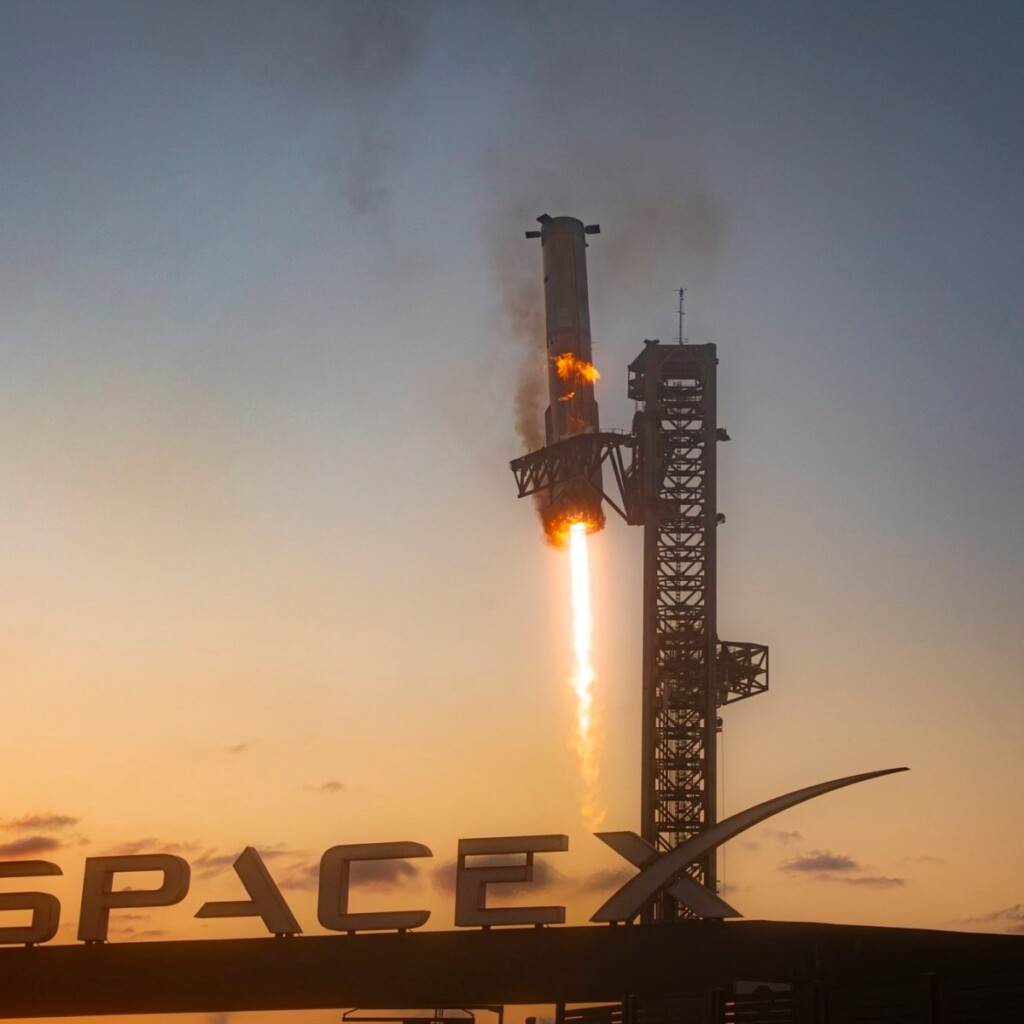
The 'catch' landing represents a revolutionary approach to rocket recovery, where the Super Heavy booster is caught mid-air by mechanical arms attached to the launch tower rather than landing on a pad. This method aims to drastically reduce turnaround time and costs associated with refurbishing rockets after flight. Achieving a successful catch is critical to SpaceX's goal of rapid reusability and making space access more economical.
Flight 5 marked the first time the Super Heavy booster was caught successfully, a milestone that has been years in the making. The booster lifted off from SpaceX's Boca Chica, Texas facility, completed its mission, and returned to the launch tower, where the mechanical arms grasped it securely. This success demonstrated the feasibility of the catch concept and opened new avenues for operational efficiency.
However, the landing was not without drama. Behind the scenes, the booster narrowly avoided aborting the catch sequence due to a misconfiguration in the landing burn parameters. Understanding this near-abort event is essential to appreciating the complexities and risks involved in pioneering such novel technology.
Recently leaked audio captured a candid discussion among SpaceX staff revealing that the Super Heavy booster came within one second of aborting the catch landing. The issue centered around a 'misconfigured' parameter related to spin pressure in the Raptor engines during the landing burn. This parameter did not increase as expected, which nearly triggered an automatic abort command.
Had the abort triggered, the booster would have been instructed to crash land next to the tower rather than attempt the catch. This would have been a costly failure, erroneously telling the system that a healthy rocket was in distress. The team acknowledged that the abort and commit criteria were complex and that they had implemented numerous new abort checks for Flight 5.
The close call highlighted the precarious balance between safety protocols and mission success. The staff admitted they were 'scared' due to the high number of abort conditions—over a hundred—that were not trivial. Their vigilance and rapid troubleshooting helped prevent a premature abort, allowing the historic catch to proceed.
Another critical issue discussed in the audio was the loss of a cover on one of the booster's chines—a vertical aerodynamic surface—during the transonic phase of descent. This cover detached just as the booster was beginning its landing burn, raising concerns due to its proximity to vital single-point failure valves critical for engine operation.
Fortunately, the detachment did not damage the valves or associated harnessing, but the event underscored the vulnerability of external components during high-speed reentry. SpaceX engineers had anticipated potential problems with the chine covers before launch and are actively developing plans to reinforce or redesign these parts.
This incident serves as a reminder of the harsh conditions rockets endure during atmospheric reentry and the importance of continuous testing and iteration to improve vehicle robustness. Ensuring that such components remain intact is vital for safe and reliable booster recovery.
The landing burn itself is a highly complex maneuver involving precise control of the Raptor engines to slow the booster and guide it to the catch. The audio hinted at issues related to the engine plume during this phase, although details were cut off before elaboration. Engine plume behavior can affect heat distribution, aerodynamic forces, and sensor readings, making it a critical factor to monitor.
SpaceX’s Raptor engines are cutting-edge full-flow staged combustion methalox engines, designed for high efficiency and reliability. Any anomalies during the landing burn must be addressed to avoid mission failure. The Flight 5 experience has likely provided valuable data to fine-tune engine control algorithms and sensor calibration.
Given the booster’s size and velocity, the challenge lies in maintaining stable combustion and thrust vectoring while managing thermal and mechanical stresses. Continuous refinement of landing burn parameters is essential for improving the safety margin and ensuring repeatable successful recoveries.
Following Flight 5, SpaceX is energetically preparing for Flight 6, which will build on the lessons learned. Unlike previous launches, Flight 6 already has Federal Aviation Administration (FAA) approval, thanks to a license update that covered both flights. This regulatory clearance removes some scheduling uncertainty and enables SpaceX to focus on technical readiness.
The team is prioritizing booster risk reduction over expanding the ship’s flight envelope for the next launch. This cautious approach aims to stabilize core systems and mitigate failure points before pushing performance boundaries further. Balancing risk and speed is a key theme as SpaceX moves forward.
Without the constraints of a new FAA license, engineers can streamline testing and decision-making processes. However, they recognize the importance of thorough data analysis and iterative improvements to maintain safety and reliability in upcoming missions.
The Flight 5 experience highlighted the critical role of abort criteria—predefined conditions that trigger emergency procedures to protect the vehicle and personnel. SpaceX implemented a comprehensive set of abort checks for the booster’s descent and landing phases, reflecting lessons from prior flights and simulations.
While these aborts serve as vital safety nets, the team acknowledged the challenge of distinguishing between genuine anomalies and false positives. In the Flight 5 case, the system was nearly fooled by a benign parameter misconfiguration, nearly aborting a healthy booster.
Refining abort algorithms to minimize unnecessary triggers while maintaining stringent safety standards is an ongoing engineering challenge. Data from Flight 5 will inform adjustments to abort thresholds and logic, aiming to optimize mission success rates without compromising safety.
The successful catch landing of the Super Heavy booster, despite the near-abort scare, represents a watershed moment for SpaceX and the broader aerospace community. It validates a potentially transformative approach to rocket reuse, promising faster turnaround and lower costs for space missions.
However, the close call also underscores the technical complexity and inherent risks of pioneering new aerospace technologies. Continuous iteration, rigorous testing, and transparent analysis of setbacks are essential to advancing toward fully operational Starship flights.
As SpaceX prepares for Flight 6 and beyond, the lessons from Flight 5 will guide design improvements, risk management strategies, and operational protocols. The program’s success could accelerate humanity’s access to space, enabling ambitious missions including lunar landings and Mars colonization.
SpaceX’s commitment to mastering booster catch landings signals a broader shift in spaceflight philosophy, emphasizing rapid reusability and sustainability. Mastery of these techniques could revolutionize launch economics, making frequent and affordable access to space a reality.
Future flights will likely incorporate enhanced hardware, refined software, and improved contingency planning informed by Flight 5’s data. SpaceX’s iterative development model, characterized by rapid testing and learning from near-misses, is central to this progress.
Ultimately, the Starship program’s advancements in booster recovery will contribute to humanity’s ability to explore the solar system. Each successful flight builds confidence in the technology and brings us closer to realizing ambitious goals like Mars colonization and beyond.
The near-abort event during the Super Heavy booster’s first successful catch landing illuminates both the promise and challenges of SpaceX’s Starship program. While the booster was seconds away from aborting, the team’s rigorous safety protocols and quick response averted a costly failure. This milestone showcases the innovative approach to rocket recovery that could redefine spaceflight economics. As SpaceX prepares for Flight 6, lessons learned from Flight 5 will shape safer, more reliable missions ahead. The ongoing evolution of booster recovery technology is a critical step toward realizing humanity’s aspirations for deeper space exploration.
Originally reported by spacenews.com. Adapted for our readers.
Keep reading
Top Stories
NEWYou can now listen to Fox News articles! Researchers recently uncovered a long-lost medieval convent in an unusual location in Denmark: a soccer field…
News
By Engr. Tamunofiniarisa BrownReading Time: 6 Minutes The conflict between Russia and Ukraine is often framed in the media as a simple battle between…
TAMFIS NIG LTD
Electrical and instrumentation engineering, bid preparation and consulting, IT and software.