
Top Stories
KFF Health News’ ‘What the Health?’: The Supreme Court and the Abortion Pill
Since the Supreme Court overturned Roe v. Wade in 2022, the landscape of abortion rights in the United S...
TAMFIS NIG LTDRC 8067447CAC ACTIVEFinima, Bonny Island, Rivers State

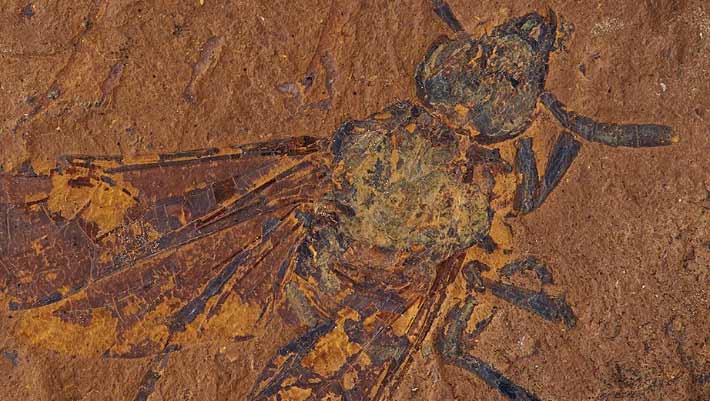
In a remarkable paleontological breakthrough, scientists have uncovered the first fossil of an Australian sawfly species dating back to the Miocene period, approximately 11 to 16 million years ago. This fossil, discovered at McGraths Flat in central New South Wales, belongs to the Pergidae family—a diverse group of sawflies predominantly found in the Americas and Australasia. This finding not only enriches the fossil record of sawflies but also offers valuable insights into their evolutionary journey, biogeographic distribution, and ecological relationships during a dynamic period in Earth's history. This article explores the significance of this discovery, the biology of sawflies, and its broader implications for understanding ancient ecosystems and species interactions.
The discovery of the sawfly fossil, named Goodnews, at McGraths Flat represents a milestone in Australian paleontology. Before this finding, fossil records of the Pergidae family were scarce, with only two previously documented fossil representatives globally. This well-preserved fossil provides a rare glimpse into the diversity of ancient Hymenoptera and helps fill gaps in the evolutionary history of sawflies.
Dating back to the Miocene period, between 11 and 16 million years ago, the fossil offers crucial evidence of the existence and adaptation of sawflies in prehistoric Australia. The Miocene was a time of significant climatic and ecological change, and understanding the organisms that thrived during this era helps reconstruct past environments and biodiversity patterns.
Furthermore, the fossil's exceptional preservation allows scientists to analyze morphological features in detail, facilitating precise placement within the sawfly family tree. This contributes to refining phylogenetic models and understanding the diversification of sawflies in Gondwanan continents.
Sawflies, despite their name, are not flies but belong to the order Hymenoptera, which also includes wasps, bees, and ants. They are characterized by their saw-like ovipositor, used by females to lay eggs inside plant tissues. Unlike typical wasps, sawflies lack the narrow 'wasp waist,' which often leads to confusion in identification.
The Pergidae family, to which the fossil species Goodnews belongs, is a moderately sized group comprising about 441 species worldwide. Of these, 165 species are found in the Australasian region, while the majority inhabit the Americas, particularly South America. This distribution reflects ancient biogeographic connections dating back to the supercontinent Gondwana.
Adult female sawflies typically deposit eggs on host plants, where larvae feed on foliage, often aggregating in groups. Their feeding habits can impact plant health, and some species have evolved mechanisms to tolerate or even utilize plant toxins, demonstrating complex ecological interactions.
McGraths Flat, located approximately 25 kilometers northeast of Gulgong in central New South Wales, is a renowned fossil site known for its exceptional preservation of mid-Miocene flora and fauna. The site offers a unique snapshot of Australia's ancient ecosystems, capturing a diverse array of organisms in remarkable detail.
The sedimentary environment at McGraths Flat favored the fossilization of delicate structures, including insects like the sawfly, which are often underrepresented in the fossil record. This quality enables paleontologists to study morphological traits and ecological relationships that are otherwise lost.
The discovery of Goodnews at McGraths Flat adds to the growing list of fossils that illustrate the complexity of Miocene ecosystems in Australia. It provides evidence of insect-plant interactions and the presence of flowering plants that shaped the evolutionary pathways of native insects.
By integrating morphological data from the fossil with molecular analyses of extant sawfly species, researchers have refined the evolutionary timeline of the Pergidae family. The evidence suggests that sawflies originated during the Cretaceous period, around 100 million years ago, when the supercontinent Gondwana still existed.
The breakup of Gondwana led to the geographic isolation of sawfly populations, resulting in their present-day distribution across Australia and South America. The fossil record, including Goodnews, supports this biogeographic pattern and highlights how continental drift influenced species diversification.
Understanding this evolutionary history aids in reconstructing the ancestral traits and ecological niches of sawflies. It also informs studies on how ancient climatic and geological events shaped insect diversity and distribution in the Southern Hemisphere.
One of the remarkable aspects of the Goodnews fossil is the presence of pollen grains on its head, indicating that this sawfly species visited flowering plants, specifically those of the genus Quintinia. This discovery provides direct evidence of pollination interactions during the Miocene in Australia.
Such interactions suggest that sawflies played a role as pollinators in ancient ecosystems, contributing to the reproduction and diversification of flowering plants. These relationships are key to understanding coevolutionary dynamics between insects and plants over millions of years.
Additionally, the fossil supports observations of sawflies’ ability to feed on toxic plants, such as those in the Myrtaceae family. Their larvae possess adaptations for detoxifying or sequestering plant chemicals, which may serve as defense mechanisms against predators, illustrating complex ecological adaptations.
Sawflies, particularly those in Australia known as 'spitfires,' have evolved specialized mouthparts and biochemical pathways to consume toxic foliage from plants like eucalypts, members of the Myrtaceae family. These adaptations enable larvae to navigate chemical defenses that deter most herbivores.
The ability to process or sequester toxic oils allows larvae to use these compounds as defensive weapons, making them less palatable to predators. This evolutionary strategy exemplifies the intricate arms race between plants and herbivorous insects.
The fossil discovery underscores that such adaptations have deep evolutionary roots, dating back at least to the Miocene. Understanding these mechanisms helps explain the ecological success and resilience of sawflies in diverse and often challenging environments.
The Goodnews fossil enriches the fossil record of Hymenoptera and provides a benchmark for calibrating molecular clocks used to estimate divergence times among insect lineages. This enhances the accuracy of evolutionary studies across related taxa.
From an ecological perspective, the find informs conservation biology by illustrating long-term insect-plant relationships and the role of native pollinators in shaping biodiversity. Insights gained can guide efforts to preserve modern ecosystems facing environmental changes.
Moreover, the discovery highlights the importance of fossil sites like McGraths Flat in uncovering hidden chapters of Earth’s natural history. Continued exploration is vital for revealing further details about ancient biodiversity and ecological networks.
The discovery of the Miocene sawfly fossil Goodnews at McGraths Flat marks a significant advancement in our understanding of insect evolution and ancient Australian ecosystems. By providing direct evidence of sawfly morphology, behavior, and ecological interactions from over 11 million years ago, this find deepens our insight into the evolutionary history of the Pergidae family and their biogeographic distribution linked to Gondwana. Furthermore, the fossil highlights the intricate relationships between insects and plants, including pollination and adaptation to toxic hosts, underscoring the complexity of Miocene ecological networks. As paleontologists continue to unearth such exceptional fossils, our comprehension of biodiversity’s origins and transformations through geological time will only continue to grow, informing both science and conservation efforts today.
Originally reported by sci.news. Adapted for our readers.
Keep reading
Top Stories
Since the Supreme Court overturned Roe v. Wade in 2022, the landscape of abortion rights in the United S...
Top Stories
Top Stories Tamfitronics One evening in May, nursing assistant Debra Ragoonanan’s vision blurred during her shift at a state-run Massachusetts vet...
TAMFIS NIG LTD
Electrical and instrumentation engineering, bid preparation and consulting, IT and software.

