Politics
Yari’s 2027 Campaign Strategy: How to Evaluate Claims About Tinubu’s Record
Yari says the APC will emphasise Tinubu’s achievements in 2027. This analysis explains how voters can examine outcomes, baselines and campaign evidence.
TAMFIS NIG LTDRC 8067447CAC ACTIVEFinima, Bonny Island, Rivers State

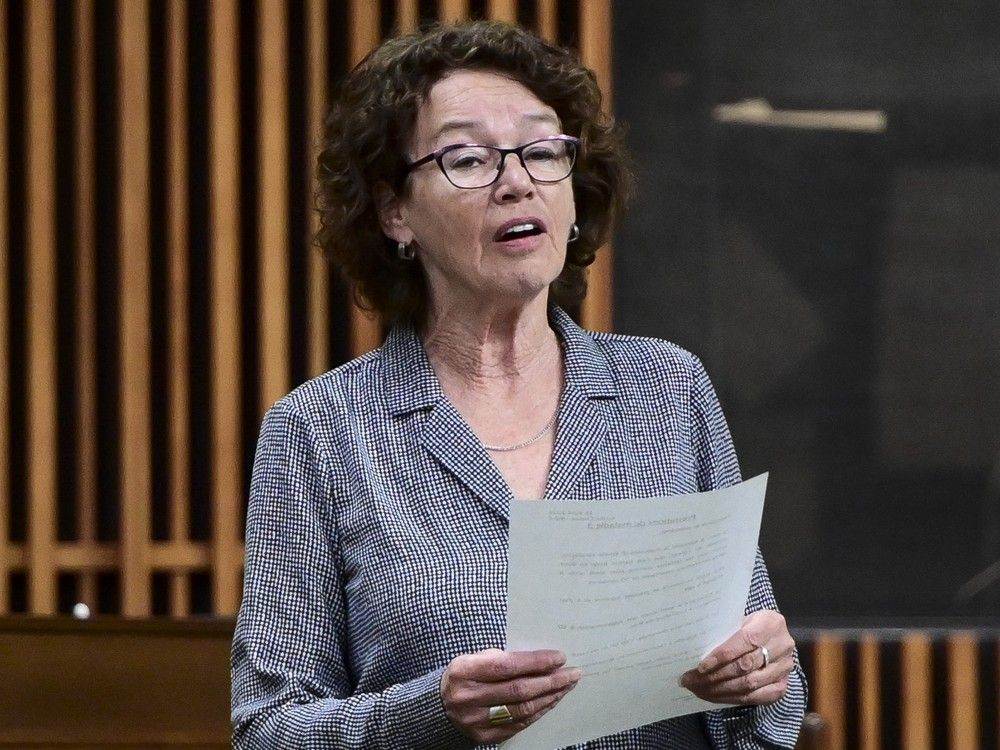
Louise Chabot, a prominent figure in Quebec’s political and labor landscape, has announced she will not run for a third term as the Bloc Québécois Member of Parliament for Thérèse-de Blainville. Since her election in 2019, Chabot has been a dedicated advocate for workers’ rights and social justice, drawing on decades of experience as a nurse and union leader. Her decision comes as the Bloc faces a period of transition, with two other MPs also stepping down ahead of a federal election expected within the next year. This article explores Chabot’s career, her contributions to labor legislation, and the implications of her retirement for the Bloc Québécois and Quebec politics more broadly.
Louise Chabot’s professional journey began in 1976 when she started working as a nurse at Lévis Hospital. She later moved to the Trois-Rivières Regional Hospital Centre in 1979, where her involvement in labor activism took root. By 1981, Chabot had been elected as a union delegate, marking the start of a long-standing commitment to representing workers’ interests.
Her leadership roles expanded over the years, including serving as president of the Syndicat Professionnel des Nurses et Infirmiers de Trois-Rivières in 1985. In 1988, she became the founding president of the Union Québécoise des Infirmiers et Nurses, further solidifying her influence within Quebec’s nursing community. By 2000, Chabot had advanced to the position of vice-president of the Centrale des syndicats du Québec (CSQ), a major union federation representing over 200,000 members.
From 2012 to 2019, Chabot served as president of the CSQ, where she championed workers’ rights and social justice issues. Her extensive background in healthcare and union leadership provided a strong foundation for her subsequent political career.
Elected as the Bloc Québécois MP for Thérèse-de Blainville in 2019, Louise Chabot brought her advocacy for labor rights to the federal stage. During her time in Parliament, she was instrumental in advancing important legislative changes, particularly those aimed at protecting workers.
Among her notable achievements was contributing to the ban on the use of replacement workers under the Canada Labour Code. This measure was a significant victory for unions and workers, preventing employers from hiring temporary replacements during strikes or labor disputes.
Chabot also played a key role in the passage of legislation safeguarding workers’ pension funds, ensuring greater security for employees’ retirement savings. These accomplishments reflect her deep commitment to improving labor conditions and protecting vulnerable workers.
Despite these successes, Chabot acknowledged ongoing challenges, including the need for reforming unemployment insurance. She emphasized that the Bloc Québécois would continue to fight for such reforms, underscoring the party’s dedication to social and economic justice.
On October 21, 2024, the Bloc Québécois officially announced that Louise Chabot would not seek re-election in the upcoming federal election. In a statement, Chabot described her time as an MP as both exciting and enriching, expressing pride in her work while acknowledging the difficulty of her decision to step away from politics.
Her retirement marks the third departure from the Bloc’s parliamentary caucus ahead of the expected election, following announcements by Jean-Denis Garon of Mirabel and Monique Pauzé of Repentigny. This wave of retirements occurs amid increasing political instability in Ottawa, with the next election mandated to occur within a year.
Bloc leader Yves-François Blanchet praised Chabot’s contributions, highlighting her as a committed and thoughtful figure who combined sharpness with generosity. He described her as an essential part of building a fairer Quebec and noted her rebellious spirit as a driving force behind her work.
Chabot’s departure leaves a gap in the Bloc’s representation, particularly given her extensive experience and leadership within both the party and the broader labor movement.
Louise Chabot’s retirement comes at a critical juncture for the Bloc Québécois, which has been navigating internal changes and external political pressures. The loss of experienced MPs like Chabot, Garon, and Pauzé could challenge the party’s ability to maintain its influence and continuity in Parliament.
Her background in nursing and union leadership brought a unique perspective to the Bloc, particularly on social and labor issues that resonate strongly with Quebec voters. Replacing such a figure will require the party to find candidates who can uphold this legacy while addressing emerging concerns.
Moreover, Chabot’s emphasis on ongoing struggles, such as unemployment insurance reform, signals that the Bloc’s agenda will continue to focus on social justice and workers’ rights. The party’s ability to champion these causes effectively in the next Parliament may depend on how well it manages this transition.
For Quebec politics more broadly, Chabot’s departure underscores the evolving landscape as seasoned politicians step down and new voices emerge. It reflects a moment of renewal that could reshape the province’s representation at the federal level.
Louise Chabot’s decision to step down after a distinguished career highlights the natural cycle of political renewal and the challenges it brings. Her legacy as a champion for workers and social justice is firmly established, and her contributions have left a lasting imprint on both Quebec and federal politics. As the Bloc Québécois prepares for an election amid political uncertainty, it faces the task of building on the foundation laid by leaders like Chabot while adapting to new realities. For voters in Thérèse-de Blainville and beyond, this transition marks both an end and a beginning in the ongoing pursuit of a fairer, more equitable Quebec.
Originally reported by montrealgazette.com. Adapted for our readers with AI assistance.
Keep reading
Politics
Yari says the APC will emphasise Tinubu’s achievements in 2027. This analysis explains how voters can examine outcomes, baselines and campaign evidence.
Lifestyle
Obi says his wife funds her own purchases. This analysis separates his explanation, unverified handbag prices and the evidence needed to assess public spending.
Politics
Politics tamfitronics Minnesota Gov. Tim Walz attends a rally in Asheville, North Carolina, on Sept. 17. Minnesota led the way on in...
TAMFIS NIG LTD
Electrical and instrumentation engineering, bid preparation and consulting, IT and software.