
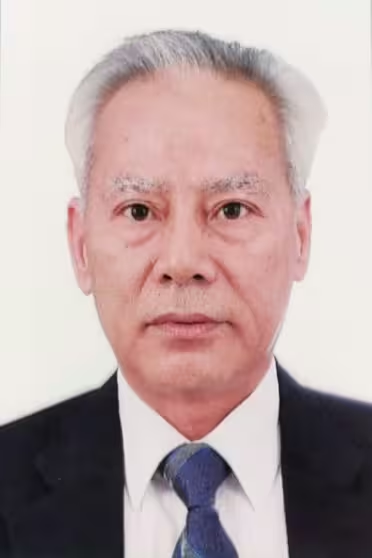
On 13 October, Sam Hou Fai was elected as Macau’s new Chief Executive with an overwhelming 99.5% of the vote. The 62-year-old former president of Macau’s Court of Final Appeal is set to succeed Ho Iat-Seng in December, stepping into a role that demands both political savvy and economic foresight. While his legal credentials are impeccable, analysts question whether Sam possesses the necessary experience to steer Macau through its pressing challenges, particularly economic diversification and political governance. This article delves into the implications of his appointment, the challenges ahead, and the potential strategies that could define his tenure.
Sam Hou Fai’s Judicial Background: Strengths and Limitations
Sam Hou Fai’s career has been deeply rooted in Macau’s judiciary, culminating in his role as president of the Court of Final Appeal. His legal expertise and reputation for impartiality have earned him respect across the region. However, his judicial background offers limited exposure to the complexities of economic management and political negotiation, areas critical for the Chief Executive role.
The transition from judge to political leader involves mastering governance dynamics, stakeholder engagement, and policy formulation beyond legal interpretations. Analysts suggest that Sam’s experience in applying the law in a binary manner may not fully prepare him for the nuanced decision-making required in economic policy and political consensus-building.
Despite these limitations, his judicial discipline could bring a fresh perspective to Macau’s administration, emphasizing rule of law and transparency. Yet, the absence of prior political roles raises questions about his ability to effectively lead Macau’s government and respond to diverse economic challenges.
Economic Diversification: A Crucial Challenge for Macau’s Future
Macau’s economy has historically relied heavily on its gaming industry, which accounts for the lion’s share of government revenue and employment. However, the Covid-19 pandemic exposed the vulnerabilities of this dependency, prompting Beijing to urge Macau to diversify its economic base. Sam Hou Fai has echoed this directive, describing diversification as mandatory for Macau’s sustainable development.
In August, after announcing his candidacy, Sam criticized the gaming sector’s unchecked expansion, calling it “barbaric” and highlighting the need for regulation and balance. He recognizes that while gaming remains Macau’s primary industry, overreliance poses risks that could undermine long-term growth and social stability.
Achieving diversification requires strategic investment in emerging sectors such as big health, finance, technology, culture, sports, and MICE (meetings, incentives, conferences, and exhibitions). Sam’s limited economic experience raises concerns about his capacity to champion and implement policies that nurture these industries effectively.
Maintaining the Gaming Industry’s Vital Role
Despite his critical stance, Sam has reassured stakeholders that Macau’s gaming industry will not be shut down or diminished. Post-pandemic recovery has seen casino revenues rebound significantly, underscoring gaming’s economic importance. In 2022, gross gaming revenue reached MOP183.1 billion, reflecting the sector’s resilience and centrality to Macau’s identity.
Sam’s policy address emphasized protecting and supervising the healthy and orderly development of Macau’s six casino concessionaires. This balanced approach aims to curb disorderly expansion while sustaining the economic benefits that gaming provides to the city.
Analysts like University of Macau’s Ieong Meng U believe Sam is unlikely to disrupt the casino industry drastically, given its critical role. The challenge lies in regulating the sector to prevent excesses while simultaneously fostering economic diversification to reduce Macau’s dependence on gaming.
The “1+4” Policy Framework: Balancing Tradition and Innovation
Sam Hou Fai has pledged to continue the “1+4” policy framework established by his predecessor, which focuses on developing Macau as a World Centre of Tourism and Leisure while promoting four new industries: big health, finance, technology, and culture-sports-MICE.
This strategy leverages Macau’s unique positioning as a global convention city, bolstered by its status as the “hotel capital of the world” with 22 five-star hotels recognized by Forbes Travel Guide in 2023. However, many of these hotels are integrated into casino resorts, indicating the ongoing interplay between gaming and tourism sectors.
The success of the “1+4” plan depends on effective governance and targeted investment, areas where Sam’s lack of political and economic experience could pose challenges. Collaborating with experienced advisors and leveraging Beijing’s guidance will be crucial to advancing this multifaceted development agenda.
Political Experience and Governance: Navigating Complexities
Sam Hou Fai’s political experience is limited, as he ran unopposed and is perceived by some as handpicked by Beijing. His lack of prior political roles has raised concerns about his ability to navigate Macau’s complex political landscape, which requires balancing local interests, central government directives, and diverse stakeholder demands.
Political commentator Sonny Lo Shiu-Hing suggests that Sam will rely heavily on his executive council and cabinet members who possess economic and financial expertise. This collective leadership approach may compensate for his individual shortcomings and provide the necessary governance support.
Lau Siu-kai, a consultant on Hong Kong and Macau affairs, emphasizes Beijing’s strong backing as a key factor that could offset Sam’s limited political networks. This support may facilitate smoother policy implementation and problem-solving in Macau’s governance.
Implications for Macau’s Casino Concessionaires
Industry experts predict that under Sam’s leadership, Macau’s casino operators will face tighter regulatory scrutiny. Ben Lee, managing partner at consultancy iGamiX, notes that Sam’s judicial mindset, characterized by strict adherence to rules, could limit the ‘wiggle room’ concessionaires previously enjoyed in non-gaming investments and operational flexibility.
This shift may prompt casino operators to reassess their business strategies and compliance frameworks to align with stricter regulatory expectations. While the gaming sector will remain indispensable, its operators may encounter reduced latitude in expanding beyond traditional gaming activities.
Such regulatory tightening aligns with Beijing’s broader goals of fostering sustainable development and curbing excessive gambling-related social issues. The challenge will be balancing regulatory rigor with the industry’s economic vitality.
The Role of Beijing’s Support in Sam Hou Fai’s Administration
Macau’s Chief Executive operates within a political framework heavily influenced by the central government in Beijing. Analysts agree that Beijing’s support will be pivotal in enabling Sam Hou Fai to overcome his lack of economic and political experience.
Beijing’s backing provides access to resources, policy guidance, and political legitimacy, which can empower Sam to implement reforms and navigate challenges effectively. This support is particularly important for pursuing economic diversification and maintaining social stability.
However, reliance on Beijing also means that Macau’s governance will continue to align closely with central government priorities, potentially limiting local autonomy. Sam’s administration will need to balance these dynamics while addressing Macau’s unique local needs.
Looking Ahead: Opportunities and Risks for Macau’s Governance
Sam Hou Fai’s appointment marks a new chapter for Macau, with opportunities to reinforce the rule of law and pursue economic modernization. His judicial background may introduce a disciplined and transparent approach to governance, which could benefit Macau’s institutional integrity.
Conversely, his lack of direct experience in economic management and political negotiation presents risks, especially as Macau confronts urgent issues like economic diversification and regulatory reform. The effectiveness of his administration will hinge on the strength of his cabinet and advisors.
Ultimately, Macau’s future under Sam will depend on his ability to adapt, collaborate, and leverage Beijing’s support while addressing the city’s economic vulnerabilities and political complexities. Stakeholders will closely watch how these factors play out in the coming years.
Conclusion
Sam Hou Fai’s ascension to Macau’s Chief Executive position brings a unique blend of judicial discipline and nascent political leadership. While his legal background equips him with a strong foundation in rule of law, his limited experience in economic and political governance poses significant challenges. Navigating Macau’s pressing need for economic diversification, managing the vital gaming sector, and balancing local and central government interests will test his leadership. Success will largely depend on his ability to build a competent cabinet, effectively leverage Beijing’s support, and adapt to the complexities of governance. As Macau embarks on this new chapter, stakeholders remain cautiously optimistic, recognizing both the potential and pitfalls inherent in Sam’s administration.