
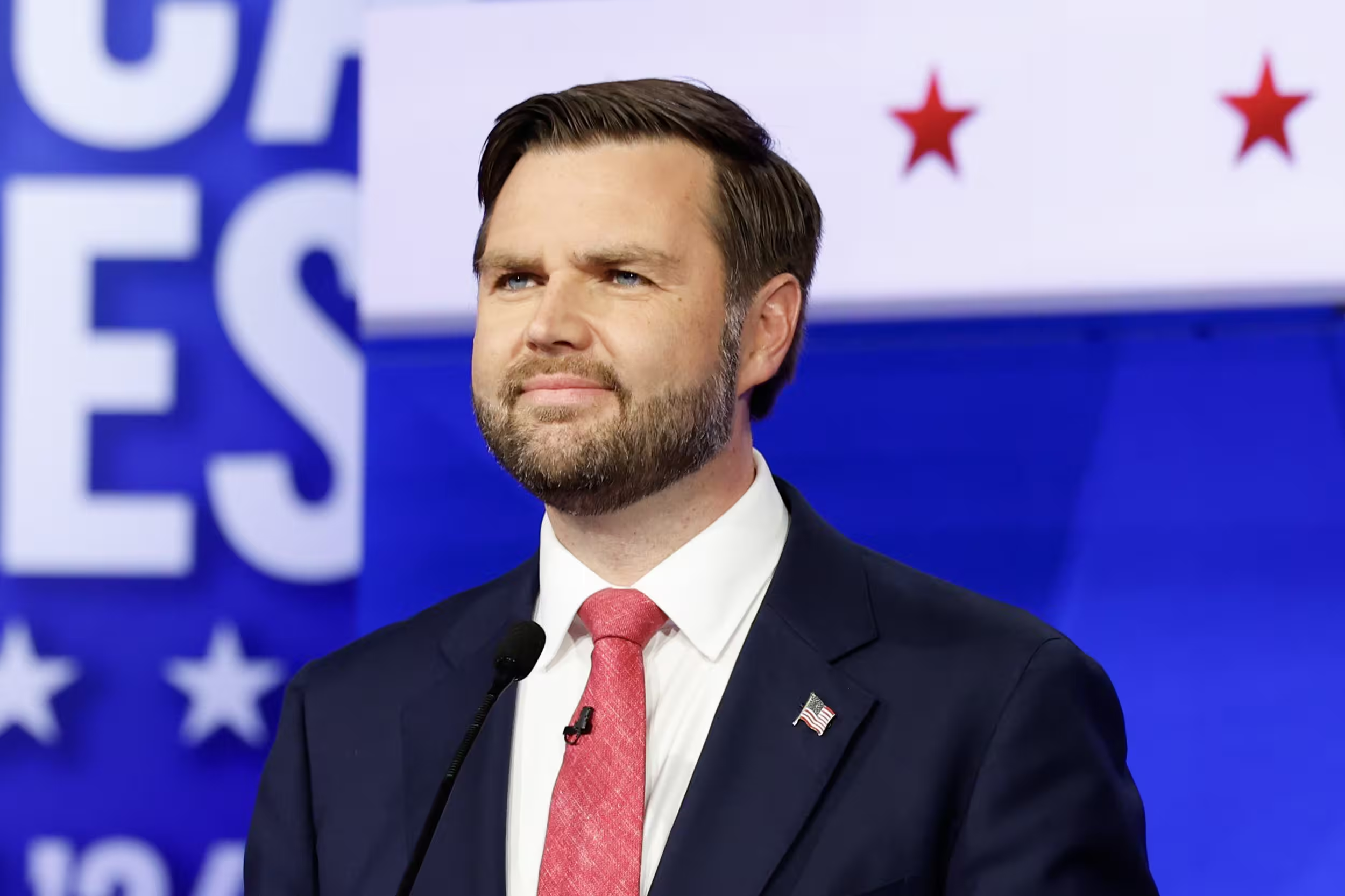
Abortion continues to be a deeply divisive and pivotal issue in American politics, especially as the 2024 presidential election draws near. On Fox News Sunday, host Shannon Bream confronted Ohio Senator JD Vance, former President Donald Trump's running mate, about his position on a national abortion ban. This discussion emerged amid growing concern among young female voters, for whom abortion rights rank as a top priority. The interview revealed complexities and contradictions in the Republican ticket's stance, highlighting the ongoing debate over federal versus state control of abortion legislation.
The Rising Importance of Abortion Among Young Voters
Recent polling underscores abortion as the foremost issue for young female voters aged 18 to 29. A Kaiser Family Foundation (KFF) survey conducted between September 12 and October 1 found that 39 percent of these voters identify abortion as their primary concern, a sharp increase from approximately 20 percent in earlier surveys. This shift reflects heightened awareness and activism around reproductive rights following recent Supreme Court decisions and legislative battles nationwide.
The growing prioritization of abortion rights among young voters signals significant political implications. Candidates and parties are increasingly pressured to clarify their positions on reproductive health policies. For Republicans, traditionally associated with more restrictive abortion views, this trend presents a challenge to appeal to a demographic that strongly favors maintaining or expanding access to abortion services.
The survey results also highlight the broader cultural and generational divide on abortion. While older voters may prioritize other issues, young women’s heightened focus on abortion rights could influence turnout and voting patterns in key battleground states, making the topic a central theme in campaign strategies and public debates.
Fox News Sunday: Shannon Bream’s Direct Questioning of JD Vance
During the Fox News Sunday program, Shannon Bream opened the conversation by playing a 2022 debate clip featuring JD Vance. In the clip, Vance was asked if he would support Senator Lindsey Graham’s proposed 15-week national abortion ban. Vance responded affirmatively, describing the ban as reasonable and asserting that no civilized country allows elective abortions after 15 weeks of gestation.
Bream pressed Vance further, noting that a 15- to 20-week national ban would restrict access for many people, especially in states currently offering broader abortion rights. She asked if Vance would support such a ban at the federal level, prompting him to emphasize the need for exceptions and to characterize late-term elective abortions as 'barbaric.'
The interview became more pointed as Vance contrasted his views with those of Vice President Kamala Harris and her running mate, Minnesota Governor Tim Walz, accusing them of supporting taxpayer-funded late-term abortions that could be imposed on Christian hospitals. This framing underscored the stark ideological divide between the Republican ticket and their Democratic opponents.
JD Vance’s Position: State Control Over Abortion Laws
Vance reiterated that while he supports gestational limits on abortion, he does not endorse a federal abortion ban. Instead, he advocates for returning the decision-making power to individual states. This position aligns with former President Trump’s publicly stated view that abortion regulations should be determined at the state level rather than through national mandates.
This stance reflects a broader Republican strategy to avoid a nationalized culture war on abortion, aiming instead to empower states to craft policies that reflect their constituents’ values. Vance argued that this approach respects the diversity of opinions across the country and prevents a one-size-fits-all federal policy that could alienate voters in more moderate or pro-choice states.
However, this nuanced position has drawn criticism and skepticism. Some conservative activists and voters seek a more definitive national ban, while pro-choice advocates warn that state-level restrictions could lead to a patchwork of access, disproportionately impacting marginalized communities and those in restrictive states.
Contradictions and Controversy Surrounding Vance’s Past Statements
Vance’s claims during the Fox News Sunday interview came under scrutiny due to apparent contradictions in his past statements. Notably, during the 2022 Ohio Senate race debate, he explicitly supported a national 15-week abortion ban, a position seemingly at odds with his recent assertions that he opposes federal abortion bans.
This discrepancy has fueled criticism that Vance is attempting to recalibrate his messaging for the presidential campaign, possibly to appeal to a broader electorate. Such shifts in rhetoric can erode trust among voters who prioritize consistency and transparency on critical issues like abortion.
The evolving narrative around Vance’s abortion stance also highlights the broader tensions within the Republican Party as it balances its conservative base with the need to attract moderate and independent voters. Navigating this complex landscape requires careful communication, but inconsistencies risk undermining the campaign’s credibility.
Democratic Response and the Abortion Debate in the 2024 Election
Democratic leaders, including Vice President Kamala Harris, have taken a firm stance on abortion rights, advocating for federal codification of reproductive freedoms. Harris has pledged to ensure nationwide protections for abortion access, positioning the Democratic ticket as champions of reproductive choice.
This stark contrast with the Republican ticket’s emphasis on state control and gestational limits has intensified the abortion debate in the 2024 election cycle. The issue remains a powerful motivator for voters, particularly women and younger demographics, shaping campaign narratives and policy proposals.
Democrats argue that without federal protections, abortion rights remain vulnerable to state-level restrictions and judicial rulings. They warn that a patchwork of laws could lead to unequal access and increased health risks, making a national framework essential for safeguarding reproductive freedom.
Influence of Former President Trump and Melania Trump’s Divergent Views
Former President Donald Trump has publicly stated that he would not support a federal abortion ban and would veto such legislation, a position he reiterated on his social media platform, Truth Social. This stance aims to clarify his views amid ongoing debates about the Republican Party’s abortion policies.
In a surprising development, former First Lady Melania Trump expressed support for abortion rights in her memoir, emphasizing a woman’s fundamental right to make decisions about her own body. Her perspective introduces an unexpected dimension to the national abortion conversation within Republican circles.
This divergence between Donald and Melania Trump’s views reflects the broader complexities and varying opinions on abortion within the Republican Party and among its prominent figures, underscoring the challenge of presenting a unified front on this contentious issue.
The Cultural and Political Impact of the Abortion Debate
The abortion debate remains a flashpoint in American culture and politics, influencing voter behavior and shaping national discourse. The issue intersects with broader themes such as religious freedom, women’s rights, and states’ sovereignty, making it a multifaceted and emotionally charged topic.
For the Republican Party, managing abortion policy is particularly challenging as it seeks to maintain its conservative base while avoiding alienation of moderate voters who may support abortion rights or limited restrictions. The tension between national leadership and state-level policymaking remains a key strategic consideration.
As the 2024 election approaches, abortion will likely continue to dominate campaign messaging, debates, and voter mobilization efforts. Both parties are expected to leverage the issue to galvanize support, making it a central battleground for political influence and legislative priorities.
Looking Ahead: What JD Vance’s Stance Means for the GOP and the Election
JD Vance’s articulation of the Republican ticket’s abortion stance signals an attempt to navigate a complex political landscape. By advocating for state-level decision-making while supporting gestational limits, Vance seeks to balance conservative principles with electoral pragmatism.
However, the mixed messages and past contradictions in his statements may pose challenges in building trust among voters who consider abortion a decisive issue. Clarity and consistency will be critical as the campaign progresses and scrutiny intensifies.
Ultimately, the abortion debate will remain a defining factor in the 2024 election, influencing voter turnout, party strategies, and legislative agendas. How Vance and the Republican ticket manage this issue could significantly impact their electoral prospects and the future direction of reproductive policies in the United States.
Conclusion
The confrontation between Fox News host Shannon Bream and Senator JD Vance over abortion policy encapsulates the broader national debate as the 2024 election approaches. With abortion rights at the forefront for many voters, particularly young women, the Republican ticket faces the difficult task of articulating a clear and consistent position. Vance’s emphasis on state-level decision-making aims to navigate the party’s internal divisions and appeal to a diverse electorate. Meanwhile, Democratic advocates continue to push for federal protections, highlighting the ideological chasm between the parties. As the election unfolds, abortion will remain a defining and deeply contentious issue, influencing voter sentiment and shaping the future of reproductive rights in America.