
Business
Nigeria’s Broken Systems: Why Failure Persists and What Must Change
An analysis of the structural and institutional factors that entrench governance failures in Nigeria, from patronage politics and weakened oversight to the urgent need…
TAMFIS NIG LTDRC 8067447CAC ACTIVEFinima, Bonny Island, Rivers State

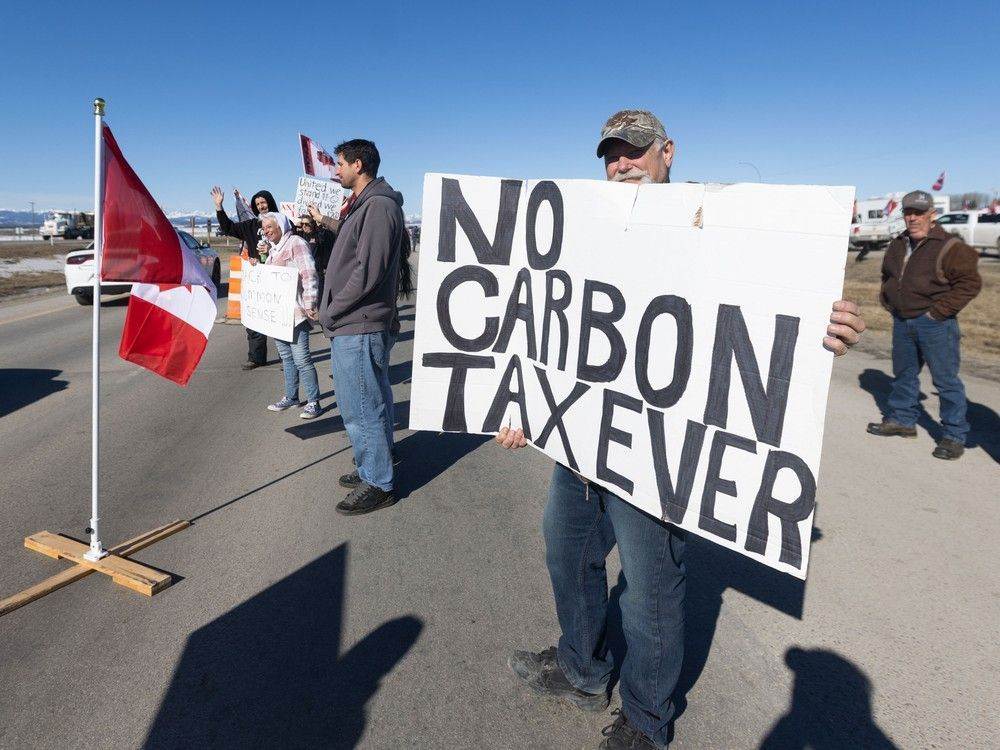
Two letters published in the Regina Leader-Post this week capture a tension at the heart of Canadian economic life: the politicisation of climate policy and the quiet reliability of national infrastructure. Randy Graham of Edenwold argues that the federal carbon tax has become a political football rather than a tool for responsible governance, while Petra Seyffarth of Regina offers a timely defence of Canada Post's parcel service. Both perspectives matter for shoppers, small business owners, and anyone tracking the intersection of climate policy, affordability, and logistics in Canada today.
The Canada Carbon Rebate (CCR), formerly the Climate Action Incentive Payment, remains the primary mechanism returning fuel charge proceeds to households. For the 2024-25 benefit year, quarterly payments arrive in April, July, October, and January, with amounts varying by province and household composition. In backstop provinces — Alberta, Saskatchewan, Manitoba, Ontario, New Brunswick, Nova Scotia, Prince Edward Island, and Newfoundland and Labrador — most households receive more in rebates than they pay in carbon costs, with lower-income households benefiting proportionally more.
Official figures from the Department of Finance show a family of four in Saskatchewan receives $1,804 annually, while the same family in Alberta receives $1,779. Single adults in Saskatchewan receive $902 per year. Payments are tax-free and delivered via direct deposit or cheque through the Canada Revenue Agency. The rebate is designed to be revenue-neutral at the household level, though critics argue administrative costs and behavioural incentives warrant scrutiny.
Saskatchewan's relationship with carbon pricing took a dramatic turn. In March 2025, Premier Scott Moe announced the province would pause the industrial carbon tax rate under its Output-Based Performance Standards (OBPS) programme effective April 1, 2025, positioning Saskatchewan as Canada's first 'carbon tax-free province.' The government argued this would provide immediate relief to households, farms, and industries while protecting competitiveness amid global trade tensions.
Economists and federal officials warn the move could undermine national emissions targets and trigger federal backstop provisions. CBC reporting indicates Saskatchewan continues to pay hundreds of millions to meet federal framework obligations despite the provincial pause. Negotiations between Regina and Ottawa remain ongoing as of mid-2026. For businesses, the uncertainty creates planning challenges: capital expenditure decisions for emissions-reducing technology may be deferred pending regulatory clarity.
Graham's letter raises a substantive policy question: whether the rebate structure could be better targeted. Currently, the CCR is universal within eligible provinces, phased out only at higher income thresholds through the tax system. Graham proposes eliminating rebates for wealthy households — 'who seem to complain the most' — and substantially increasing payments for low-income Canadians, mirroring proposals from policy analysts who argue for more progressive redistribution of carbon revenues.
The federal government has resisted means-testing, citing administrative simplicity and the political importance of broad-based support. However, as the carbon price rises — scheduled to reach $170 per tonne by 2030 — the fiscal envelope grows, and pressure for targeted relief may intensify. Graham also suggests directing revenues to subsidise solar and wind projects, a revenue-recycling approach used in several European jurisdictions. For Canadian consumers, the key takeaway is that the current rebate structure is not set in stone; future governments could reshape it significantly.
Seyffarth's letter highlights a service many urban Canadians take for granted: reliable, affordable parcel delivery across vast distances. Her anecdote — a Victoria resident shipping wheel rims to Toronto at reasonable cost — illustrates Canada Post's role in enabling peer-to-peer and small business e-commerce. The Crown corporation's 'Solutions for Small Business' programme offers discounted rates, integrated shipping tools (Snap Ship), and pickup services tailored to low-volume shippers.
For global market observers, Canada Post presents an instructive case study in universal service obligation. Despite recurring labour disputes and financial pressures, the corporation maintains a network reaching every address in the country — a critical enabler for e-commerce in remote and northern communities. The 2024-25 service standards show domestic parcel delivery within 2-9 business days depending on distance, with tracking and liability coverage included. Small businesses shipping internationally can access Tracked Packet International service to 31 countries for items under 2 kg.
The intersection of carbon pricing and logistics costs is rarely discussed but increasingly relevant. Fuel surcharges on parcel delivery — whether from Canada Post or private carriers — reflect carbon costs embedded in transportation fuels. As the carbon price escalates, these surcharges will rise, affecting the landed cost of goods for online shoppers and the margins of e-commerce retailers.
Canada Post's commercial shipping platforms offer volume discounts and integrated label printing, helping businesses manage these costs. The corporation's 2024 rate adjustments included an average 3.5% increase for domestic parcels, partly attributable to fuel and carbon cost pass-through. For businesses exporting to Canada — whether through diaspora networks or direct e-commerce — understanding the Canadian logistics landscape, including the role of the national postal operator, is essential for pricing and market entry strategy.
Canada's carbon pricing experiment — a federal backstop with household rebates — is watched closely by policymakers worldwide, including in Nigeria where carbon market discussions are advancing. The Canadian model demonstrates both the political vulnerability of carbon taxes and the importance of visible, direct household compensation. Saskatchewan's recent pivot underscores how subnational resistance can fracture national climate policy.
On the logistics side, Canada Post's universal service mandate offers a template for postal operators in large, geographically diverse countries. Nigeria's NIPOST has undergone partial commercialisation, but the challenge of serving rural areas at affordable rates persists. Public-private partnerships, digital integration, and e-commerce-focused product lines — all features of Canada Post's recent strategy — merit consideration in the Nigerian context.
The letters from Edenwold and Regina reflect a broader truth: climate policy and logistics infrastructure are not abstract debates — they shape the daily costs and capabilities of households and businesses. As Canada's carbon price marches toward $170 per tonne, the rebate mechanism will face intensifying political scrutiny. Saskatchewan's experiment with industrial carbon tax pause will test the federation's ability to maintain a coherent national framework. Meanwhile, Canada Post continues to deliver — literally — the connective tissue of a dispersed digital economy. For stakeholders from Regina to Lagos, the Canadian experience offers a real-time case study in the politics of carbon pricing and the quiet power of universal logistics. Staying informed on both fronts is not optional; it is a commercial necessity.
Originally reported by leaderpost.com. Adapted for our readers with AI assistance.
Keep reading
Business
An analysis of the structural and institutional factors that entrench governance failures in Nigeria, from patronage politics and weakened oversight to the urgent need…
Politics
Yari says the APC will emphasise Tinubu’s achievements in 2027. This analysis explains how voters can examine outcomes, baselines and campaign evidence.
Lifestyle
Obi says his wife funds her own purchases. This analysis separates his explanation, unverified handbag prices and the evidence needed to assess public spending.
TAMFIS NIG LTD
Electrical and instrumentation engineering, bid preparation and consulting, IT and software.

