
Top Stories
KFF Health News’ ‘What the Health?’: The Supreme Court and the Abortion Pill
Since the Supreme Court overturned Roe v. Wade in 2022, the landscape of abortion rights in the United S...
TAMFIS NIG LTDRC 8067447CAC ACTIVEFinima, Bonny Island, Rivers State

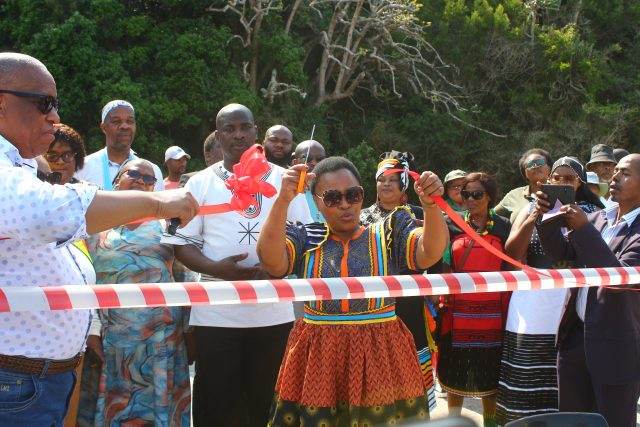
Wharf Street, a key thoroughfare connecting Nemato, Station Hill, and the Port Alfred Central Business District (CBD), has officially reopened after being closed for nearly two years. The reopening marks a significant milestone for local commuters, taxi operators, pedestrians, and the tourism sector, all of whom rely on this vital route. However, the lengthy closure and associated infrastructure projects have exposed challenges in project management, municipal service delivery, and community safety. This article examines the reopening event, the underlying sewerage infrastructure upgrades, and the broader implications for Port Alfred’s development.
The reopening of Wharf Street was celebrated at a public ceremony attended by local officials, community representatives, and stakeholders. The road’s closure since November 2022 had forced taxi operators and motorists to take lengthy detours, increasing travel distances and costs. Ayanda Zoli, chairperson of the Uncedo Taxi Association, highlighted the impact on taxi operations, noting that detours added approximately 3 kilometers per trip. With multiple trips daily, this translated into an additional 24 kilometers driven each day, incurring extra fuel costs estimated at around R45 daily per vehicle.
The poor condition of Wharf Street prior to its closure had also been a safety concern. Potholes not only caused vehicle damage but also contributed to accidents. The resurfacing and reopening of the road thus represent a significant improvement in road safety and operational efficiency for taxi operators and other road users.
Pedestrian safety was another important focus during the reopening. Bonakele Moyikwa of Port Alfred Crime Fighters emphasized that while reopening the road improves access for pedestrians commuting to and from work, additional measures such as street lighting are necessary to enhance safety and reduce incidents of robbery reported along the route.
The reopening of Wharf Street was closely linked to a major sewerage infrastructure project undertaken by the Ndlambe Municipality. Infrastructure portfolio councillor Siphokazi Dyakala explained that the road closure was necessitated by the installation of new sewerage reticulation systems designed to feed into the main sewer line and pump station. This upgrade is critical for connecting to the sewage reclamation plant near Centenary Park, which plays a key role in Port Alfred’s water management strategy.
Mayor Khululwa Ncamiso detailed the challenges that had plagued the existing sewerage system, including frequent pump station failures caused by load shedding and vandalism, particularly metal theft. These failures resulted in sewage spills that compromised public health and environmental quality. The new infrastructure includes a single, more reliable pump station located adjacent to the Nuwater reverse osmosis plant, which will pump sewage directly to the Port Alfred Waste Water Treatment Works. This consolidation aims to improve system reliability and security by centralizing critical infrastructure and backup power generation.
Despite its importance, the sewerage project faced significant delays. The initial contractor was deemed inadequate, and small, medium, and micro enterprises (SMMEs) appointed under municipal mandates struggled to meet project requirements. A new contractor, recognized as the best in the province, was brought in to advance the work. However, the challenging terrain—an environmentally sensitive and unstable wetland—along with unpredictable water ingress and heavy rains, further slowed progress.
The reopening ceremony also highlighted the collaborative efforts between the municipality and the provincial government. While the municipality focused on sewerage upgrades, the province undertook the rehabilitation of Wharf Street itself. Mayor Ncamiso emphasized the importance of public awareness regarding this partnership, noting that such collaborations often go unnoticed despite their positive impact on citizens and visitors alike.
The project has also created employment opportunities, particularly through the engagement of five SMMEs. This focus on local enterprise development aligns with broader municipal goals of economic empowerment and sustainable community growth.
Speaker Andile Marasi reinforced the message that infrastructure projects should be communicated transparently to the public, stating, “We do projects but we don’t tell people. This is the start of good things going forward.” The event was positioned as a civic occasion rather than a political one, with participation from community organizations such as SANCO and the Uncedo Taxi Association.
Notably absent from the reopening event were representatives from the Democratic Alliance (DA) and the Economic Freedom Fighters (EFF). The EFF publicly announced a boycott, with councillor Xolisa Runeli criticizing the timing and focus of the ceremony. Runeli argued that celebrating the road reopening while the sewerage project remained incomplete amounted to “cheap political grandstanding.” She stressed that the priority should be addressing ongoing sewage spills and infrastructure failures before marking road rehabilitation milestones.
Runeli also raised questions about municipal accountability, asking whether the mayor’s ribbon-cutting implied the municipality’s assumption of responsibility for road safety and potential accidents on Wharf Street. These concerns underscore the complex interplay between infrastructure delivery, political dynamics, and community expectations in local governance.
The reopening of Wharf Street after nearly two years signals important progress in Port Alfred’s infrastructure renewal, particularly in addressing critical sewerage system challenges that have long affected the town’s environmental health and public safety. While the road rehabilitation brings immediate benefits to commuters and local businesses, the delays and ongoing concerns about the sewerage project reveal the complexities of municipal service delivery in a resource-constrained and environmentally sensitive context. Moving forward, sustained collaboration, transparent communication, and a focus on community safety will be essential to fully realize the benefits of these infrastructure investments and to build public trust in local governance.
Originally reported by talkofthetown.co.za. Adapted for our readers with AI assistance.
Keep reading
Top Stories
Since the Supreme Court overturned Roe v. Wade in 2022, the landscape of abortion rights in the United S...
Top Stories
Top Stories Tamfitronics One evening in May, nursing assistant Debra Ragoonanan’s vision blurred during her shift at a state-run Massachusetts vet...
TAMFIS NIG LTD
Electrical and instrumentation engineering, bid preparation and consulting, IT and software.

