Politics
How Minnesota Figures Into the Presidential Politics of Insulin Prices
Politics tamfitronics Minnesota Gov. Tim Walz attends a rally in Asheville, North Carolina, on Sept. 17. Minnesota led the way on in...
TAMFIS NIG LTDRC 8067447CAC ACTIVEFinima, Bonny Island, Rivers State

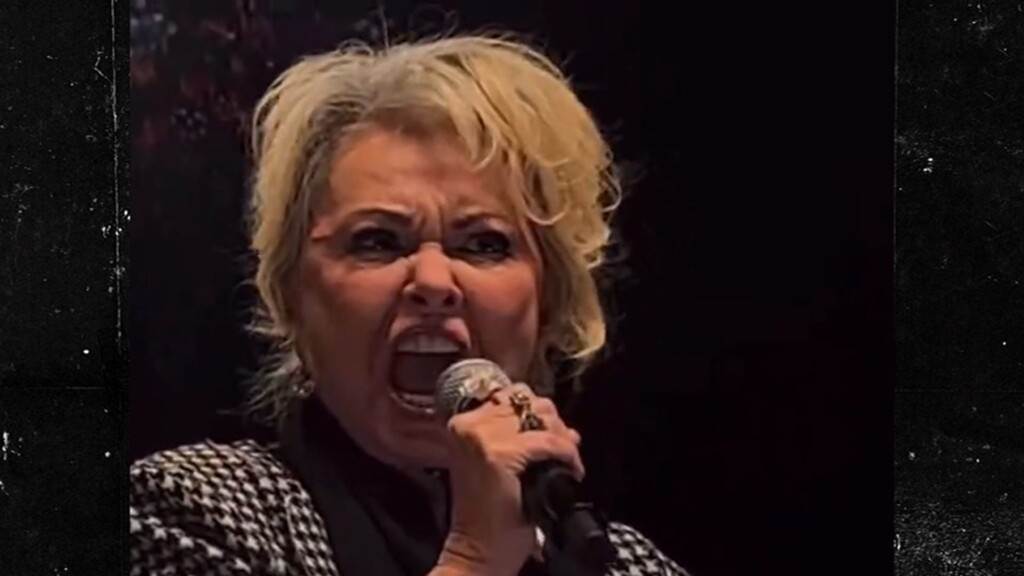
Roseanne Barr, known for her provocative and often controversial public persona, once again made headlines at the Tucker Carlson Live Tour event in Texas. During her appearance, Barr fervently screamed conspiracy theories alleging that the 2020 presidential election was stolen by Democrats, asserting that the January 6th Capitol events were a deliberate misdirection from the alleged fraud. This article thoroughly examines Barr’s statements, the event’s atmosphere, the factual inaccuracies surrounding the 2020 election fraud claims, and the broader impact of spreading such narratives. As misinformation continues to shape political discourse, understanding these incidents is vital for fostering informed public dialogue.
On a recent night in Texas, Roseanne Barr took the stage at the Tucker Carlson Live Tour, delivering a highly charged and emotional speech that quickly drew attention. Known for her outspoken conservative views and past controversies, Barr did not hold back, loudly proclaiming her belief in widespread election fraud during the 2020 presidential race. Her delivery was marked by shouting, foot-stomping, and intense emotion, captivating and polarizing the audience.
Barr’s rhetoric centered on the assertion that Democrats orchestrated a massive theft of the election, which she claimed remains unaddressed by authorities. She accused the Democratic Party of orchestrating a cover-up involving the January 6th Capitol riot investigation, suggesting this inquiry was a smokescreen designed to distract the public from the alleged election manipulation.
Tucker Carlson, the host of the event and a former Fox News personality known for his conservative commentary, appeared visibly entertained by Barr’s impassioned tirade. His laughter and engagement underscored the event’s atmosphere, where controversial political rhetoric was not only welcomed but celebrated among attendees.
Roseanne Barr’s claims echo a broader narrative that emerged following the 2020 presidential election, wherein former President Donald Trump and his supporters alleged widespread voter fraud. These assertions have been extensively investigated and repeatedly debunked by multiple sources, including bipartisan election officials and courts across the United States.
No credible evidence has been found to support claims of systemic fraud that could have altered the election outcome. Courts dismissed numerous lawsuits challenging the results due to lack of evidence, and recounts affirmed the legitimacy of the vote counts. Independent fact-checkers and the Department of Justice also found no proof of fraud at a scale that would impact the election.
Despite this, Barr’s vocal insistence on these disproven theories reflects a significant segment of the population that remains skeptical of the election results. Her statements contribute to ongoing polarization and distrust in democratic institutions, highlighting the challenges in combating misinformation in the digital age.
A central element of Barr’s speech was her claim that the January 6 Capitol riot investigation was a deliberate distraction orchestrated by Democrats to hide election fraud. She argued that the focus on the so-called 'insurrection' diverted public attention from investigating the alleged theft of the election.
In reality, the January 6th event was a violent attack on the U.S. Capitol by rioters attempting to disrupt the certification of the 2020 election results. The investigation into this event has been conducted by multiple agencies and congressional committees to understand the causes and prevent future threats to democracy.
Barr’s framing of the investigation as a cover-up dismisses the gravity of the Capitol riot and undermines the rule of law. It also reflects a broader tactic used by some political figures to delegitimize accountability efforts by framing them as partisan distractions.
Tucker Carlson, who hosted the event where Barr spoke, has been a prominent figure in conservative media. His rise to fame was largely built on his Fox News show, which became known for promoting controversial opinions and conspiracy theories, including those related to the 2020 election.
Fox News was recently involved in a high-profile legal settlement with Dominion Voting Systems, agreeing to pay nearly $800 million after spreading false claims about election fraud. This legal consequence underscores the tangible impact of misinformation and the responsibilities media personalities hold.
Carlson’s live tour events serve as rallying points for conservative audiences, often amplifying narratives rejected by mainstream media and fact-based investigations. Barr’s appearance at such an event highlights the symbiotic relationship between media figures and public personalities in shaping political narratives.
Roseanne Barr’s political commentary has long been a subject of controversy, with the actress frequently voicing strong conservative opinions that polarize audiences. She has openly supported Donald Trump and engaged in provocative rhetoric, including the release of satirical videos that sparked backlash.
One notable incident involved Barr making unfounded allegations against Joe Biden in a satirical video, which drew criticism for its inflammatory nature. Additionally, her public support for figures like Robert F. Kennedy Jr., known for his anti-vaccine stance and fringe theories, further illustrates her alignment with controversial political views.
Barr’s consistent outspokenness, combined with her celebrity status, ensures that her statements receive widespread attention, influencing segments of the public discourse and sometimes exacerbating political divisions.
When celebrities like Roseanne Barr endorse and amplify conspiracy theories, it can significantly influence public perception. Their large platforms and fan bases allow misinformation to spread rapidly, sometimes overshadowing factual reporting and expert analysis.
Celebrity endorsements of conspiracy theories often lend an air of legitimacy to unfounded claims, making it harder for fact-checkers and educators to correct false narratives. This phenomenon complicates efforts to maintain an informed electorate and preserve trust in democratic processes.
The role of social media further magnifies this effect, as clips from events like Barr’s Tucker Carlson appearance can go viral, reaching millions. This dynamic emphasizes the need for media literacy and responsible communication from public figures.
The propagation of false election fraud claims has led to significant legal and social ramifications. Lawsuits, such as the Dominion Voting Systems case against Fox News, demonstrate the financial and reputational costs of spreading misinformation.
Socially, these narratives have deepened political polarization and contributed to distrust in electoral institutions. The January 6 Capitol riot is a stark example of how misinformation can incite real-world violence and threaten democratic stability.
Public figures who promote such theories may face backlash, including loss of credibility and professional opportunities. However, some also experience increased support within certain political circles, reflecting complex dynamics in today’s polarized media environment.
Combating election misinformation requires a multifaceted approach involving media platforms, government agencies, educators, and the public. Promoting critical thinking and media literacy is essential to help individuals discern credible sources from conspiracy theories.
Public figures and media personalities bear responsibility to fact-check their statements and avoid amplifying falsehoods. Encouraging accountability and transparency in political discourse can help restore trust in democratic processes.
Finally, fostering open, respectful dialogue across political divides is crucial. While freedom of speech is a cornerstone of democracy, it must be balanced with the need to protect truth and prevent the erosion of democratic institutions.
Roseanne Barr’s explosive outburst at the Tucker Carlson Live event serves as a vivid example of how election conspiracy theories continue to permeate American political discourse. Despite overwhelming evidence affirming the legitimacy of the 2020 election, figures like Barr persist in promoting false narratives that fuel division and distrust. The interplay between celebrity influence, media platforms, and political polarization underscores the urgency of addressing misinformation through education, accountability, and civic engagement. Only by confronting these challenges head-on can society protect the integrity of its democratic institutions and ensure a more informed electorate moving forward.
Originally reported by tmz.com. Adapted for our readers.
Keep reading
Politics
Politics tamfitronics Minnesota Gov. Tim Walz attends a rally in Asheville, North Carolina, on Sept. 17. Minnesota led the way on in...
Politics
Deji Adeyanju; Niger State Mining Victims Human rights lawyer and activist, Deji Adeyanju, has accepted his appointment as a member of the Federal Government’s…
Politics
Democracy, Featured, Global, Global Governance, Headlines, International Justice, IPS UN: Inside the Glasshouse, TerraViva United Nations UNITED NATIONS, Sep 11 2026 (IPS) – When…
TAMFIS NIG LTD
Electrical and instrumentation engineering, bid preparation and consulting, IT and software.