
News
RUSSIA versus NATO and BRICS vs. NATO Military SWOT
Recall that Poland’s Minister Sikorski’s core claim is partially supported by the numbers, but the framing “quite quickly” and “without the U.S.” does not…
TAMFIS NIG LTDRC 8067447CAC ACTIVEFinima, Bonny Island, Rivers State

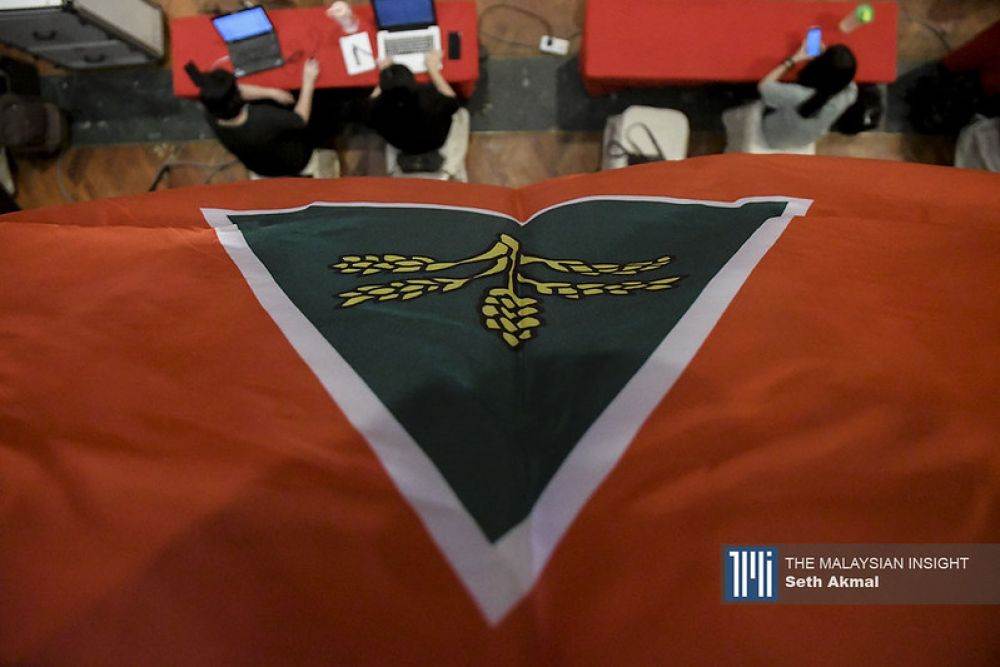
Political movements frequently encounter pivotal moments that determine their future trajectory. These crossroads can stem from electoral setbacks, shifting alliances, leadership crises, or evolving public sentiment. The Malaysian political party Gerakan exemplifies such a movement at a crossroads, grappling with its diminished influence in Penang, a state it once governed. Despite perceptions of decline, Gerakan’s ongoing efforts to reinvent itself, address internal challenges, and recalibrate its strategies highlight the resilience of political movements confronting adversity. This article delves into the multifaceted challenges and opportunities faced by political movements like Gerakan, offering insights into how they can navigate crossroads to remain relevant and impactful.
Political movements often reach critical junctures where their survival and relevance are deeply tested. These moments, frequently triggered by electoral defeats or internal discord, compel movements to reassess their goals, strategies, and leadership. The crossroads symbolize both a challenge and an opportunity to redefine identity and direction.
At such crossroads, movements face the dilemma of whether to persist with established approaches or to innovate and adapt to new political realities. The choices made during these periods influence not only immediate electoral prospects but also long-term viability and public perception.
The complexity of these dynamics is amplified by the external environment, including voter sentiment, rival parties’ strengths, and shifting alliances. Understanding these factors is crucial for movements aiming to transition from moments of uncertainty to renewed momentum.
Gerakan once held significant sway in Penang, governing the state under the leadership of Koh Tsu Koon from 1990 to 2008. During this period, the party was viewed as a formidable political force with a strong base and clear governance record. However, over the years, Gerakan’s influence has waned amid the rise of rival parties, notably the Democratic Action Party (DAP).
The party’s decline in Penang is attributed to a combination of factors including changing voter demographics, strategic missteps, and the dominance of DAP, which has maintained control for nearly two decades. Public perception of Gerakan shifted from a governing authority to a party struggling to maintain relevance.
Despite these setbacks, recent observations suggest a subtle resurgence in public sentiment towards Gerakan’s leadership, particularly Koh Tsu Koon. His improved reception in public appearances indicates a potential softening of voter attitudes, signaling that the party may not be entirely sidelined.
Effective leadership is critical for any political movement attempting to navigate a crossroads. Gerakan’s current leadership has faced criticism for perceived weaknesses on the national stage, with dissatisfaction expressed over Senator Dominic Lau Hou Chai’s performance. Internal party cohesion is vital to present a unified front to voters.
Leadership challenges extend beyond individual figures to include broader strategic disagreements and factional divides. Insiders reveal concerns about the party’s direction, questioning whether current alliances and strategies adequately serve Gerakan’s long-term interests.
Revitalizing leadership entails not only replacing or empowering key individuals but also fostering an environment that encourages innovative ideas and responsive decision-making. For Gerakan, addressing leadership concerns is a prerequisite for rebuilding trust and electoral competitiveness.
Political coalitions can offer movements access to broader support bases but may also constrain autonomy and dilute core principles. Gerakan’s alliance with the Malay-centric Perikatan Nasional coalition, dominated by PAS and Bersatu, has sparked debate within and outside the party about strategic direction and identity preservation.
Some within Gerakan advocate for contesting elections independently, focusing on Penang as a stronghold before considering coalition partnerships. This approach aims to restore a clear party identity and leverage local support without being overshadowed by larger coalition partners.
Conversely, remaining within coalitions offers opportunities to influence policy and gain visibility but requires navigating ideological differences and managing complex negotiations over seat allocations and campaign priorities. Balancing these factors is a delicate task for movements at political crossroads.
Reinvention is often essential for political movements seeking to overcome stagnation or decline. Gerakan’s efforts to redefine its political identity emphasize its liberal democratic values and multi-racialism within an Asian cultural framework, distinguishing it from parties like DAP which espouse social democracy.
This strategic repositioning involves broadening the party’s appeal beyond traditional constituencies and contesting a wider range of electoral seats, including those with diverse demographics. Such flexibility reflects a pragmatic approach to maximizing electoral opportunities.
Reinventing strategy also requires adapting communication methods, policy priorities, and grassroots engagement to resonate with contemporary voters. For Gerakan, this means addressing local issues in Penang while articulating a vision that aligns with national aspirations.
Public sentiment is a powerful force shaping the fate of political movements. Gerakan’s gradual improvement in public perception, particularly towards veteran leaders, demonstrates how voter attitudes can evolve over time, influenced by personal interactions and broader socio-political trends.
Engaging voters effectively necessitates authentic outreach, transparent communication, and responsiveness to community needs. Movements at crossroads must rebuild trust and demonstrate relevance to regain electoral support.
In Penang, Gerakan’s challenge lies in overcoming entrenched loyalties to dominant parties while articulating a compelling alternative. This requires sustained efforts to connect with diverse voter groups through grassroots initiatives and clear policy platforms.
Political storms—periods of intense competition, controversy, or instability—can threaten even the most established movements. Experts advise that during such times, taking shelter and preserving core strengths is often the wisest course, allowing the storm to pass before reengaging aggressively.
Gerakan’s experience underscores the importance of resilience and adaptability. Despite electoral losses and leadership challenges, the party continues to devise multiple contingency plans to counter opposition tactics and capitalize on emerging opportunities.
Long-term success depends on learning from setbacks, maintaining organizational discipline, and preparing strategically for future contests. Movements that master these elements are better positioned to emerge stronger from political crossroads.
The question of whether Gerakan can reclaim seats in Penang remains open, contingent on several internal and external factors aligning favorably. Improved leadership, coherent strategy, effective alliances, and positive voter engagement are essential components of any potential comeback.
While outright victory may currently seem ambitious, incremental gains in select constituencies can rebuild momentum and restore credibility. Gerakan’s willingness to contest diverse seats and redefine its political narrative reflects an understanding of the need for gradual progress.
Ultimately, the future of movements at crossroads like Gerakan hinges on their ability to balance tradition with innovation, maintain core values while embracing change, and respond dynamically to evolving political landscapes.
Movements at political crossroads face a complex interplay of challenges and opportunities that test their resilience, adaptability, and vision. Gerakan’s journey in Penang illustrates the multifaceted nature of such crossroads, encompassing leadership renewal, coalition dynamics, strategic reinvention, and voter engagement. While the path forward is fraught with uncertainties, the party’s determination to evolve and respond to the political environment offers valuable lessons for similar movements worldwide. Success is not guaranteed by strength alone but often emerges from strategic patience, clarity of purpose, and the ability to capitalize on moments when rivals falter. As political landscapes continue to shift, movements that embrace change while staying true to their core principles stand the best chance of navigating their crossroads and securing a meaningful future.
Originally reported by themalaysianinsight.com. Adapted for our readers.
Keep reading
News
Recall that Poland’s Minister Sikorski’s core claim is partially supported by the numbers, but the framing “quite quickly” and “without the U.S.” does not…
Politics
In August 2025, Zespri, the world’s largest marketer of kiwifruit, announced that the European Commission had approved what it described as the first health…
News
By Engr. Tamunofiniarisa BrownReading Time: 6 Minutes The conflict between Russia and Ukraine is often framed in the media as a simple battle between…
TAMFIS NIG LTD
Electrical and instrumentation engineering, bid preparation and consulting, IT and software.