
Politics
Science vs politics: Kiwi’s long road to EU health-claim approval
In August 2025, Zespri, the world’s largest marketer of kiwifruit, announced that the European Commission had approved what it described as the first health…
TAMFIS NIG LTDRC 8067447CAC ACTIVEFinima, Bonny Island, Rivers State

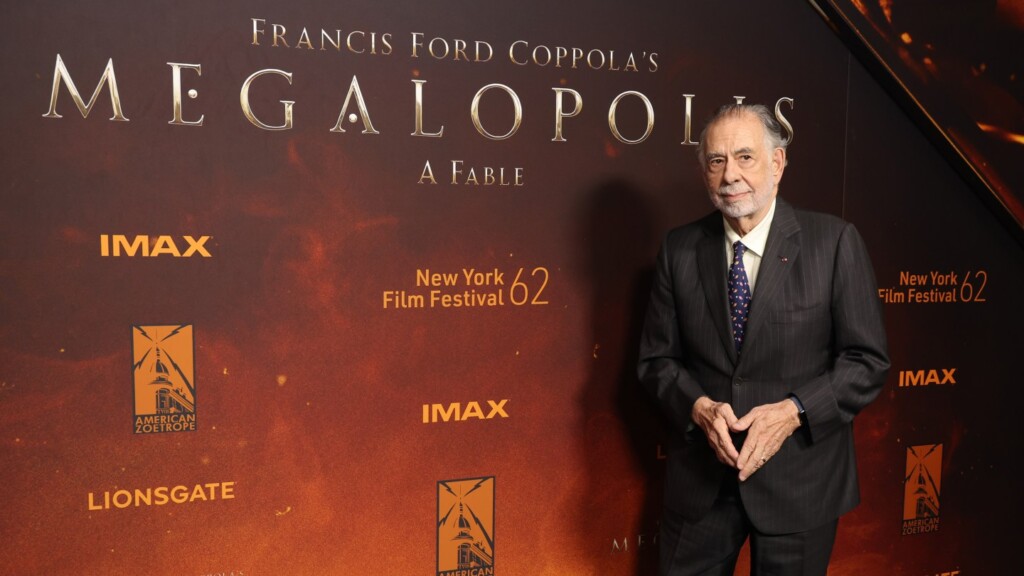
Francis Ford Coppola, legendary director of cinematic masterpieces, recently sparked intense political discourse while promoting his new film Megalopolis. During a panel at the New York Film Festival, Coppola likened contemporary American politics to the fall of the Roman Republic, warning that the United States risks losing its democratic foundation and ending up under an authoritarian ruler. This comparison sheds light on the challenges facing modern America, as political power becomes concentrated and the interests of the elite overshadow the common good. Coppola’s insights invite audiences to reflect deeply on the parallels between historical decline and today’s political climate.
The Roman Republic was once a beacon of democracy, where power was shared among elected senators representing the people. However, over centuries, Rome’s political system became corrupted by wealth and self-interest, leading to the erosion of republican ideals. Senators increasingly prioritized their own riches and influence over the welfare of the state, setting the stage for the rise of autocratic rule.
Coppola draws attention to this critical period when Rome lost its republican values and transitioned into an empire ruled by emperors with centralized authority. This shift marked the end of participatory governance and the beginning of political dominance by a singular figure, fundamentally altering the course of Roman history.
The filmmaker’s comparison highlights how political decay and concentration of power can destabilize even the most prosperous societies. By invoking Rome’s fall, Coppola warns that similar patterns of corruption and disengagement from democratic responsibility could threaten America’s political future.
Megalopolis, Coppola’s ambitious new film, is described as a Roman epic set in modern America. The narrative centers on a conflict between Cesar, a visionary artist advocating for a utopian future, and Mayor Franklyn Cicero, who embodies resistance to change and the preservation of the status quo.
Through this storyline, Coppola explores the tension between progress and conservatism, mirroring the political struggles that define contemporary America. The film uses the allegory of Rome to question the direction of the nation and the viability of its democratic institutions.
By casting well-known actors with diverse political views and fostering collaboration among them, Coppola emphasizes the importance of dialogue and unity despite ideological differences. This approach underscores the film’s thematic call for collective engagement in shaping the future.
A central theme in Coppola’s commentary is the critique of America’s political class, which he compares to the Roman senators who became absorbed in their own wealth and power. He argues that many contemporary representatives prioritize personal gain over effective governance, undermining the nation's democratic principles.
This concentration of power and wealth among political elites creates a disconnect between the government and its citizens, fostering disillusionment and weakening public trust. Coppola warns that such dynamics jeopardize the republic’s survival by sidelining the voices of ordinary Americans.
His perspective invites reflection on the role of political accountability and the need for leaders who prioritize the common good. The filmmaker’s concerns resonate with ongoing debates about campaign finance, lobbying influence, and political polarization in the United States.
Coppola’s remarks come at a critical moment as the United States approaches a presidential election that could determine the country’s political trajectory. He suggests that the stakes resemble those faced by Rome during its decline, with the potential for democratic erosion and the rise of authoritarian leadership.
The filmmaker’s analogy serves as a cautionary tale, urging voters to recognize the importance of preserving democratic institutions and resisting forces that threaten to concentrate power undemocratically. This call to action emphasizes civic engagement and informed participation.
Other prominent figures at the festival, including Robert De Niro, echoed these concerns, underscoring the urgency of the moment. Their shared message highlights the critical role of elections in shaping the nation’s future and the responsibility of citizens to uphold democratic values.
In assembling the cast and crew for Megalopolis, Coppola intentionally brought together individuals with varying political beliefs, including some who have faced public backlash or cancellation. This inclusive approach reflects a commitment to creative collaboration beyond partisan divides.
By fostering an environment where differing viewpoints coexist harmoniously, Coppola demonstrates that dialogue and mutual respect are possible even amid political polarization. This ethos aligns with the film’s broader themes of unity and collective progress.
The decision to prioritize artistic integrity over political agendas reinforces the idea that art can serve as a platform for meaningful conversation, bridging ideological gaps and encouraging audiences to engage thoughtfully with complex societal issues.
During the discussion, filmmaker Spike Lee injected humor by recalling a historical joke about Rome, playfully referencing former President Donald Trump’s controversial remarks on immigration. This moment of levity highlighted the intersection of cultural commentary and political critique within the conversation.
Such exchanges underscore how historical analogies can be used not only to analyze political trends but also to engage audiences through relatable and timely references. This blend of humor and insight enriches the dialogue surrounding Megalopolis and its themes.
Coppola’s openness about his own background, including anecdotes about attending military school with Trump, adds a personal dimension to the discourse, illustrating how individual experiences inform broader political observations.
Megalopolis exemplifies how cinema can serve as a powerful medium for exploring and critiquing political realities. Coppola’s vision transforms historical allegory into a contemporary narrative that challenges audiences to reflect on governance, power, and civic responsibility.
The film’s ambition extends beyond entertainment, aiming to spark debate about America’s future and the preservation of democratic ideals. By engaging viewers emotionally and intellectually, Megalopolis encourages active participation in political discourse.
This approach reaffirms the potential of art to influence societal attitudes and promote dialogue, reminding audiences that democracy requires vigilance and collective effort to sustain.
Francis Ford Coppola’s comparison of America’s political landscape to the decline of ancient Rome offers a profound warning about the fragility of democracy. Through his film Megalopolis and public discourse, Coppola challenges audiences to recognize the dangers of political complacency, elite self-interest, and the concentration of power. His call for inclusive debate and creative collaboration underscores the necessity of collective action to preserve the republic’s ideals. As America stands at a crossroads, Coppola’s insights remind us that history’s lessons are invaluable guides for safeguarding the nation’s democratic future.
Originally reported by hollywoodreporter.com. Adapted for our readers.
Keep reading
Politics
In August 2025, Zespri, the world’s largest marketer of kiwifruit, announced that the European Commission had approved what it described as the first health…
News
By Engr. Tamunofiniarisa BrownReading Time: 6 Minutes The conflict between Russia and Ukraine is often framed in the media as a simple battle between…
Politics
Twenty-five years after the September 11 attacks, the family of Marine Travis Fuller reflects on his death in the Iraq War, grappling with the…
TAMFIS NIG LTD
Electrical and instrumentation engineering, bid preparation and consulting, IT and software.