Politics
How Minnesota Figures Into the Presidential Politics of Insulin Prices
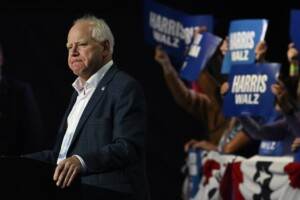
Politics tamfitronics Minnesota Gov. Tim Walz attends a rally in Asheville, North Carolina, on Sept. 17. Minnesota led the way on in...
TAMFIS NIG LTDRC 8067447CAC ACTIVEFinima, Bonny Island, Rivers State


When former US President Donald Trump faced a second apparent assassination attempt in September 2024, the immediate partisan blame game that followed revealed more than just political theatre—it highlighted a dangerous pattern where inflammatory rhetoric creates real-world consequences that extend far beyond the ballot box. For Nigerian business leaders navigating both local and global markets, this episode serves as a stark reminder that political speech doesn't just shape opinions; it directly influences economic behaviour, investment decisions, and market stability. In Nigeria's complex political landscape, where ethnic, religious, and regional tensions often intersect with economic policy, understanding how rhetoric translates into tangible business risks has become an essential skill for sustainable operations.
The immediate aftermath of the September assassination attempt demonstrated how quickly political language can trigger measurable economic responses. Within hours of the incident, social media platforms were flooded with conflicting narratives, each designed to mobilise political bases rather than inform the public. This information environment creates what economists call 'noise trading'—where investment decisions are driven by emotion and misinformation rather than fundamental analysis. For Nigerian businesses with exposure to US markets or dollar-denominated transactions, such volatility can affect everything from foreign exchange rates to commodity prices, particularly in sectors like agriculture and energy that are sensitive to geopolitical perceptions.
More concerning is the ripple effect through global supply chains. When political leaders engage in what Representative Adam Kinzinger described as 'gaslighting to the 100th power'—denying their role in escalating tensions while blaming opponents—the resulting uncertainty makes long-term business planning nearly impossible. Nigerian importers relying on stable US-Nigeria trade relations, exporters targeting American markets, or businesses with American partners all face increased risk when political rhetoric undermines diplomatic norms. The business cost of this instability manifests in higher insurance premiums, increased hedging costs, and the need for more conservative financial planning that can stifle growth initiatives.
The Trump-Vance rhetoric targeting Haitian immigrants in Ohio provides a particularly relevant case study for Nigerian businesses. The false claim that Haitian residents were 'eating pets' led to tangible community harm, including bomb threats and widespread fear among immigrant populations. For businesses operating in diverse environments—whether in Nigeria's multicultural cities or international markets—this illustrates how political speech can quickly escalate from offensive commentary to direct threats against customer bases, employee communities, and local economic activity.
In Nigeria's context, where over 250 ethnic groups coexist and regional identities often influence economic opportunities, similar dynamics can emerge when political figures use divisive language about specific groups. Businesses that fail to recognise these risks may find themselves inadvertently associated with harmful narratives, facing boycotts, or losing access to certain markets. More critically, when political rhetoric creates fear or displacement among worker communities, businesses experience direct operational impacts through absenteeism, reduced productivity, and difficulty maintaining stable workforces—particularly in sectors like manufacturing, retail, and services that rely on local labour pools.
Contrary to the notion that businesses should remain politically neutral, the current environment demands a more nuanced approach. Nigerian companies that have successfully navigated political volatility tend to share three characteristics: they establish clear internal guidelines for political engagement, they invest in community relations that transcend ethnic or religious lines, and they maintain scenario planning that accounts for political instability as a standard risk factor rather than an exceptional event.
Practical steps include conducting regular political risk assessments that go beyond tracking election cycles to monitoring rhetoric patterns that could signal increasing social tension. Businesses should also consider how their own communications might be perceived in charged environments—what seems like neutral commentary in calm times can be interpreted as taking sides during periods of heightened polarization. Most importantly, companies need to develop authentic relationships with diverse community stakeholders before crises occur, creating reservoirs of trust that can help mitigate the impact when political rhetoric does escalate.
While political volatility creates risks, it also generates opportunities for businesses that can provide stability in uncertain times. Nigerian entrepreneurs have already demonstrated ingenuity in this area, from developing secure payment systems that function during periods of civil unrest to creating agricultural supply chains that bypass politically sensitive corridors. The global demand for risk mitigation services—from political risk insurance to scenario planning consultancy—represents a growing market where Nigerian firms can leverage their local experience with complex political environments.
Technology solutions offer particular promise. Platforms that monitor political rhetoric in real-time and translate it into actionable business intelligence could help companies anticipate market shifts before they fully materialise. Similarly, businesses that specialise in cross-cultural communication training or community resilience building are likely to find increasing demand as companies worldwide recognise that navigating political diversity isn't just a social responsibility—it's a competitive necessity in interconnected markets.
The Trump assassination attempt aftermath isn't merely a US political story—it's a case study in how political speech shapes economic reality with immediate relevance for Nigerian businesses. As political polarization increases globally, the ability to distinguish between legitimate political discourse and dangerous rhetoric that incites violence or market instability becomes a critical business competency. Nigerian leaders who develop sophisticated approaches to political risk—not by avoiding engagement, but by understanding how language translates into tangible economic consequences—will be better positioned to protect their investments, maintain operational stability, and identify emerging opportunities in an increasingly volatile world. The lesson is clear: in today's interconnected marketplace, political literacy isn't just for politicians; it's an essential tool for business survival and success.
Originally reported by vanityfair.com. Adapted for our readers with AI assistance.
Keep reading
Politics
Politics tamfitronics Minnesota Gov. Tim Walz attends a rally in Asheville, North Carolina, on Sept. 17. Minnesota led the way on in...
Politics
Deji Adeyanju; Niger State Mining Victims Human rights lawyer and activist, Deji Adeyanju, has accepted his appointment as a member of the Federal Government’s…
Politics
Democracy, Featured, Global, Global Governance, Headlines, International Justice, IPS UN: Inside the Glasshouse, TerraViva United Nations UNITED NATIONS, Sep 11 2026 (IPS) – When…
TAMFIS NIG LTD
Electrical and instrumentation engineering, bid preparation and consulting, IT and software.